
Press
MIT researchers tackle the economic realities of fusion power
Their new study aims to give budding industry a framework for understanding how fusion can be profitable.
Aug 11, 2026
Faculty

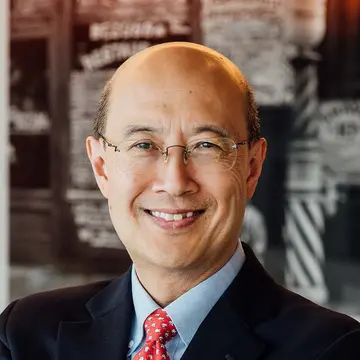
Andrew W. Lo is the Charles E. and Susan T. Harris Professor at the MIT Sloan School of Management and the director of MIT's Laboratory for Financial Engineering. He is also a Principal Investigator at the Computer Science and Artificial Intelligence Laboratory (CSAIL), an affiliated faculty of the Department of Electrical Engineering and Computer Science, a member of the Operations Research Center (ORC) and the Institute for Data, Systems, and Society (IDSS), all at MIT. He is also an external faculty at the Santa Fe Institute, Santa FE, NM. He received his AM and PhD in economics from Harvard University, his BA in economics from Yale University, and graduated from the Bronx High School of Science. He began his academic career at the University of Pennsylvania's Wharton School, where he was an Asistant and Associate Professor.
His current research spans several areas: evolutionary models of investor behavior and adaptive markets; systemic risk and financial regulation; quantitative models of financial markets; financial applications of machine-learning techniques and secure multi-party computation; healthcare finance; and deep-tech investing, including fusion energy and advanced manufacturing. Recent projects include:
An evolutionary model of asset prices based on the Adaptive Markets Hypothesis
New financing methods/ business models for accelerating biomedical innovation
Quantitative approaches to deep-tech investing
Applications of AI, especially machine learning and LLMs, to financial advice, “quantamental investing,” and healthcare finance
Lo has published extensively in academic journals (see http://alo.mit.edu) and his most recent book is The Adaptive Markets Hypothesis: An Evolutionary Approach to Understanding Financial System Dynamics. His awards include Sloan and Guggenheim Fellowships, the Paul A. Samuelson Award, the Harry M. Markowitz Award, the CFA Institute’s James R. Vertin Award, as well as election to Academia Sinica, the American Academy of Arts and Sciences, the American Finance Association, the Econometric Society, and TIME’s 2012 list of the “100 most influential people in the world.” His trade book Adaptive Markets: Financial Evolution at the Speed of Thought published in 2017 has also received a number of awards, listed here, and he has received multiple teaching awards from the University of Pennsylvania and MIT.
Lo is also a research associate of the National Bureau of Economic Research; a cofounder and board member of BridgeBio Pharma and Uncommon Cures; a cofounder of AlphaSimplex Group, QLS Advisors, QLS Technologies, Quantile Health, and Rutherford Energy Ventures; a board member of GCAR, n-Lorem, and Vesalius; and an investor in and advisor to a number of biotech companies and non-profit organizations. For a complete list of Lo’s affiliations and conflicts of interest disclosure, please click here.
Dai, Yuehao, Andrew W. Lo, Manish Singh, Qingyang Xu, and Ruixun Zhang. Oxford Bulletin of Economics and Statistics. Forthcoming.
Thakor, Richard T. and Andrew W. Lo. Research Policy. Forthcoming. SSRN Preprint.
Li, Xuelin, Andrew W. Lo, and Richard Thakor. Review of Finance. Forthcoming. SSRN Preprint.
Cho, Joonhyuk, Manish Singh, Chaoyi Zhao, Shomesh E. Chaudhuri, and Andrew W. Lo. PLOS Global Public Health. Forthcoming.
Shukla, Chinmay, Irwin Tendler, Neil Kumar, and Andrew W. Lo. Drug Discovery Today Vol. 31, No. 1 (2026): 104583. Download PDF.
Fengze Liu, Haoyu Wang, Joonhyuk Cho, Dan Roth, and Andrew W. Lo. In Proceedings of the 2025 Conference on Empirical Methods in Natural Language Processing, Suzhou, China: November 2025. Download PDF.

Their new study aims to give budding industry a framework for understanding how fusion can be profitable.

MIT Sloan professor Andrew Lo says Al is good at explaining trade-offs and exploring scenarios but weak at precise tax optimization, math, and regulatory compliance.
Professor Andrew W. Lo and a team of researchers from MIT have looked into the economic challenges of fusion power and built a framework to make it commercially feasible. The framework is technology-agnostic and takes into account the physical inputs needed to build and operate a fusion power plant that is competitive in energy markets. For more on professor Lo's new research, please visit MIT News.
According to professor Andrew W. Lo, models like ChatGPT can help with personalized analyses, but they do not yet replace the investor's responsibility or the work of a financial advisor. The best way to use these tools is to treat them as a second brain, not as an absolute authority. Among professor Lo's recommendations are asking the AI to explain the assumptions it used in its analysis, what information might be missing, and even requesting that it critique its own response.
Michael Miebach, Mastercard chief executive, noted that the same consumer protection questions the payments industry has addressed over the past two decades are now resurfacing in the agentic commerce space. Professor Andrew W. Lo added: "One of the things about large language models that I find particularly concerning is that no matter what you ask it, it'll always come back with an answer that sounds authoritative, even if it's not."
Professor Andrew W. Lo said that AI struggles with tax optimization, doesn't understand regulatory nuance and — unlike a human financial adviser — isn't subject to legal requirements, such as acting in a client's best interest. He stressed that it's important to ask critical questions when using AI for retirement advice, such as prompting an AI to say where it might be wrong and to list its assumptions and uncertainties.

This online program from the MIT Sloan School of Management and the MIT Computer Science and Artificial Intelligence Laboratory (CSAIL) challenges common misconceptions surrounding AI and will equip and encourage you to embrace AI as part of a transformative toolkit. With a focus on the organizational and managerial implications of these technologies, rather than on their technical aspects, you’ll leave this course armed with the knowledge and confidence you need to pioneer its successful integration in business.

This in-person course, led by MIT Professor Andrew W. Lo, provides a practical, executive-level exploration of how AI and machine learning are reshaping the financial industry. Participants will gain a foundational understanding of AI’s evolution—from early machine learning to the current LLM era—before diving into real-world applications across the buy side, sell side, banking, insurance, and risk management sectors. Through interactive sessions, case studies, and guest lectures from leading practitioners and researchers, executives will examine the capabilities and limitations of today’s AI tools and consider how emerging innovations will forge the next generation of FinTech.