
Ideas Made to Matter
To withstand credit market shocks, diversify your company’s bonds
Having access to a wider variety of institutional investors allows companies to better maintain access to capital, research shows.
Feb 20, 2025
Faculty

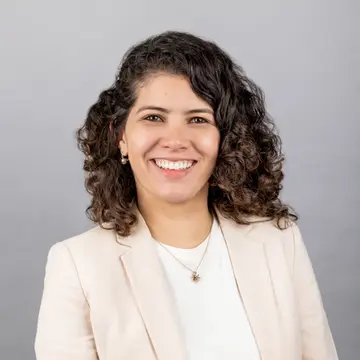
Lira Mota is the Victor J. Menezes (1972) Career Development Assistant Professor of Finance at MIT Sloan School of Management.
Her research lies at the intersection of asset pricing, macrofinance, and corporate finance. Much of her work examines how financial frictions, regulation, and monetary policy shape asset prices and corporate decisions, contributing to our understanding of portfolio allocation, the drivers of risk and return, and the transmission mechanisms through which policy affects financial markets.
Before joining Sloan, she received a PhD in finance from Columbia Business School and completed post-doctoral work at Princeton University.
Current Research Focus: Mota’s recent research covers topics such as the consequences of the demand for safe assets, the role of non-financial firms as financial agents, the drivers of the cross-section of risk and return, and information in financial markets.
Campello, Murillo, Angela Gallo, Lira Mota, and Tammaro Terracciano, Working Paper. January 2026.
Corell, Felix, Federic Holm-Hadulla, Matteo Leombroni, Lira Mota, and Melina Papoutsi, MIT Sloan Working Paper 7347-25. Cambridge, MA: MIT Sloan School of Management, December 2025.
Corell, Felix, Lira Mota, Melina Papoutsi, MIT Sloan Working Paper 7346-23. Cambridge, MA: MIT Sloan School of Management, December 2025.
Mota, Lira and Kerry Y. Siani, Working Paper. October 2025.
Darmouni, Olivier, and Lira Mota. The Review of Financial Studies Vol. 37, No. 10 (2024): 3024-3049. SSRN Preprint.
Mota, Lira. MarketWatch, March 5, 2024.

Having access to a wider variety of institutional investors allows companies to better maintain access to capital, research shows.

Large corporations like Apple, Microsoft, and Alphabet hold complex financial portfolios. Many investors are not aware that these holdings expose them to additional risk.
"In essence, corporate giants have become lenders in their own right, running financial institutions within their company walls."
"Este é um momento de maior volatilidade no mercado de ações. ...diversificação hoje é interessante justamente por causa desse período."