Press
How can managers best design teams and tasks?
New research from the MIT Sloan School of Management introduces the Task Space, a tool with a new approach to analyzing how well teams perform on a wide variety of tasks
Jul 7, 2026
Faculty

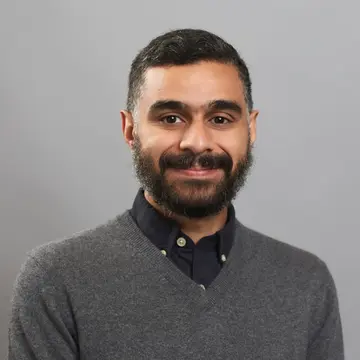
Abdullah Almaatouq is a computational social scientist and the Douglas Drane Career Development Associate Professor in Information Technology and Management at the MIT Sloan School of Management.
Abdullah’s research focuses on improving cooperation, coordination, and collective intelligence in decision-making systems, such as teams, committees, crowds, markets, and elections. Abdullah also explores ways to advance social and behavioral research methodology through innovative research designs and theory-building strategies, with the ultimate goal of developing a deeper understanding of collective decision systems and how to design them effectively in various contexts. He is affiliated with the MIT Center for Computational Engineering, the MIT Center for Collective Intelligence, and the MIT Connection Science Research Initiative.
Abdullah holds a PhD in computational science and engineering, as well as dual master's degrees in media arts and sciences (MIT Media Lab) and computational science and engineering from MIT. Prior to joining MIT, he earned his undergraduate degree from Southampton University in the United Kingdom.
Featured Publication
"Task Complexity Moderates Group Synergy."Almaatouq, Abdullah, Mohammed Alsobay, Ming Yin, and Duncan J. Watts. Proceedings of the National Academy of Sciences of the United States of America Vol. 118, No. 36 (2021): e210106211. Download Paper.
Featured Publication
"Adaptive Social Networks Promote the Wisdom of Crowds."Almaatouq, Abdullah, Alejandro Noriega-Campero, Abdulrahman Alotaibi, P.M. Krafft, Mehdi Moussaid, and Alex Pentland. Proceedings of the National Academy of Sciences Vol. 117, No. 21 (2020): 11379-86. Download Paper.
Hu, Xinlan Emily, Mark E. Whiting, Linnea Gandhi, Duncan J. Watts, and Abdullah Almaatouq. Management Science. Forthcoming. PsyArXiv Preprint.
Alsobay, Mohammed, David G. Rand, Duncan J. Watts, and Abdullah Almaatouq. Science Vol. 392, No. 6794 (2026): eaeb5280.
Almaatouq, Abdullah, Thomas L. Griffiths, Jordan W. Suchow, Mark E. Whiting, James Evans, and Duncan J. Watts. Behavioral and Brain Sciences Vol. 47, (2024): e33. SSRN Preprint.
Vaccaro, Michelle, Abdullah Almaatouq, and Thomas W. Malone. Nature Human Behaviour Vol. 8, No. 12 (2024): 2293-2303.
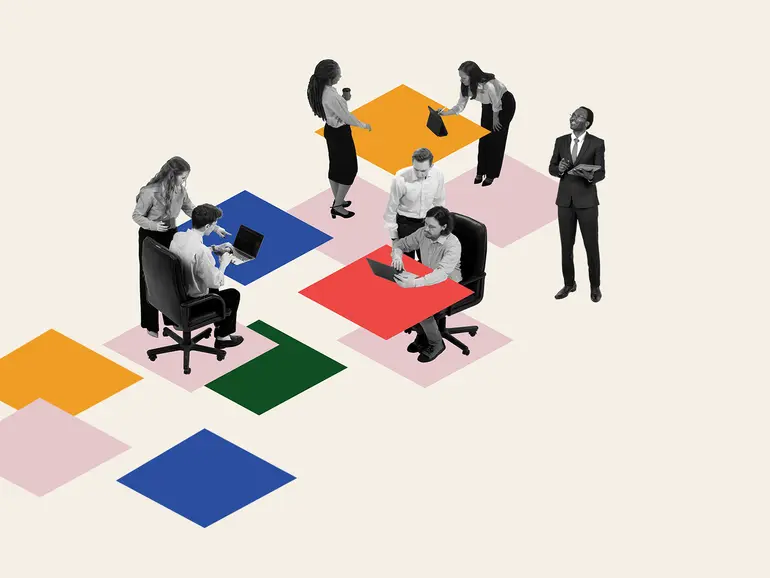
New research from the MIT Sloan School of Management introduces the Task Space, a tool with a new approach to analyzing how well teams perform on a wide variety of tasks
BPHC engaged with a team of students taking MIT IDE’s Analytics Lab (A-Lab) to explore how a wide range of non-traditional data such as weather metrics, unemployment statistics, and rental patterns can create a predictive model to forecast demand for public health services.
A study led by professor Abdullah Almaatouq mapped self-reported friendship ties in several datasets. In one network of 84 adults, 53 percent of 775 nominated ties were reciprocal. In other words, both people identified each other as friends. Does that mean half of all friendships are fake? No, but it showed something interesting. People often assume a friendship is mutual when the other person may define it differently.
A study by professor Sandy Pentland, associate professor Abdullah Almaatouq, and co-authors analyzed various friendship networks and found that only about half were truly reciprocal. In many relationships, one person considers the friendship close while the other experiences it much more superficially.
Research by associate professor Abdullah Almaatouq, Mohammed Alsobay (PhD '25, MS '24, SB '16), and co-authors have developed an innovative experimental design framework that promises to decipher the intricate web of factors influencing human cooperation. This new methodology, known as integrative experiment design, heralds a paradigm shift away from traditional one-variable-at-a-time approaches toward a comprehensive, system-level understanding of social behavior.
Humans and AI don't work as well together as many assume. What is the point in which human tasks and AI tasks are best blended?