What you’ll learn:
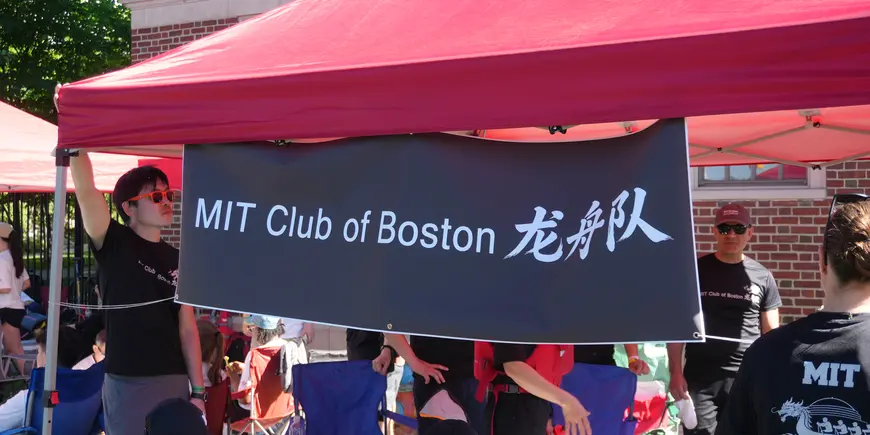
- The inaugural MIT Club of Boston Dragon Boat Team brought together alumni, students, and affiliates to compete in the 47th Annual Boston Dragon Boat Festival.
- Team members learned that synchronization, communication, and execution matter more than individual strength.
- Participants connected dragon boating to MIT Sloan lessons on leadership, teamwork, and the power of well-designed systems.
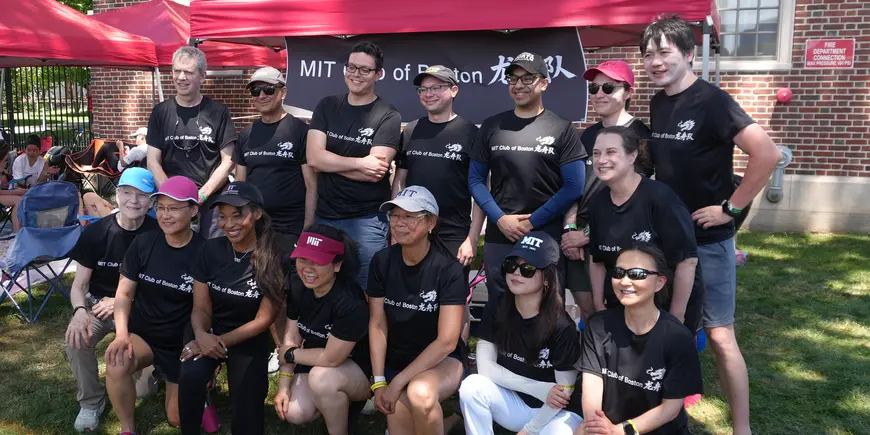
As thousands converged on the MIT campus in late May for commencement ceremonies and reunions, a group of students, alumni, and affiliates walked, biked, or drove to the Richard J. Resch Boathouse on Memorial Drive.
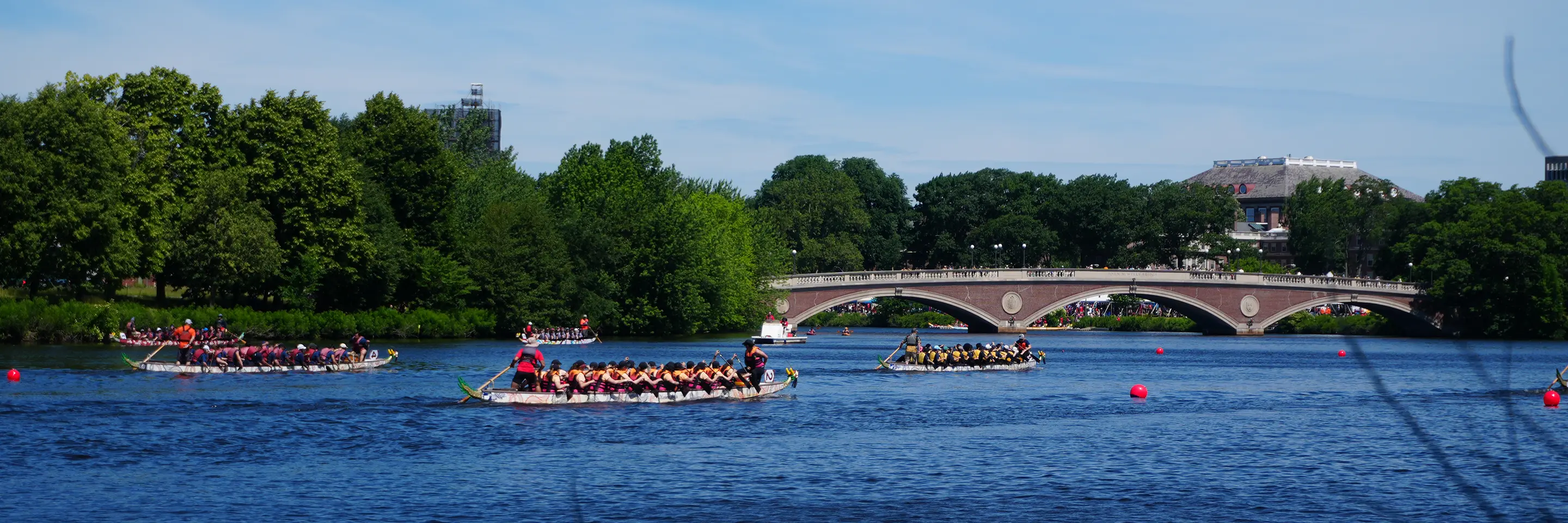
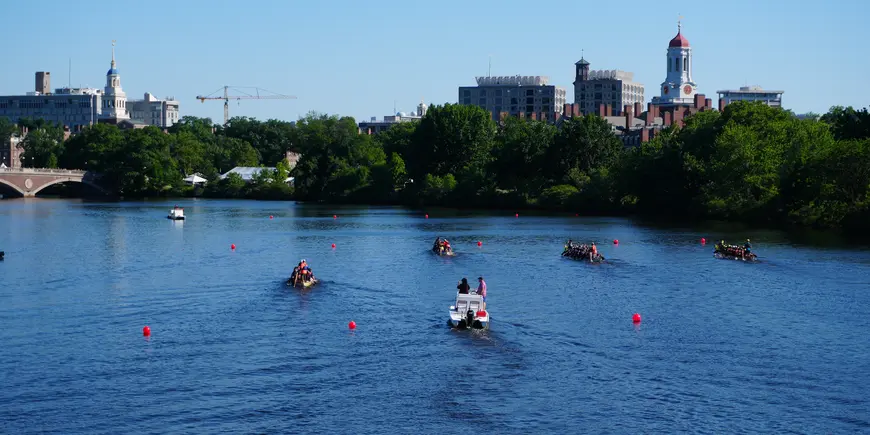
They were the inaugural MIT Club of Boston Dragon Boat Team, and most had never participated in the annual Boston Dragon Boat Festival, which has been happening every summer on Charles River since 1979. The 47th annual festival took place on Sunday, June 14, 2026.
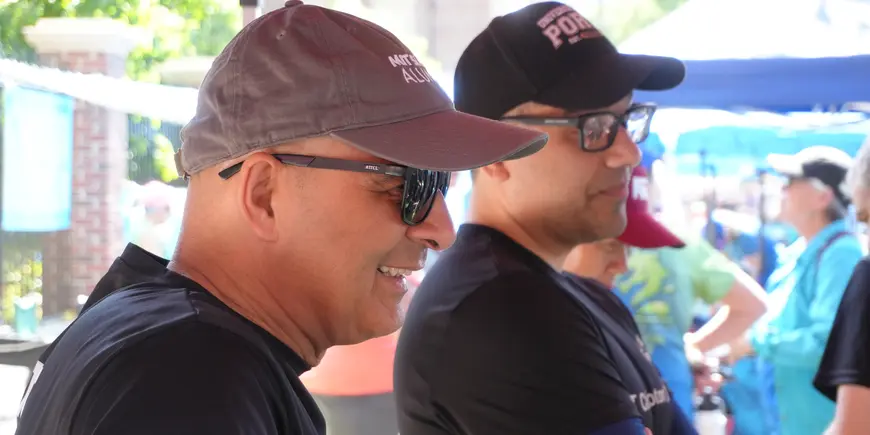
“I didn’t know anything about it,” says Farshid Alizadeh-Shabdiz, EMBA ’17, a professor of the practice at Boston University.
After reading an email about the team and signing up, however, Alizadeh-Shabdiz is committed to doing it again next year. “It’s definitely fun,” he adds.
Lessons in Leadership from the Dragon Boat Festival
A long partnership
The Boston Dragon Boat Festival routinely hosts over 60,000 attendees, athletes, artists, and vendors during a single day of races and performances. It is the oldest dragon boat festival in the United States. It is also one of the largest in North America.
From helping festival organizers to managing and participating on numerous teams, Ling Xiang, EMBA ’19, and her husband, Alan Phillips, have been involved with the festival for many years. Despite the festival’s longstanding relationship with the Institute, no official MIT alumni team had participated in the races. Xiang decided it was time to change that.
“We have a lot of alumni, and I want to have an MIT presence here,” says Xiang. “MIT has been a partner to the festival for so many years, providing training facilities through the boathouse, so I want to make sure that we have an MIT Dragon Boat Team for many years to come.”
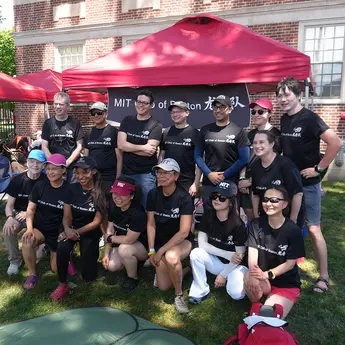
Through the MIT Club of Boston and the MIT Alumni Association, Xiang put out a call for participants. The message quickly landed in the inboxes of Alizadeh-Shabdiz and other Sloanies—like Christalyn Rhodes, SFMBA ’26, who was a student in the MIT Sloan Fellows MBA program at the time.
“I love the sport and the community,” says Rhodes. “When I saw in the listserv that MIT Sloan was building its first alumni team, I was overjoyed.”
Infinite Connection
Join your fellow alumni
Connect Now
No experience required
The call for participants emphasized that no experience was necessary. Those who were interested simply had to show up at practice with “a desire to learn and have fun.”
Dr. Carl Robert Dahlberg, SF ’17, one of many first-timers like Alizadeh-Shabdiz who joined the team, echoes this sentiment.
“It’s a low barrier to entry,” says Dahlberg. “It’s not a contest of strength; it’s a contest of rowing precision and technique. That was my big takeaway: The boats that synchronize the best go the fastest, not necessarily the strongest rowers.”
“That’s an attainable skill by anybody,” he adds.
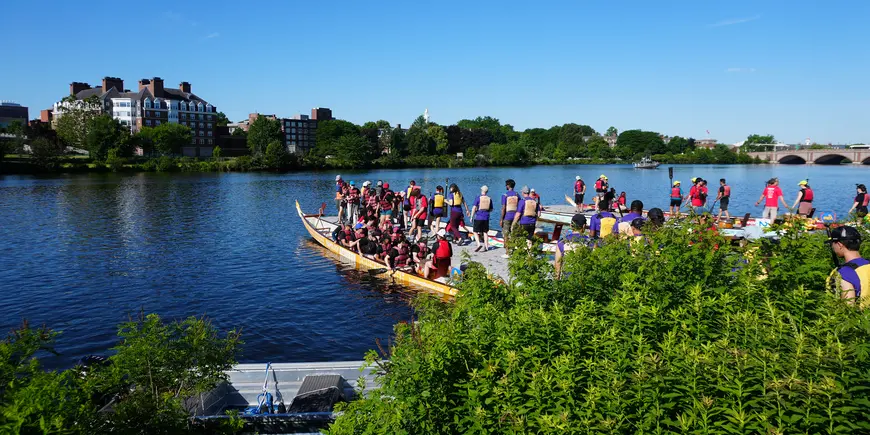
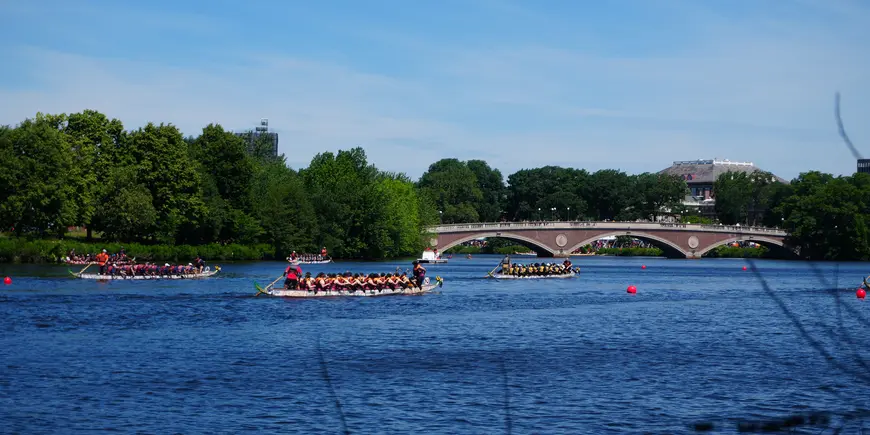
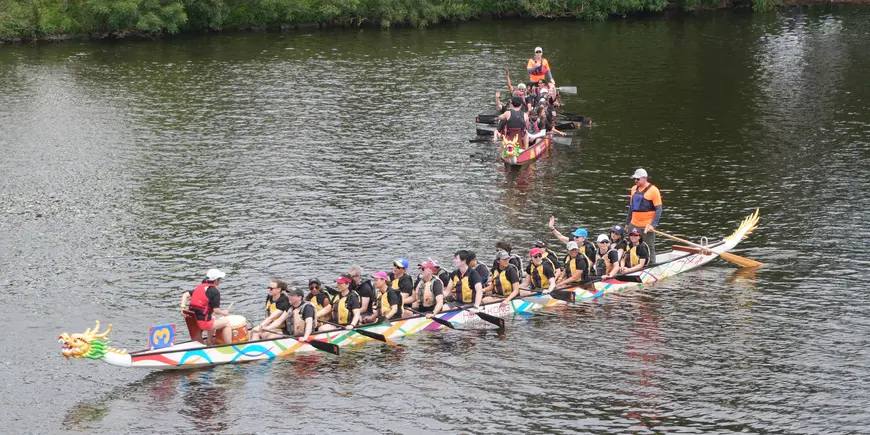
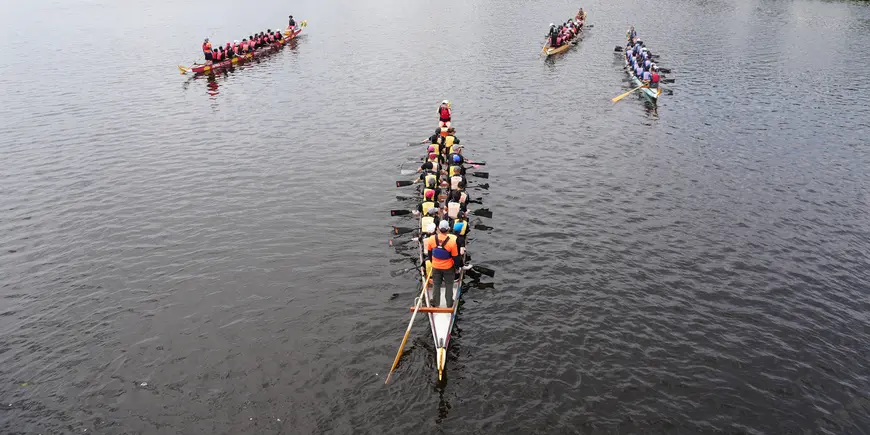
In May and June, teams met four times at the Resch Boathouse to learn about the ins and outs of a successful dragon boat. A standard crew consists of 22 people—20 paddlers in 10 rows of pairs, a drummer at the bow who faces the paddlers and counts their rhythm, and a steerperson (or sweep) who stands astern and steers the boat.
The MIT Club of Boston team quickly learned that effort alone would not make the boat go faster. In a race, it is natural for paddlers to pull harder to gain speed, but without synchronization, extra effort creates drag. Only when everyone matches the same timing and rhythm will the boat accelerate.
This lesson became especially important during Saturday’s University Alumni Division time trial, when the rookie MIT team lined up against eight experienced Chinese university alumni teams. Before the start, Xiang reminded the crew to trust their own rhythm and stay synchronized.
Throughout the two-day competition, the team improved with every race by following the cadence set by experienced stroke paddlers Rhodes, graduate student Lucie McCormick, and PhD student David Mayo, SB ’18, Meng ’19. They also benefited from the experience of steerperson Uriel Klieger, SB ’04.
By Sunday’s 500-yard division race, the team delivered its fastest performance of the weekend—improving by 11 seconds from Saturday and finishing just 0.61 seconds behind second place. It was a remarkable result for a team that had trained together for only three weeks.
The 47th Annual Boston Dragon Boat Festival
-
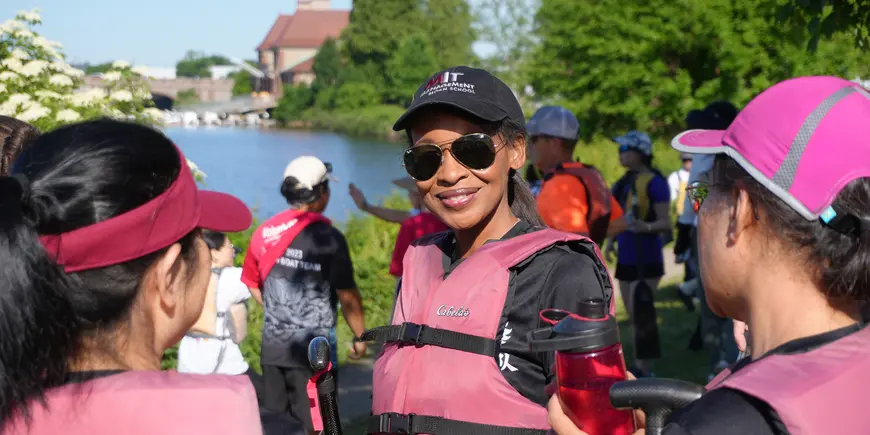
Christalyn Rhodes, SFMBA ’26, listens to team members before the first race



Lessons in leadership
Midway through Sunday, Xiang spoke to her teammates about leadership, the lessons she learned at MIT Sloan, and how they applied to what they had accomplished as a new dragon boat team. Dragon boating, she explained, reminded her of the classic Mumbai Dabbalawa lunch delivery case she studied as an MIT Sloan Executive MBA student.
For more than a century, Mumbai Dabbalawas delivered hundreds of thousands of home-cooked lunches with near-perfect reliability—not through sophisticated technology, but good system design, human coordination, and precise execution. Xiang saw the same principle at work in dragon boating: Success does not depend on the strongest paddler, but on 22 people following a system of simple yet precise techniques, clear communication, and disciplined execution.
“What we learned on the water is: How do we start to synchronize with the person next to us and the person in front of us?” says Rhodes. “How do we all get into the same rhythm and move something forward together at the same time? If that’s not building a startup, I don’t know what it is.”
“I feel like the experience of dragon boating echoes what we learned at MIT Sloan,” she adds.
For Xiang, dragon boat racing reinforced the lessons she learned at MIT Sloan. Sustainable performance comes not from extraordinary individuals, she notes, but from ordinary people executing a well-designed system.
The inaugural MIT Club of Boston Dragon Boat Team may have started as an experiment, but Xiang and others hope it becomes an annual club tradition that brings together Boston-area alumni, students, and affiliates through teamwork, leadership, and community.
MIT Sloan alumni interested in participating in next year’s Boston Dragon Boat Festival can connect with the MIT Club of Boston through the Infinite Connection.