
Sloan Alum and BioPharma Expert Talks Strategic Inflection Points, Strategy and Messaging
On December 3, 2025, Sloan alum Alain Eudaric shared his expertise in biopharma and life science, gained over 30 years in the industry. Biopharma is a capital-intensive, high-risk environment where success is rare, but it can be transformative for companies, investors, and patients. Bringing a single new drug to market is a complex and extraordinarily expensive journey, during which the vast majority of promising projects fail. In his overview, Eudaric focused on three areas: inflection points, understanding the market landscape, and crafting the message.
Inflection Points
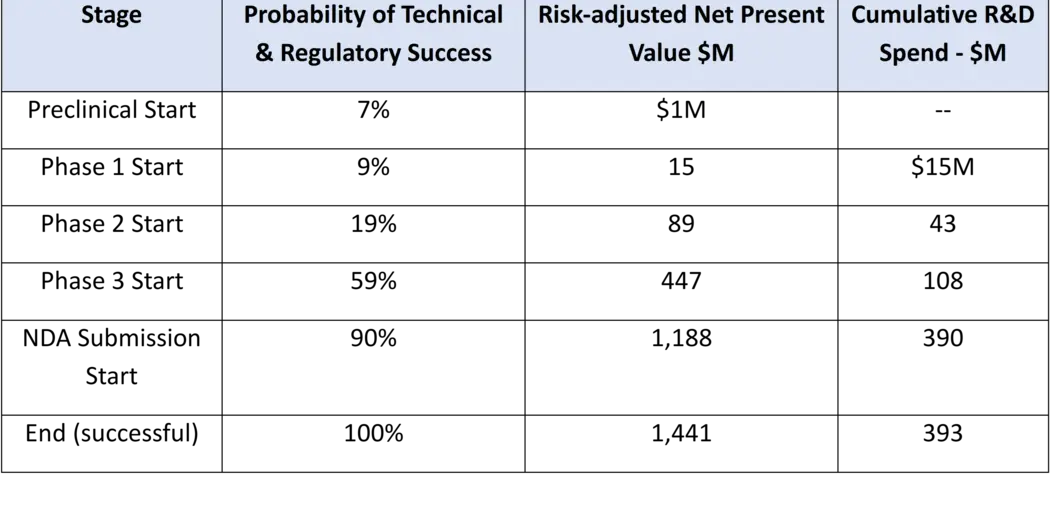
A biopharma company’s success hinges on its ability to manage a series of critical moments called strategic inflection points. In this case, a strategic inflection point is a moment where new information fundamentally changes a program’s outlook and perceived value. It is a data-driven event that reduces uncertainty and provides evidence that a program is on the right track.
In the biopharma industry, value is not created linearly over time. Instead, it is built in significant, step-like increases that are directly tied to successfully reaching inflection points. A program’s value remains relatively low through early development. It accelerates dramatically after the successful completion of Phase 2 trials, as this phase is often considered the proof-of-concept stage.
A company wants to manage its cash so that it is not forced to fundraise before it completes Phase 2 of the drug’s clinical trial, since at that point its drug is significantly more attractive to investors than it was before.
From Alain Eudaric’s presentation:
Understanding the Market Landscape
Strategy must be grounded in a realistic understanding of the market. Eudaric presented an example of a biopharma company that made an inaccurate assessment and ended up being second to market with a particular therapeutic.
The first drug to market captures 100% of the initial market share. After the second drug enters, the first drug’s share drops to 58%, while the second entrant captures only 42%. Whichever company comes in second takes a significant hit to market share. A company that is second to market cannot make up for the penalty of being late to the game.
Crafting the Message
Compelling data are necessary to support the investment case. These data, combined with a well-rounded message, are even more persuasive. Eudaric identified three elements that, when combined, compose the most convincing message. These are:
- Logic: complex scientific results, disease statistics, clinical trial details
- Trust and credibility: acknowledgement by a KOL or known organization, selection for a prestigious conference
- Emotions: patient testimonials, stories of unmet medical need
The goal is to create a message that is factually sound, credible, and memorable.
Conclusion
The biopharma industry is characterized by staggeringly high costs, high failure rates, and rising costs as programs progress through late-stage clinical trials. Given these conditions, companies must time their financing activities around the strategic inflection points. Meeting a successful milestone, especially the end of Phase 2, reduces uncertainty and makes the drug much more attractive to investors and partners, which in turn unlocks financing to proceed to the more expensive stages of development. Failing to reach a milestone can mean running out of cash and the end of the road for a promising drug.