Rewiring Prosperity: How Corporations and Entrepreneurs can Rewrite the Calculus of Economic Growth
At MIT Kuo Sharper Center, we focus on shared prosperity in the world’s fastest growing regions. Here’s what it takes to drive success.
By: Andrea Kates, Entrepreneur-in-Residence at the MIT Kuo Sharper Center for Prosperity and Entrepreneurship and author of From Stuck to Scale
Rewiring Prosperity: How Corporations and Entrepreneurs can Rewrite the Calculus of Economic Growth
The future of the world’s fastest-growing regions—from Africa and Latin America to Southeast Asia, Central Asia, and the Arab States—will not be built on old corporate playbooks. For decades, multinational corporations viewed these growth markets through a narrow, extractive lens: either as consumer bases to sell to, or supply chains to source from. In that legacy model, local entrepreneurs were treated as niche suppliers, cogs in a machine, or targets for opportunistic acquisitions.
On the other side of the equation, entrepreneurs haven’t been wired to perceive corporates as trusted partners. Founders have experienced an imbalance with corporations who commanded the lion’s share of power in the relationship and ended up undervaluing the smaller company’s intellectual property, human capital, and track record. In the extreme version of imbalance, relationships that started out as partnerships turned into top-down relationships, with the corporations calling the shots.
That era is over.
But true economic sovereignty and sustainable prosperity require a complete rewiring of the relationship between corporate capacity and entrepreneurial agility.
Breakthrough growth occurs when we pair a founder’s disruptive innovations and local market savvy with a corporation’s scaling muscle. When this happens, we don't just launch isolated businesses; we build anchor infrastructure capable of serving local markets, creating high-quality local jobs, as well as scaling to become global export engines.
Astute corporations don't dilute a founder’s impact; they amplify it
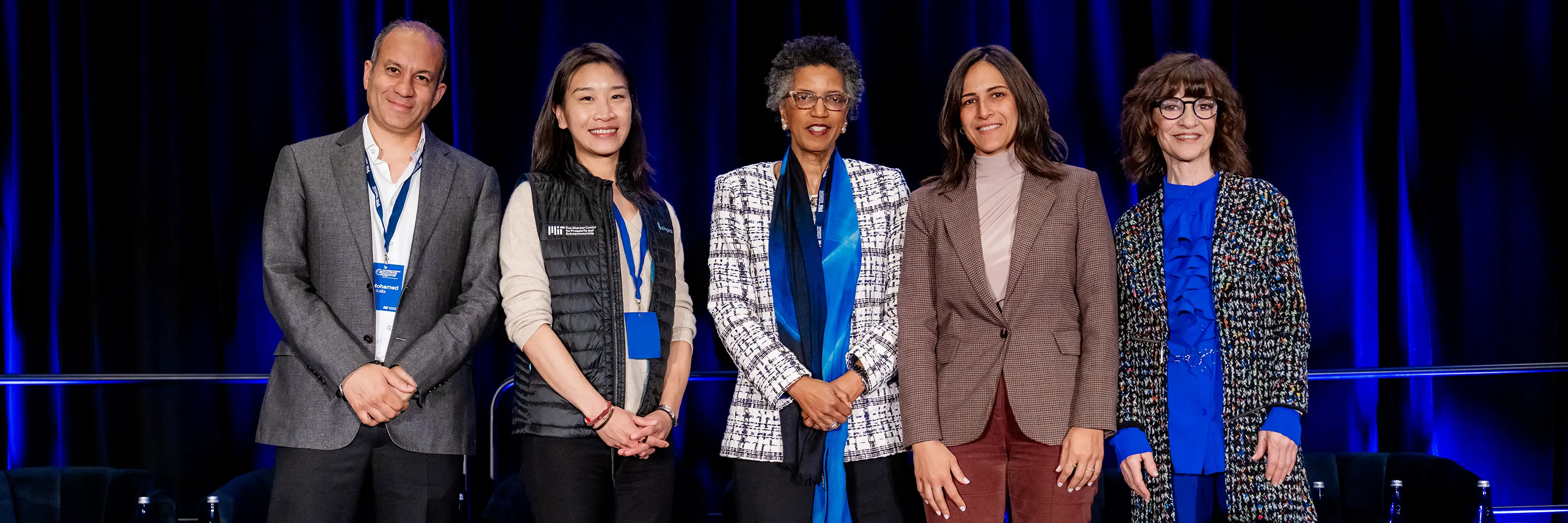
Navigating this transition requires abandoning conventional approaches. At the MIT Kuo Sharper Center’s recent annual conference, I moderated a panel titled "Innovation with Intent: Corporate Strategies for Innovation-Driven Entrepreneurship Ecosystem Building.” Joined by Linda Hill (Harvard Business School professor and author of Genius at Scale), Mohamed El-Kalla (CEO, CIRA Education), Nanis El Essaily (CIO, Raya Holding), and Dee Poon (President, Tessellation Group), we mapped out the operational mechanics required to scale business breakthroughs in growth markets.
Rather than a simple retrospective, the panel outlined three shifts that define how corporations and innovation-driven enterprises (IDEs) must collaborate next.
1. Reciprocal Collaboration vs. Passive Capital
The era of arms-length corporate check-writing is over. Success requires a new playbook from both sides. Corporations need to move away from a top-down, controller mindset and act as catalysts. At the same time, entrepreneurs need to view corporations as true strategic allies, not just as a source of capital or as a competitive threat.
Dee Poon, President of Tessellation Group, pushed back against the standard funding model, arguing that a corporation's true value lies in its value chain, not just its bank account:
"We discovered what we could do by leveraging all the different parts of our company for these younger startups with emerging technologies or new ideas was much more powerful than just providing capital."
Tessellation Group put this into practice through a salt-recovery incubation project with a local dye-recovery startup. Instead of treating the startup as a subordinate vendor, Tessellation took the founders directly to their key clients as a side-by-side offering, co-developing a more resilient industry supply chain.
This shift requires massive corporate courage. Onboarding an agile startup and introducing them directly to major enterprise clients requires dismantling rigid procurement rules and trusting external innovators with core customer relationships.
2. Reframing Growth Markets from "Consumers" to "Brainpower Hubs"
A foundational mindset shift involves how corporations define a local market. Visionary companies no longer see growth markets as places of scarcity to be sub-contracted, but as environments of abundance, dynamism, and deep talent.
Mohamed El-Kalla, CEO of CIRA Education, shared how reframing local partnerships transformed his organization's growth velocity:
“As we built our company, local partners became force multipliers for growth. Initially, we thought of partners as customers or acquisition targets, but the deep value they brought turned out to be brainpower.”
This philosophy led CIRA’s venture arm to invest directly in tech startups like Orcas, seamlessly integrating hybrid tutoring into their platform. Similarly, global giants like Mastercard have adopted this win-win approach, equipping 50 million small businesses to enter the digital economy while simultaneously accelerating their own market valuation.
In this rewired view, local entrepreneurs and communities contribute; they don’t simply consume. Growth markets become the source of the innovation itself, not just the destination for scaled Western products. The true magic happens when these local relationships give birth to major hubs of innovation.
3. Navigating the Velocity Gap: The Critical Need for "Bridgers"
Healthy friction is inevitable when pairing a startup's hyper-speed execution with a multinational’s tedious decision cycles. Startups risk running out of runway while waiting for corporate approval, while corporations frequently back away from brilliant innovations out of a legacy aversion to risk.
To solve this, Linda Hill, Wallace Brett Donham Professor of Business Administration at Harvard Business School, asserts that organizations must intentionally cultivate a new corporate persona: the "Bridger."
“You need people in charge who know how to work across boundaries," Hill emphasizes. "Large organizations need innovation and buy-in from local markets to bring the right products forward.”
Corporate bridgers act as cultural translators. They protect the startup's entrepreneurial edge from being swallowed by corporate bureaucracy, while aligning the startup’s disruptive solutions with corporate compliance. They need to translate from one domain to another to build something bigger than either party could have done on their own.
We saw this friction resolved at Raya Holding. As Nanis El Essaily, CIO of Raya Holding, detailed, Raya recognized the technological superiority of a specialized platform built by a local startup.
Acting as the ultimate bridger, Raya successfully facilitated a major corporate customer’s high-stakes transition away from a legacy enterprise system onto the startup's sector-specific platform—proving that when bridgers mitigate risk, local IDEs can displace legacy tech giants.
When the bridger role works, everyone wins. Large organizations benefit from the fresh thinking of the founders and founders can leverage their innovation to multiple markets by leveraging the relationships already established by their corporate counterparts.
Actionable Takeaways for the Ecosystem
To implement this "New Calculus" effectively, different ecosystem players must adapt their roles immediately:
| Audience | The Urgent Mandate | What Success Looks Like |
|---|---|---|
| For Founders & Entrepreneurs | Brace for corporate friction without losing agility. Do not view corporations merely as clients or acquirers; treat them as distribution rails. | Navigating corporate compliance while maintaining ownership of your core intellectual property. |
| For Corporate Leaders & Investors | Move from a controller mindset to a catalyst mindset. Stop treating regional expansion as a transactional sales exercise. | Integrating local startups directly into your primary value chain to co-create high-impact, exportable solutions. |
| For Policy Makers | Build regulatory frameworks that lower collaboration friction. Move away from rigid, legacy corporate protections that stifle local talent. | Aligning national digital infrastructure to support local jobs, ethical management, and cross-border tech scaling. |
The New Calculus for Prosperity Rewires the Whole Economy
Rewired founders contribute novel solutions and apply innovative technologies. Rewired corporations amplify distribution, provide infrastructure to scale more quickly and resources to expand the market. Together, they build local markets that thrive, provide high quality jobs, and co-create breakthrough products that expand exports.
The great unlock in global economic prosperity will not come from isolated actors. When we combine an entrepreneur’s disruptive solution with a corporation’s scaling infrastructure, we ignite entire regional ecosystems and economies. Together, we equip local markets to thrive, foster economic sovereignty, and provide local innovators with the tools needed to serve locally and lead globally.
Ultimately, this collaboration is what allows us to rewire the economy through the “New Calculus” of the MIT Kuo Sharper Center: a framework where corporate scale and startup agility can align to foster economic sovereignty.
Dive Deeper into the Discussion
- Watch the Panel: Tune into the full debate and hear the comprehensive strategies shared by Linda Hill, Mohamed El-Kalla, Nanis El Essaily, and Dee Poon on our YouTube Panel Stream (Panel session starts at timestamp 2:37).
- Get Involved: Discover how the Center partners with founders, students, and ecosystem enablers by exploring the MIT Kuo Sharper Center Insights.
Related Posts