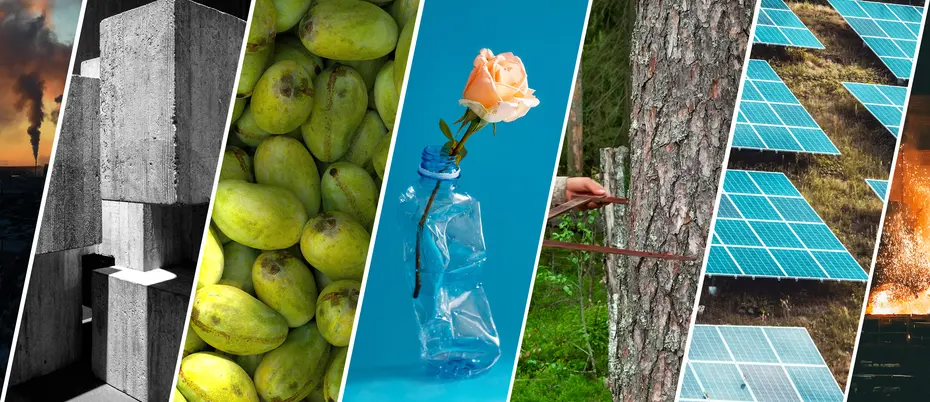
What does the next wave of climate innovation look like? At the 2026 ClimateCAP MBA Summit, MIT-connected startups — largely alumni-led — presented solutions across energy, materials, and supply chains.
Active Surfaces
Active Surfaces has developed ultrathin peel-and-stick solar panels that are manufactured using high-speed roll-to-roll printing. They are 90% lighter than conventional products and can be attached to any surface. The panels produce the same power per square meter as conventional panels and can be installed in hours, with no racking, ballast, or structural reinforcement required, according to co-founder and CEO Shiv Bhakta, LGO ’24.
Adaviv
About one-third of global food is lost or wasted, particularly fruits and vegetables. Adaviv’s Lean Cultivation Agent enables field crews to capture crop health data and grade harvests in real time. Packers, shippers, and forecasters use this intelligence to improve logistics and reduce overproduction waste. Working with brands like Driscoll’s and NatureSweet, Adaviv has achieved 28% less harvest waste and a 38% reduction in pest pressure.
Apollo Atomics
Nuclear power supplies about 18% of U.S. electricity, but most plants were built before 1990. Only three reactors have come online since 2000, and two of them faced seven-year delays and cost $15,000 per kilowatt of generating capacity to build. Apollo Atomics addresses such challenges by creating nuclear reactors that can fit on a truck and are capable of powering 50,000 homes. The company is developing a full reactor demonstrator and targeting a 10-megawatt commercial pilot by 2028.
Carbion
Synthetic graphite — which accounts for 60% to 80% of the graphite found in lithium-ion batteries — is produced through the high-temperature processing of coal tar pitch and calcined petroleum coke. Carbion is a thermochemical platform that makes battery-grade graphite from biomass waste, such as nutshells and wood scraps, using lower temperatures than the typical processing procedure.
Forma Systems
Forma Systems reduces the cost and carbon footprint of concrete construction using a proprietary multiobjective optimization engine developed at MIT. By aligning with a manufacturer’s specific inventory and material properties, the Cimbra software generates optimized geometries to ensure that material is placed only where structurally required. Cimbra is a web-based platform that supports diverse structural systems and building codes.
Gaia AI
Forestry requires biodiversity management and wildfire mitigation, but manual data collection via calipers and tape is slow and often inaccurate. Gaia AI replaces that process with a mobile lidar and AI platform for tree-level measurement. Field crews capture 3D point clouds while walking, and the AI tool automatically measures individual trunk characteristics. This process replaces months of manual cruising and extrapolation with precise stand-level inventories.
Helix Carbon
The steel production sector is the largest carbon emitter in manufacturing, responsible for 7% of all human-caused greenhouse gas emissions. Helix Carbon is developing an electrochemical reformer that converts carbon dioxide from raw blast-furnace waste gas into high-value syngas, allowing steelmakers to recycle their emissions as a fuel source.
Entrepreneurship Development Program
In person at MIT Sloan
Register Now

LNK Energies
Fossil fuels power 95% of global transportation. LNK Energies provides a powertrain fueled by liquid organic hydrogen carriers — oils that store and release hydrogen at room temperature. A hydrogen release unit within the powertrain extracts hydrogen to fuel an engine or fuel cell and then returns the used liquid to the tank.
MacroCycle Technologies
Only about 14.7% of all textiles are recycled, with no large-scale economical upcycling pathway in sight. MacroCycle extracts polyester from heavily contaminated and mixed materials to create a resin that can be used to make yarn and garments. The resin is produced with 80% less energy compared with virgin material, according to CEO Stwart Peña Feliz, MBA ’23.
Quaise Energy
Geothermal power is a continuous energy source, yet it meets less than 1% of global demand due to geographic limitations. Quaise Energy overcomes this obstacle using millimeter wave drilling, a technology developed from a decade of research at the MIT Plasma Science and Fusion Center. By using high-power microwaves to ablate rock without contact, Quaise enables deeper drilling, with less machinery wear and downtime, to access power where conventional methods cannot.
S3 Markets
Materials manufacturers and corporate buyers often struggle to identify and procure verified environmental benefits from upstream producers, stalling Scope 3 decarbonization. S3 Markets bridges that gap by providing market infrastructure for Environmental Attribute Certificates. This enables producers to monetize emissions reductions while helping buyers credibly account for supply chain improvements.
The 2026 ClimateCAP MBA Summit, held April 17 – 18, was hosted by the MIT Sloan School of Management and the MIT Sloan Sustainability Initiative, a leading voice in sustainable business and policy. The initiative’s mission is to provide the best education, apply academic rigor to real-world problems, and empower leaders everywhere to take action so humans and nature can thrive for generations to come.