Leadership
Breaking Barriers, Building Impact: One Alumna's Path from Software Engineer to Executive Leader
Anita Carleton’s journey into software engineering leadership began with a groundbreaking role where she was hired as the youngest woman software engineer among a team of primarily, experienced male leaders at the Carnegie Mellon University Software Engineering Institute. This distinction was more than just a demographic anomaly; it was a tribute to her exceptional technical skills and leadership potential.
Today, Carleton, EMBA ‘18, is on the Executive Leadership Team and the Division Director of the Software Solutions Division at SEI. She leads its mission of advancing the state of the practice in software engineering through applied research, development, and the transition of innovative technologies for building and acquiring software-intensive systems, with the specific goal of making software a strategic advantage for the U.S. Department of Defense (DoD). Her work shapes the future of software engineering, cybersecurity, and artificial intelligence, all in support of national defense and security.
What motivated you to pursue the MIT EMBA, and how did it shape your professional journey?
I had reached a point where I felt I wasn’t growing professionally. It wasn’t that I was dissatisfied. I just knew I had more to offer, but I wasn't sure how to unlock that next level. It felt like a career lull. I realized I could either stay where I was or seek out new challenges. I looked at exactly one program, and that was the MIT EMBA program. I wanted a rigorous quantitative program; I wanted an executive program; and I wanted a program where I would not only learn from world-renowned professors but also from colleagues from other industries around the world. The MIT EMBA program provided exactly that—it expanded my thinking, sharpened my strategic decision-making, and helped me approach complex problems from different perspectives.
How did the EMBA program influence your leadership style?
Anita Carleton, EMBA '18
The program completely transformed how I approach leadership. Balancing technical expertise with strategic leadership requires knowing when to dive deep and when to step back. The EMBA taught me to trust my team’s technical skills while focusing on the bigger picture. This shift has allowed me to guide my organization more effectively, making strategic decisions that align with our long-term goals. I've also learned to translate complex technical concepts into strategic insights that resonate with technical and non-technical stakeholders, which has been critical in influencing decision-making at the executive level.
Through the EMBA, I learned the importance of collaborative leadership, how to inspire, empower, and bring out the best in others. I also became more aware of emotional intelligence and how understanding people's motivations can significantly enhance team performance. This shift has made me a more effective leader, fostering a culture where innovation thrives, and people feel valued.
Can you provide specific examples of how you've applied what you learned from the EMBA program in your career?
One standout example is the opportunity to lead a national study on the future of software engineering that influenced Department of Defense research and engineering practice and is motivating research initiatives and investment actions by the Networking and Information Technology Research and Development (NITRD) Program in the White House Office of Science and Technology Policy. The skills I gained from the EMBA, particularly in strategic thinking, stakeholder management, and communication, were instrumental in navigating the complexities of our DoD research and development lab. Another example is my role in leading organizational change at SEI. I applied data-driven decision-making approaches I learned during the program to improve project outcomes and foster a culture of continuous improvement.
Additionally, I co-authored a book on the future of software engineering, drawing on insights from the program to articulate a vision that resonates across the industry. I've also been honored with several professional accomplishments following my EMBA. I was elected as an IEEE Fellow, a prestigious honor that recognizes IEEE Computer Society senior leaders who have made significant contributions to engineering, science, and technology. Also, I was recently selected as a Carnegie Mellon University Software Engineering Institute Fellow, only the ninth person to receive this distinction in SEI's 40-year history. I received this honor for my distinguished career and significant contribution in software engineering research, software measurement and statistical process control for software, and modern software engineering practices that have impacted the discipline of software engineering worldwide. These achievements reflect the confidence, strategic thinking, and leadership skills I gained through the EMBA program.
How did the EMBA program enhance your ability to make a global impact?
The program broadened my perspective beyond my immediate organization to consider how my work impacts the broader national and global community. This shift in mindset led to my election as an IEEE Fellow, where I now have a platform to influence the future of software engineering on an international scale. It also inspired me to give back in new ways, like serving as Vice Chairman of the Board for the Boys and Girls Clubs of Western Pennsylvania. The EMBA taught me that leadership isn’t just about personal success—it’s about leaving a lasting, positive mark on the world.
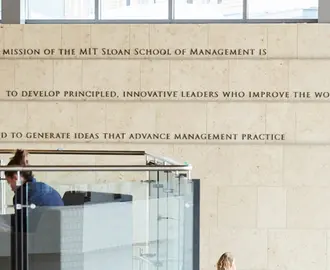
How does your work align with MIT Sloan's mission to develop principled, innovative leaders who improve the world?
My work aligns closely with MIT Sloan's mission because it centers on principled leadership, driving technological innovation, and making a meaningful impact on society. Through my leadership at SEI, I contribute to national security and the advancement of global technology. I'm focused on ensuring that software engineering and AI are applied ethically and effectively. I also prioritize fostering inclusive environments, influencing defense-related technology practices and policies, and mentoring future leaders. This not only advances the goals of my organization but also supports a broader mission to improve the world—which is at the heart of MIT Sloan's values.
Throughout my career, I've been committed to advancing the field of software engineering. One of my proudest contributions was leading the influential study and authoring the book Architecting the Future of Software Engineering: A National Agenda for Software Engineering Research and Development. This national study was about engaging the broader software engineering community in creating a multiyear research and development vision, strategy, and roadmap for engineering next-generation software-reliant systems. This agenda is now being pursued in research organizations around the world, is being incorporated into graduate and undergraduate curricula, and is motivating research initiatives and investment actions by the Networking and Information Technology Research and Development (NITRD) Program in the White House Office of Science and Technology Policy.
Earlier in my career, my work with the IBM Federal Systems Division on applying statistical process control to U.S. Space Shuttle software data was seminal in motivating the application of advanced statistical techniques in software engineering. This research led me to co-authoring my book Measuring the Software Process: Statistical Process Control for Software Process Improvement which allowed me to share forward-thinking measurement and statistical process control strategies that have been adopted globally. My goal has always been to not just improve software engineering practices but to cultivate environments where innovation thrives and meaningful, impactful change can take root.
How did the EMBA program influence your leadership approach as a woman working in traditionally male-dominated environments?
Working in a defense-oriented organization, I often found myself as the only woman in the room. The EMBA helped me develop the confidence to assert my voice, supported by strong analytical and strategic thinking skills. I also gained new tools to create inclusive environments where diverse perspectives are genuinely valued. One of the most profound shifts was realizing that my perspective wasn't just different; it was an asset. The program emphasized the value of diverse thinking for effective problem-solving, and that really resonated with me. Since then, I've championed diversity within my teams and actively mentored women in STEM fields, helping them find their voice and thrive, especially in male-dominated spaces.
What advice would you give to women considering an EMBA, especially in STEM fields?
Like the NIKE slogan—JUST DO IT! It is a career changing and life changing program. The EMBA will stretch you, but that's exactly where growth happens. It's not just an investment in your career; it’s an investment in your personal development. For women in STEM, this program is an opportunity to amplify your voice, break through barriers, and lead with impact. My advice is to embrace opportunities and always continue to build & grow your credentials, even when they feel intimidating. Build a support and mentoring network, both within the program and beyond, and never underestimate the value of your unique contributions. Your perspective matters, and the EMBA equips you with the skills and confidence to make it heard, whether you're influencing DoD policy/practice, leading national studies, or driving strategic & global initiatives.
Can you share the story behind your MIT sweatshirt and what it symbolizes for you?
Yes, I actually have a funny story about that. I loved everything about the MIT EMBA program and couldn’t wait to proudly show-off wearing an MIT sweatshirt but I told myself that I wasn’t going to buy an MIT sweatshirt till I received my first semester grades and felt worthy of wearing the MIT sweatshirt. There was just one problem…I had economics my first semester, and let’s say that I found that class incredibly challenging, and I remembered hating economics as an undergrad at CMU. I told Becca Souza, the Director of the Action Learning Office at MIT Sloan and my EMBA program advisor that I wasn’t going to get an MIT sweatshirt until I passed economics. I felt I wasn’t deserving of it until then. I remember I was on business travel when the grades came out. I was so very worried about my economics grade. I felt I had done well on all of my other courses but the economics exam was so very hard! I called Becca and asked, “Did I pass?” She said, “Yes, you got a B+.” I said, “Are you sure? Please check again. I even spelled my name out of her. C-A-R-L-E-T-O-N.” I passed. I was ecstatic! The next time I was on campus, I was so excited to get my very first MIT sweatshirt.
How has the EMBA program impacted your career advancement?
The impact of the MIT EMBA program has been profound. Shortly after graduating, I was promoted to the CMU SEI Executive Leadership Team and Division Director of the Software Engineering Portfolio, a role with significantly more responsibility reporting to the CEO of SEI. The MIT EMBA program also positioned me to qualify for more senior leadership roles within the IEEE Computer Society where I could lead and influence the software engineering profession internationally.
Beyond the financial gains, the EMBA gave me the confidence and credibility to take on high-stakes projects and leadership roles that have defined the next chapter of my career. Going through the EMBA program was the biggest and best gift I could have given myself.
Anita received numerous awards and recognitions for her technical and leadership contributions in software engineering, including being elevated to IEEE Computer Society Fellow and most recently named an SEI Fellow. She joins a small group of distinguished innovators in software engineering, becoming only the ninth individual recognized with this distinction in the SEI’s 40-year history. Throughout her career at the SEI, she has made numerous, significant technical and leadership contributions to the SEI’s work, the U.S. Department of Defense (DoD), and the broader international software engineering community and practice.