Inside Ghana’s SME Economy: Opportunity, Constraint, and Scale
Authored by Micheil Banoub
Vice President of Programs - Kuo Sharper Initiative
Chairman of the Board - Shona Capital Zambia
After establishing a strong foothold in Uganda and Zambia through the Shona Capital platform, Kuo Sharper Initiative (KSI), a U.S.-based impact investment fund, is now actively exploring entry into the Ghanaian market. In October 2025 I made an on-the-ground fact-finding mission that evaluated regulatory feasibility, market demand, macroeconomic conditions, and the competitive landscape. The findings suggest that Ghana represents one of the most promising but structurally complex opportunities for SME finance in West Africa.
Near Makola Market, one of Accra’s largest trading centers, I spoke with a textile wholesaler who had been operating for more than ten years. An inspiring entrepreneur who bootstrapped his business and built it from the ground up. The business generated steady cash flows and had a strong performance record, yet he has never received a bank loan. Commercial banks, he explained, required land titles to derisk a loan, while microfinance lenders offered only short-term loans at interest rates that would erase their margins within months. His story—repeated in different forms across retailers, import–export shops, and food processors—illustrated a familiar pattern: businesses that are clearly viable, clearly growing, and yet structurally locked out of affordable growth capital.
According to a report by Impact Investing Ghana, Ghana is facing one of the most severe SME financing gaps on the African continent, estimated at approximately $4.8 billion annually. Despite having a relatively advanced banking sector, access to affordable and flexible growth capital remains deeply constrained. Commercial banks typically lend at interest rates between 25 and 30 percent per year, while also requiring extensive documentation, long processing timelines, and strict collateral coverage. On the other extreme, non-bank financial institutions and microfinance providers often charge interest rates exceeding 60 percent annually, offer very short loan tenors, and still demand heavy collateral. This combination leaves a wide financing gap for growth-oriented SMEs that require moderate-sized loans with flexible repayment terms—precisely the segment Shona Capital was designed to serve.
However, Ghana’s regulatory environment is significantly more centralized and restrictive than those in Uganda and Zambia. In Ghana, the entire lending sector is regulated directly by the Bank of Ghana, unlike other markets where smaller MFIs fall under separate regulatory authorities such as Ministry of Finance. The Bank of Ghana has not issued any new MFI licenses in over four years and previously revoked several licenses during a sector-wide cleanup. This effectively prevents new greenfield MFI entrants and forces prospective lenders to either acquire existing licensed institutions or pursue alternative structures outside direct central bank supervision.
The Bank of Ghana regulates non-bank financial institutions through a tiered framework.
Tier 1 includes rural banks and savings and loans institutions. These entities face the highest regulatory standards and must meet minimum capital requirements of approximately $1.5 million.
Tiers 2 and 3 cover microfinance and microcredit institutions. These tiers have much lower capital requirements—closer to $200,000—but they operate under strict constraints. In particular, they face tight limits on unsecured lending and single-borrower exposure, which significantly reduces their ability to provide meaningful growth capital to SMEs.
Tier 4 applies to individual money lenders, who typically provide very small loan amounts to individuals rather than businesses.
In addition to the Bank of Ghana’s framework, the Ghana Investment Promotion Centre (GIPC) imposes minimum capitalization requirements that apply regardless of business activity. These are $200,000 for companies with at least 10 percent local ownership and $500,000 for fully foreign-owned companies.
There is more data available about the savings and loans institutions in Ghana. Savings and loans (S&L) are like banks except for restrictions on some activities such as international transfers. According to the 2024 Ghana Association of Savings and Loans report, The S&Ls is a concentrated industry with the top 10 players control around 80% of the total market share. To be more specific, as of March 2025 the top three S&Ls namely Letshego, ASA and Bayport have 42.6% of total assets of the S&Ls
To navigate these structural barriers, KSI evaluated several viable pathways for entering the Ghanaian market. These include acquiring an existing microcredit license, establishing a locally domiciled fund under the Securities and Exchange Commission managed by a licensed Ghanaian fund manager, creating a fully self-managed SEC-approved fund, pursuing both fund and fund manager licenses independently, or lending directly into Ghana from a foreign-domiciled fund while operating a local monitoring office. Of these options, the most time-efficient and cost-effective approach is to establish a locally domiciled fund managed by an existing Ghanaian fund manager, a process expected to take approximately three months with annual management fees in the range of two to three percent. Encouragingly, KSI has already secured high-level engagement with Ghana’s securities regulator, who expressed enthusiasm in backing an SME lender.
A major competitive force in the market today is the partnership between Absa Bank Ghana and the Mastercard Foundation. Through this initiative, qualifying SMEs can access loans at interest rates as low as 10 percent per annum, with tenors of up to 24 months and unsecured ticket sizes of up to approximately $200,000. The program focuses on women-owned businesses, youth entrepreneurs, agribusinesses, and fintechs, and includes a training component. To date, ABSA has already deployed more than $130 million under this structure.
While the pricing and tenor offered under this program are highly competitive, it remains limited in important ways. Access is restricted to existing ABSA clients with prior banking history, loan products are highly standardized with little customization, and the training component is largely limited to short classroom-based sessions. This contrasts with Shona Capital’s highly hands-on, bespoke technical assistance model, which is deeply embedded in client operations and tailored to each business’s real-time constraints. These structural limitations preserve significant competitive space for agile, relationship-driven lenders.
Beyond competition, Ghana’s macroeconomic environment presents both upside and risk. The Ghanaian cedi has strengthened sharply against the U.S. dollar, appreciating from approximately 16.4 cedis per dollar to around 10.9 within a single year. While this reduces immediate FX translation losses, such rapid appreciation is historically difficult to sustain unless supported by robust export growth. FX shortages persist in the formal banking system, and parallel markets remain active. Hedging costs remain high at approximately 13 percent annually, adding another layer of complexity to foreign-currency-funded lending strategies.
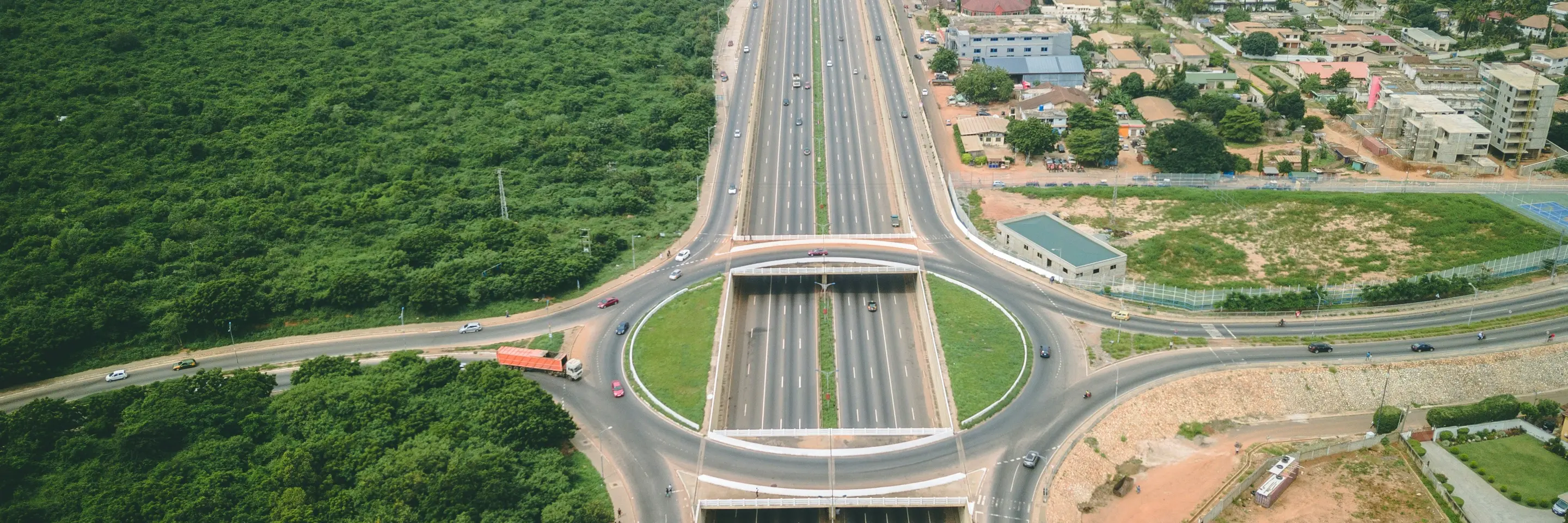
From a political and infrastructure standpoint, Ghana is entering a period of relative stability. The country’s two-party democracy has historically followed predictable electoral cycles, and the current administration is expected to remain in power for the next seven years. A $1.2 billion national infrastructure program known as the “Big Push” is already underway, focused primarily on roads and logistics corridors linking major cities. These investments are expected to strengthen domestic trade and SME activity across multiple regions.
Ultimately, Ghana presents a rare combination of large unmet SME demand, political stability, and long-term regional scale. It is understandable that that regulator is heavily involved in the lending market to protect borrowers. On the other hand, having too many regulatory constraints makes the market rigid and only allows for more of the same thing. In this case, the market has too many plain vanilla debt providers and it is very hard for innovative impact-oriented lenders like Shona to enter the market. Entry into Ghana would solidify KSI’s position as a truly Pan-African SME lender, and unlock cross-market operational efficiencies. With the right leadership, regulatory structure, and funding strategy, Ghana has the potential to become Shona Capital’s most transformative expansion to date.
Related Posts