Public Policy
How CPC Research Informs Policy that Leads to Action: Interregional Transmission
The MIT Climate Policy Center’s goal is clear: make sure world-class tools and research developed at MIT directly inform real-world climate and energy policy.
Our collaboration with Senator John Hickenlooper’s office on the Building Integrated Grids With Inter-Regional Energy Supply (BIG WIRES) Act exemplifies exactly what we’re here to do.
To meet rapidly growing energy demand, improve reliability, and accommodate more renewable energy, the United States will almost certainly have to expand its electricity grid in coming years. Multiple congressional proposals have been put forth to address this issue, but which one will be most effective, and thus, most likely receive support that leads to policy action?
Related Articles
Along with co-sponsor Rep. Scott Peters of California, Sen. Hickenlooper of Colorado proposed the BIG WIRES Act in 2023 to establish requirements to make the U.S. electric grid more reliable and resilient by updating and streamlining the country’s patchwork energy transmission system. Specifically, the bill aimed to bolster, connect, and expand the national electric grid by requiring each transmission region in the country to be able to send at least 30% of its peak load to neighboring regions by 2035.
“If we want to maintain our national security amidst growing international conflict, make our power system more reliable, and cut high energy costs for Americans, we can’t have a faulty, outdated electric grid,” said Hickenlooper in a press release. “Our bill advances two priorities simultaneously: make electricity more affordable and build a power grid fit for the 21st century.”
As discussion and debate around the bill mounted, Hickenlooper’s team sought an expert “rapid-response” quantitative research analysis of the proposed legislation. They contacted the MIT Climate Policy Center to help.
At 30% inter-regional grid connectivity, outages from extreme cold would fall by 39%.
The Study
The project was the perfect fit for our Faculty Director and his team: Post-doctoral Associate Juan Senga, Principal Research Scientist Audun Botterud, Senior Lecturer , and former Managing Director of the MIT Policy Lab, Drew Story. Researchers from MIT Sloan School of Management, the MIT Center for Energy and Environmental Policy Research and MIT Laboratory for Information and Decision Systems also played a role.
To conduct the study, the team used a power and energy systems model developed at the MIT Energy Initiative—a model called Gen X—to examine how proposed policies would affect energy investments, grid resilience to extreme weather events, climate benefits, and cost savings. Modeling showed that grid expansion and national interconnectivity would result in positive gains in all four areas—potentially lowering electricity costs, curbing the release of environmentally harmful emissions, and significantly reducing power outages due to extreme weather.
With a 30% level of interregional connectivity, the study estimated, the number of outages due to extreme cold would drop by 39%—a substantial increase in reliability. That would help avoid scenarios like the one Texas experienced in 2021, when winter storms severely damaged energy infrastructure. Hickenlooper’s office shared the CPC research findings in a 2024 press release, adding significant evidence that informed debate on the proposed legislation.
Although the bill did not pass, our research in this area is not over. We aim to use insights derived from this work to further the conversation on current and future legislation pushing for minimum interregional transfer requirements.
Shared Knowledge for Broader Impact
The CPC’s findings were not only used to inform debate on the BIG WIRES act–they were translated into a peer-reviewed paper, "Implications of policy-driven transmission expansion for costs, emissions and reliability in the USA," published in Nature Energy in December 2025. The research also informed discussion around Texas Congressman Greg Casar’s "Connect the Grid Act," which was re-introduced to Congress in February 2026.
We’re building an ecosystem where in-house researchers have the mandate, support, and incentives to collaborate directly with MIT-wide researchers to bring tools into real policy conversations.
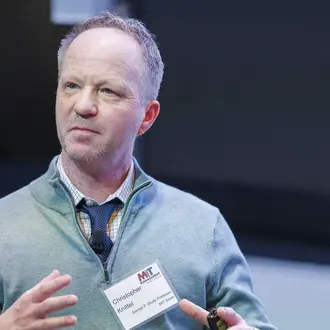
“The fact that a collaboration with a Senate office grew into a top energy-journal publication speaks to the power of the CPC’s approach,” says Knittel. “We’re building an ecosystem where in-house researchers have the mandate, support, and incentives to collaborate directly with MIT-wide researchers to bring tools like Gen X into real policy conversations.”
Key Takeaways
When we collaborate with policymakers, we can provide analysis that is both academically rigorous and directly useful for real-world decision-making.
Using legislation as the basis for academic study can be productive for both researchers and policymakers.
Scholars can apply their research tools and models to real-world scenarios, while policymakers receive a more sophisticated evaluation of how their proposals might work in practice.
How can we help you?
We're seeking collaborators in government, industry, NGOs, and academia who want to leverage MIT tools to inform real policy debates and discussion that lead to action. We’re also excited to join with funders and partners who believe in building a new model for climate-policy engagement—one that accelerates evidence-based decision-making at scale.
If you’re working on energy policy, grid planning, or transmission regulation, we look forward to hearing from you.
Want more insights on improving our electric grids?
Subscribe to our updates.
Sign up