
How the MIT Executive MBA Helps Transform Technical Expertise into Enterprise Leadership
Biomedical engineer and medtech executive Devang Shah, EMBA ’19, shares how the MIT Executive MBA helped him expand from technical and innovation roles into enterprise leadership, including:
- Building the business acumen and enterprise perspective to lead across a global medtech organization
- Applying systems thinking to align innovation, regulatory, commercial, and customer capabilities as a company scales
- Shifting from pursuing perfect answers to leading through collaboration, experimentation, and broader impact
As a biomedical engineer turned medtech executive, Devang Shah, EMBA '19, has built a career around building and scaling businesses from innovation through commercialization. Over more than two decades, his experience has spanned R&D, product and franchise leadership, business development, regulatory and quality, clinical affairs, and global business operations at companies including C.R. Bard (now part of BD) and BVI Medical. As his responsibilities expanded, he pursued the MIT Executive MBA to strengthen his business foundation and become a more effective enterprise leader.
Most recently, Shah served as Senior Vice President of Global Business Operations at BVI Medical. During his eight years with the company, BVI grew from roughly $78 million to more than $400 million in revenue, expanded from approximately 250 to nearly 1,800 employees, and grew its direct commercial footprint from three to 16 markets, with products sold in more than 90 countries. Shah's own role evolved with the business, from R&D and innovation leadership to an enterprise remit spanning regulatory affairs, quality, clinical affairs, global PMO, business process excellence, master data governance, customer operations, and technical service.
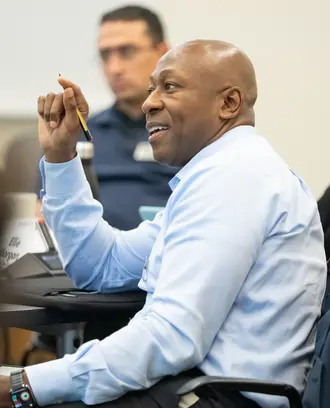
Devang Shah, EMBA '19
What compelled you to pursue an MBA, and why did you choose MIT Sloan?
I have a deeply technical background. I studied biomedical engineering, earned a PhD in molecular biology, and spent most of my early career in R&D roles at medical device companies. I always knew I wanted to work in this space; my father was an engineer and entrepreneur in the industry. It was in my blood. It is my calling.
But over time, I found myself increasingly drawn into the broader business. I was leading products and franchises, getting more involved in commercial decisions, strategy, and business development, and seeing how all of those pieces fit together. I wanted to formalize that knowledge and build a stronger foundation in areas like finance, marketing, strategy, and operations.
MIT Sloan was the obvious choice. It had the analytical orientation and engineering-rooted approach to problem-solving that resonated with me. The EMBA program wasn't about leaving medtech or reinventing myself. It was about broadening the impact I could have within the industry.
What specific gaps were you trying to fill when you entered the program?
Primarily, I wanted to build my financial acumen. I was in the boardroom with commercial leaders making decisions that directly affected the businesses and teams I led, but I didn't always fully understand the drivers behind those choices. I wanted to speak that language and understand the frameworks behind budgeting, pricing, investment, and value creation.
Marketing was another area. I worked closely with marketing colleagues, but I wanted a better understanding of the tools and frameworks they were using. More broadly, I wanted to understand the whole enterprise rather than viewing decisions through the lens of a single function.
MIT Sloan absolutely gave me new tools, but just as importantly, it helped me realize the tools I already had were more transferable than I thought. I came in thinking I was transitioning from scientist to general manager. I left realizing that maybe I had always been a general manager who happened to start in technical roles. MIT Sloan gave me the clarity and confidence to lead that way.
You mentioned a transformation in mindset. What changed for you?
Before MIT Sloan, I had a very fixed mindset: get the right grades, do the right things, don't take risks. It was the classic story of growing up in a household where academic success was the ultimate goal. Even in my early career, success often meant having the right answers and avoiding mistakes.
But in the program, surrounded by people from such diverse backgrounds, I started to think differently. I remember working with a classmate who came from a marketing background in the museum world, about as far from my world as you could get. At first, I thought, "What are we going to learn from each other?" But that collaboration forced me to rethink everything. Success wasn't about being right; it was about aligning, listening, experimenting, and learning. I became more comfortable with ambiguity. I learned that failure is part of growth. I stopped chasing perfection and started focusing on impact.
How did you apply those lessons in your role at BVI Medical?
BVI became a real-world laboratory for many of the things I learned at MIT Sloan. When I joined, it was a relatively small medtech company. Over the next eight years, it scaled dramatically in revenue, people, geographic reach, product complexity, and organizational complexity.
My role evolved along with it. I initially focused heavily on R&D and innovation, including transforming an innovation pipeline that had largely produced incremental line extensions into a broader portfolio with two major technology platforms. Over time, my responsibilities expanded across the operating infrastructure needed to support a global medtech business, including regulatory, quality, clinical affairs, program management, business processes and data, customer operations, and technical service.
The frameworks I learned at MIT Sloan helped me see those challenges as parts of one system rather than a collection of functional problems. Systems thinking became especially important: if you're scaling innovation without regulatory capacity, commercial reach without customer infrastructure, or acquisitions without the processes to integrate them, the system eventually pushes back.
At one point, someone asked me, "You have a PhD in molecular biology. How are you leading customer service?" But the reality is that the same problem-solving skills apply. You go to where the problem is, ask the right questions, understand the system, and iterate. MIT Sloan helped me recognize how transferable that approach could be and gave me a much broader business lens through which to apply it.
You've spoken passionately about sustainability. How did the EMBA program shape your views there?
Before MIT Sloan, if you had asked me what sustainability meant, I might have said, "recycling." At MIT Sloan, sustainability showed up across cases, readings, and class discussions. We debated the role of corporations in social and environmental change, and it started to click for me that sustainability isn't simply a side initiative; it can be part of how a company thinks about strategy, operations, and long-term value creation.
That perspective later influenced work I supported at BVI as the company developed its sustainability efforts, established KPIs, and looked for opportunities across the supply chain, operations, and fleet management. What I found especially powerful was how quickly teams became engaged once they saw that good ideas already existed in parts of the organization and could be scaled more broadly.
What role did the EMBA cohort play in your transformation?
My classmates pushed me out of my comfort zone more than any textbook or lecture could. It was humbling to be surrounded by neurosurgeons, entrepreneurs, marketing executives, nonprofit leaders, and people with completely different worldviews.
They taught me that there are many paths to success. That you can fail and still lead. That a perfect assignment isn't the same as a valuable one. They taught me to loosen up, trust others, and take the long view.
And on a personal level, many of those classmates became close friends. Years later, those relationships are still an important part of the experience. The network matters, but the friendships and shared experiences matter even more.
Do you feel the EMBA program delivered ROI for you?
Absolutely. The return wasn't simply a near-term change in compensation. It came through broader responsibilities, greater influence, and ultimately the ability to lead across a much wider set of functions and business challenges.
The real ROI is the transformation in how I think, lead, and solve problems. My career has evolved from developing products to building innovation platforms and ultimately helping build the operating systems required to scale an enterprise. The frameworks, confidence, and relationships I gained at MIT Sloan have been part of that evolution. I walked into MIT as a scientist looking for tools. I walked out as a leader with a much broader way of thinking.