Artificial Intelligence
AI and jobs: 4 takeaways from Google’s chief economist
What you’ll learn:
- AI will transform more jobs than it eliminates outright.
- The biggest productivity gains will come not from incorporating AI into existing workflows but from redesigning those workflows entirely.
- AI demands training employees so that they can make the most of the new opportunities AI will generate.
How many jobs will artificial intelligence eliminate? It’s a question that many people have been asking. But Google’s chief economist suggests that a more relevant question is how the technology will change the jobs that already exist.
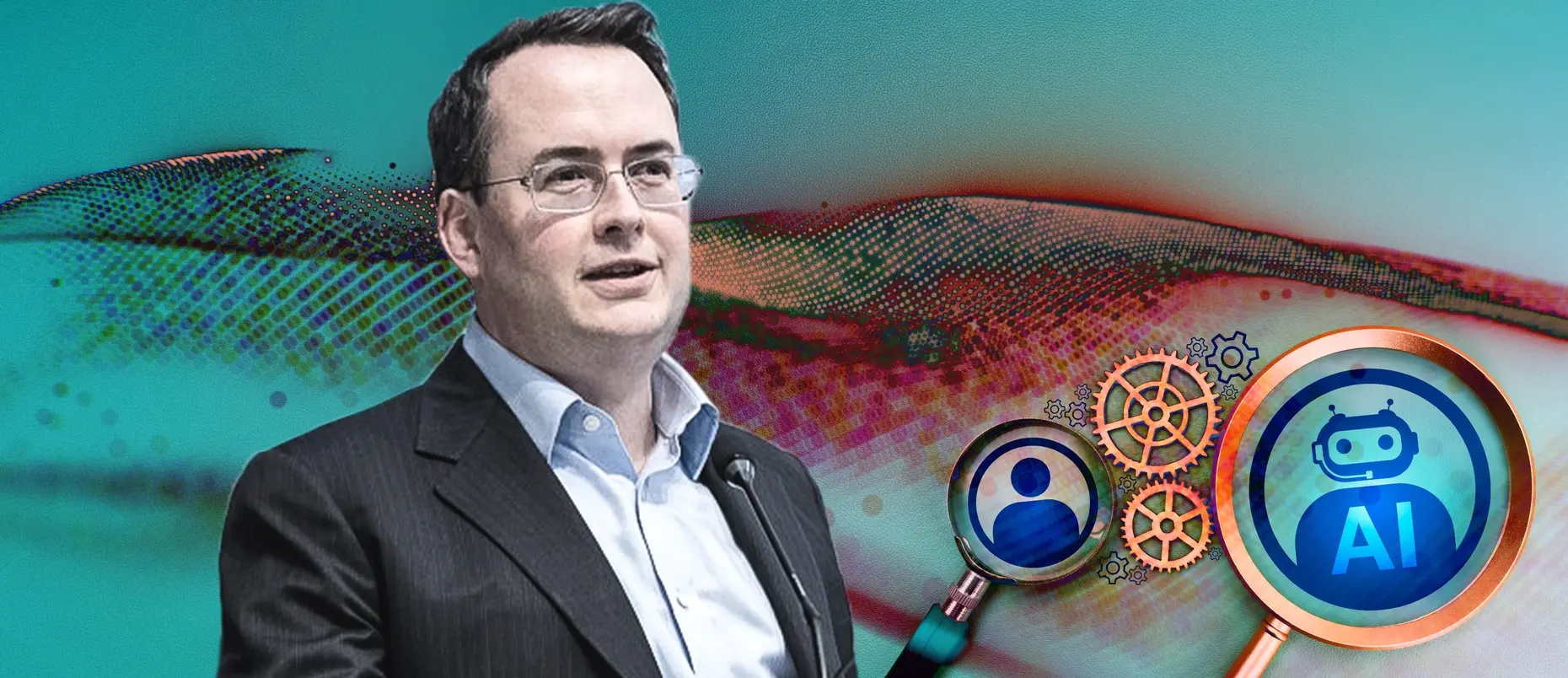
“Jobs lost, jobs gained, jobs changed: You’re going to have action in all three categories,” said Fabien Curto Millet. “You’re going to have most of the action in the third category, actually. I believe that most of the jobs in our economy are going to be transformed by AI, and probably faster than we realize.”
Millet discussed AI’s workforce and economic impacts at a recent event hosted by the Stone Center on Inequality and Shaping the Future of Work, co-founded by MIT Sloan School of Management professor Simon Johnson.
In his talk, Millet said he believes that most jobs will change because of AI — not vanish outright. Companies that are able to rethink the process of how work gets done stand the best chance of successfully navigating the transition.
Millet offered the following advice for leaders on how to prepare for AI’s impact on the workforce.
AI will reshape jobs, for the most part, not eliminate them outright
From a historical perspective, the job market has been transformed by technology time and time again, Millet said, citing a statistic from MIT professor and economist David Autor: About 60% of job roles in today’s U.S. economy didn’t exist 80 years ago.
“Technology is routinely a net creator of jobs,” Millet said.
When personal computing gained momentum across the United States, for instance, 3.5 million jobs were lost in positions such as typewriter manufacturer and clerical worker, but 19 million jobs were created in areas like computer manufacturing and analytics, Millet said, citing research conducted by Google colleague James Manyika.
Today, Millet expects AI to have a similar effect. One new position AI spawned that surfaced last year, for example — forward-deployed engineer — may be an early indicator of the other types of jobs AI will lead to.
AI Executive Academy
In person at MIT Sloan
Register Now

Companies should redesign their workflows to accommodate AI
Rather than just using AI to focus on quick wins, such as increased productivity or lower costs, companies will receive a significant payoff from AI when they are willing to completely restructure how work happens, Millet said. “That is what you need in order to actually squeeze the full productivity impact of AI.”
AI is changing the role of manager
He noted that AI, and agentic AI in particular, is already changing what it means to be a manager — a role that has historically involved having human employees as direct reports. “You now need to also manage all of these [AI] agents, even if you’re nominally an individual contributor in terms of your human reports,” Millet said.
As for those who still have humans reporting to them, “This is an era for the hero manager to step up, figure out how [to] do the farm-to-table introduction of AI into our organizations, and support our workforce in times when things are changing,” Millet said.
Companies should prioritize workforce training
In order to help people who will be displaced by AI, business leaders and policymakers need to focus on training workers for new roles and helping to alleviate “the short-run displacement problem,” Millet said. With the right training, such workers could help fill the void in undersupplied sectors, such as healthcare, he said.
“Retraining, upskilling — that’s a massive effort,” Millet said. “We need to set up our workforces for success so they can on-ramp all of these new opportunities that AI will generate.”
Millet sees plenty of room for public-private partnerships to help facilitate training, noting that equitable access to AI across sectors, age groups, genders, and geographies is key to realizing economic benefits from the technology.
“There will certainly be divides between [small-to-medium enterprise] adoption and large corporates,” he said. “Public policy should be very attentive to try to iron out all of those wrinkles.”
AI and jobs: 4 takeaways from Google’s chief economist
The James M. and Cathleen D. Stone Center on Inequality and Shaping the Future of Work is a non-partisan research organization that applies economics research to identify innovative ways to move the labor market onto a more equitable trajectory. The center is led by MIT Institute Professor Daron Acemoglu, MIT Sloan School of Management professor Simon Johnson, and MIT Department of Economics professor David Autor.