Get ready for the low-wage worker revolution
As hourly employees find their voice, and one another, smart business leaders are keeping an ear close to the ground.
A significant variation in mortgage rates makes it hard for Black homebuyers to build housing wealth. A change in risk assessment could help.
Nearly 120 million smart meters had been installed by U.S. electric utilities as of 2022, but their impact had not been quantified until now.
It is well established that average productivity increases as a function of cumulative experience. But what is not known is whether that experience affects the consistency of performance.
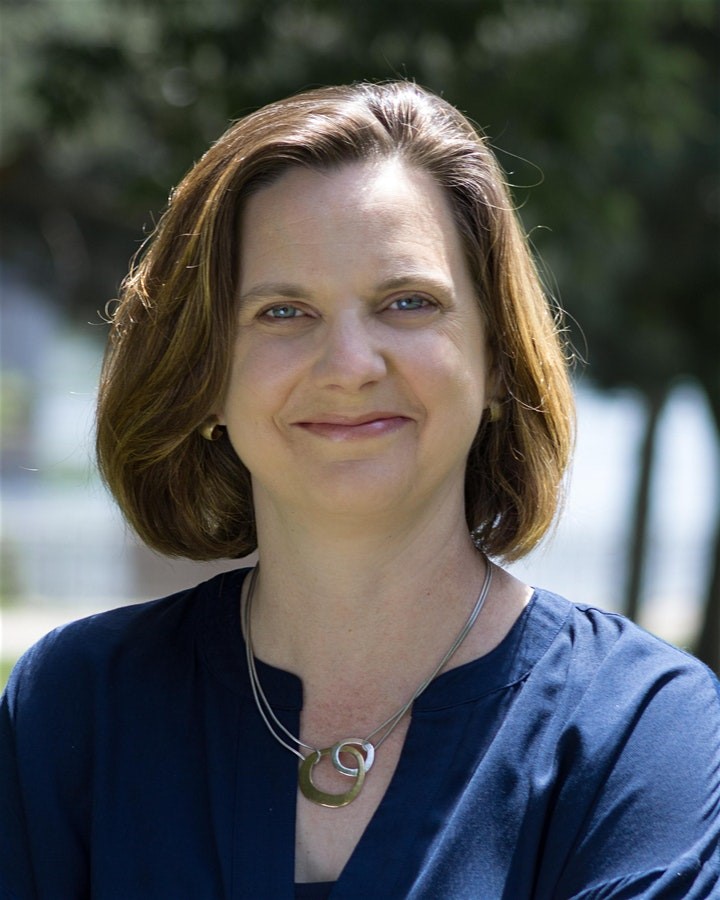
MIT Sloan Professor Erin L. Kelly, who is Co-Director of the MIT Institute for Work and Employment Research (IWER), has coauthored dozens of scholarly articles related to well-being in the workplace, with a particular focus on examining the effects of flexible scheduling initiatives on various measu...
The vast and sobering implications of climate change can be overwhelming to contemplate. What are the best solutions—and will they actually work?
Ginni Rometty, the former chairperson and CEO of IBM, participated in a fireside chat with students from MIT Sloan and across the Institute at the iLead Speaker Series in April.
In his presentation during the October MIT Sloan Alumni Online series, George Eastman Professor Arnold Barnett, PhD ’73, used his understanding of statistical sampling to discuss the United States political system and the standards and biases in polling methodology.
Kate Kellogg studies the implementation of narrow AI — AI systems designed to perform specific tasks — as well as generative AI, among frontline knowledge workers. She’s exploring the barriers to AI implementation and the mechanisms for addressing them.
Vivek Farias is using massive parallelism—many processors working simultaneously—to speed up different types of computations. He is also studying the intersection of large language models and human behavior to simulate consumer behavior and determine the impact of bias on LLMs.