- The MIT Sloan School of Management launched the “Invent the Future: Leading in an AI-Enabled World” event series.
- Dean Richard M. Locke, PhD ’89, and MIT Sloan faculty Kate Kellogg, PhD ’05, and Rama Ramakrishnan, SM ’90, PhD ’94, shared effective frameworks.
- MIT Sloan alumni were urged to apply these ideas in their organizations.
Featured Experts
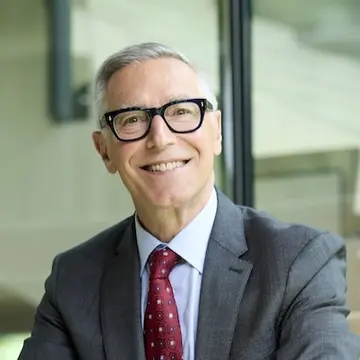

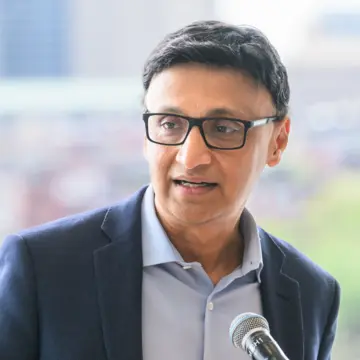
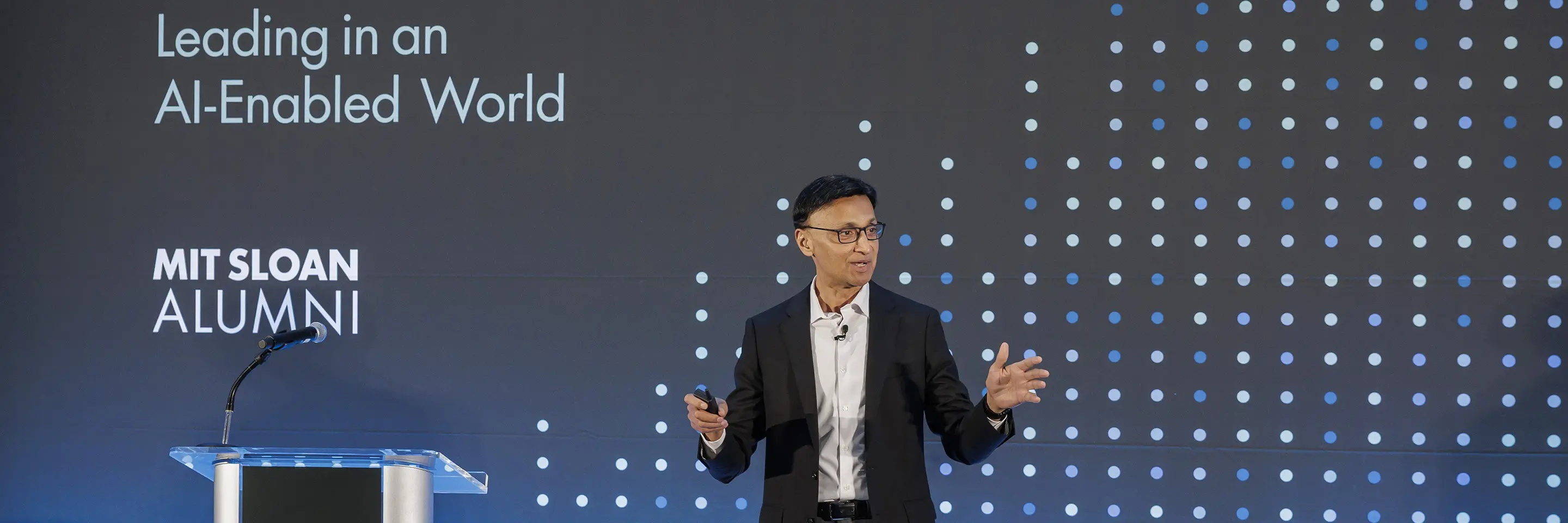
In October, the MIT Sloan School of Management debuted “Invent the Future: Leading in an AI-Enabled World,” a new event series exploring how leaders and organizations can harness artificial intelligence while keeping people at the center of the enterprise.
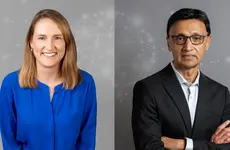
The inaugural event at the MIT Samberg Conference Center featured speakers Richard M. Locke, PhD ’89, (John C Head III Dean at the MIT Sloan School of Management); Kate Kellogg, PhD ’05, (David J. McGrath jr (1959) Professor of Management and Innovation); and Rama Ramakrishnan, SM ’90, PhD ’94, (Professor of the Practice, AI/ML).
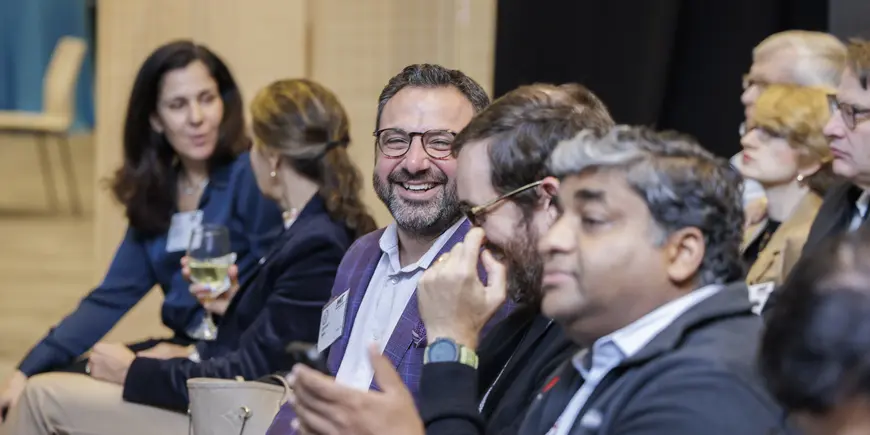
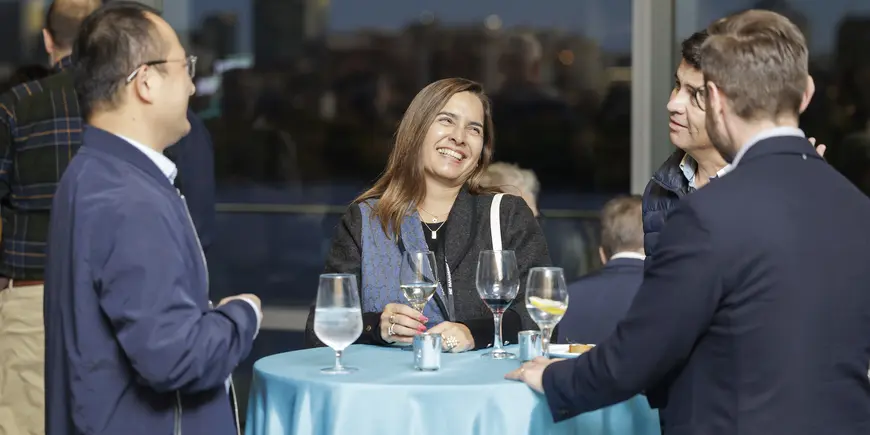
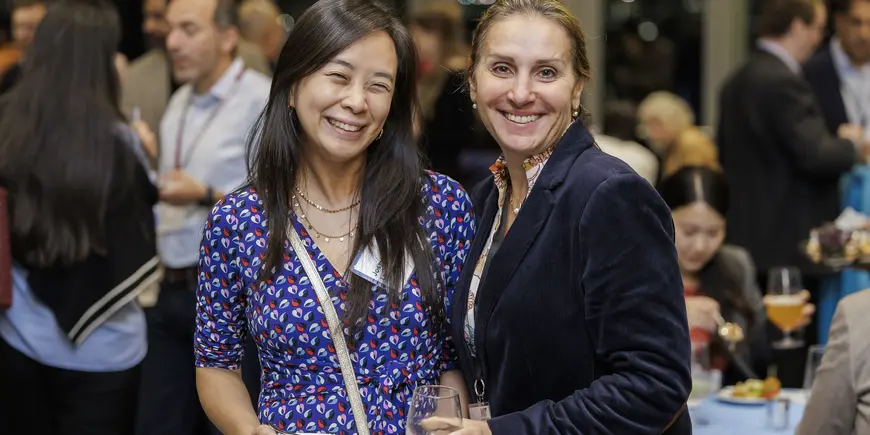
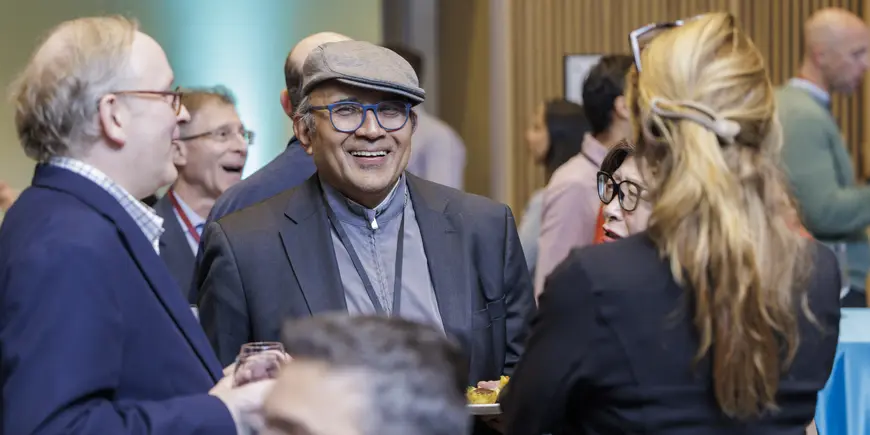
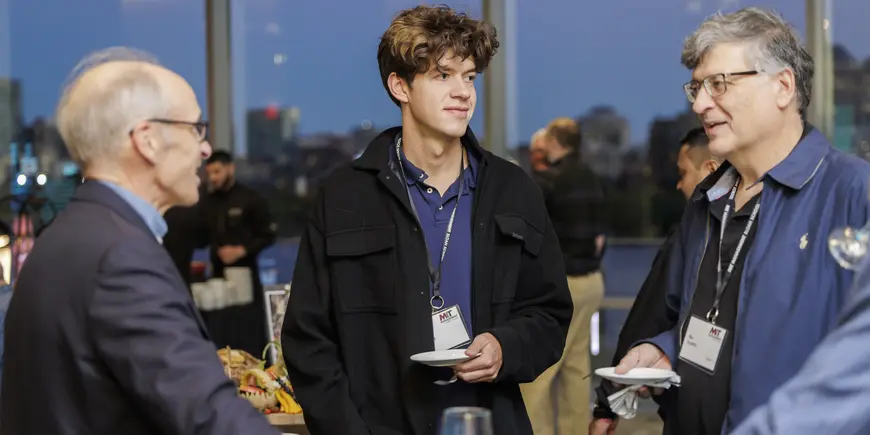
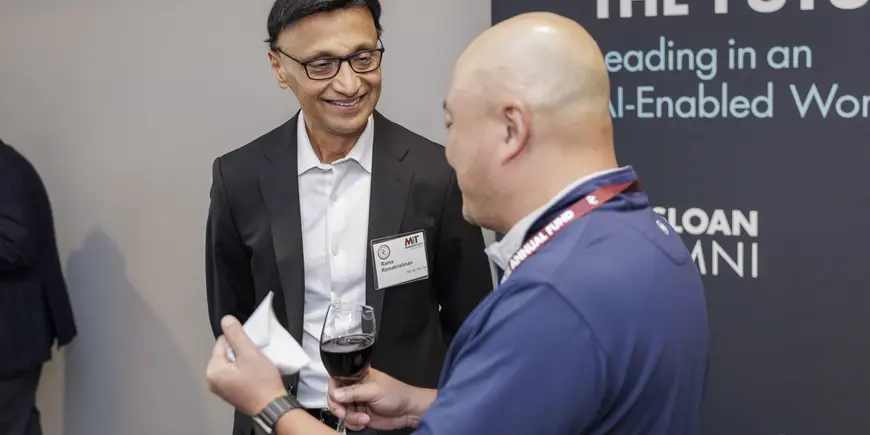
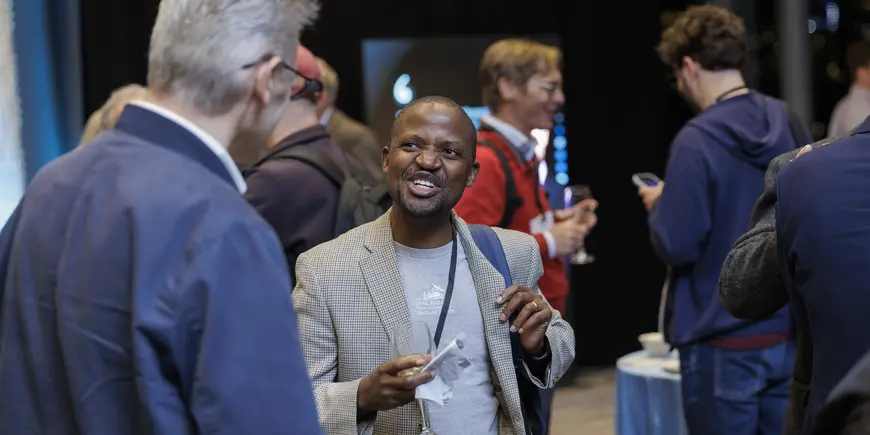
Current MIT Corporation member and past MIT Alumni Association president Stephen DeFalco, SB ’83, SM ’88, welcomed over 140 MIT Sloan alumni and friends of the school to campus.
“It is wonderful to see so many familiar faces, and it is equally great to have the opportunity to meet many of you for the first time,” said DeFalco before introducing the three speakers.
Relive the excitement from the Cambridge launch event!
-
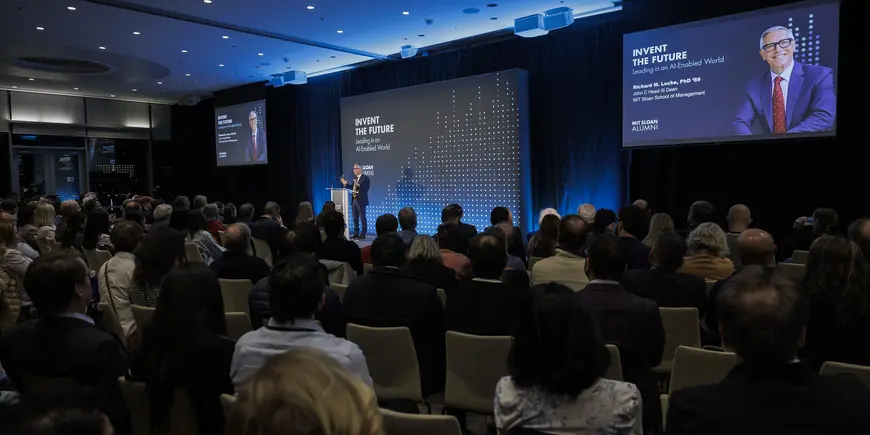
Invent the Future: Leading in an AI-Enabled World | MIT Sloan | Oct 5 Photo Credit: Tim Correira
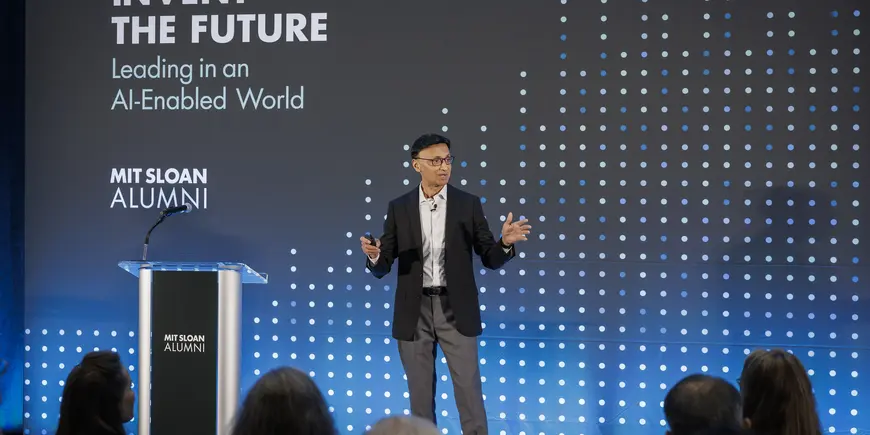

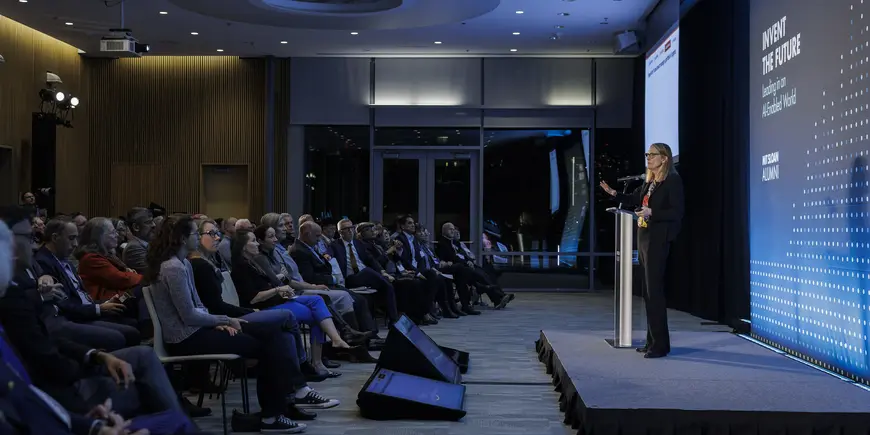

Dean Locke provided an introduction to the “Invent the Future” event series, which focuses on how leaders and organizations can lead, shape, and deploy the next wave of AI-enabled transformation in the real world.
“We stand at a pivotal moment on the cusp of a new technological era, confronted with a fundamental choice about the path we will take,” said Dean Locke. “Will we deploy AI simply to automate tasks and replace people, or will we use this innovative technology to empower workers and make the most of our distinctly human capabilities?”
He added, “We must consciously and deliberately invent a future where AI extends human capability.”
Dean Locke referenced the important work of MIT and MIT Sloan faculty members—including Kellogg, Ramakrishnan, Eric So (Sloan Distinguished Professor of Global Economics and Behavioral Science), Sendhil Mullainathan (Professor of Economics; Peter de Florez Professor), Nobel laureates Daron Acemoglu (Institute Professor) and Simon Johnson, PhD ’89, (Ronald A. Kurtz (1954) Professor of Entrepreneurship), and the late Douglas McGregor.
We stand at a pivotal moment on the cusp of a new technological era, confronted with a fundamental choice about the path we will take. Will we deploy AI simply to automate tasks and replace people, or will we use this innovative technology to empower workers and make the most of our distinctly human capabilities?
Ramakrishnan followed with his observation that leaders who are successfully deploying AI in their organizations often exhibit seven mindsets or characteristics.
“I noticed that leaders executing highly effective transformations share specific mindsets, whereas less effective leaders consistently lack them,” said Ramakrishnan. “While correlation does not imply causation, I have become increasingly convinced that cultivating these seven mindsets is critical to steering AI implementations successfully.”
- Possess an atomic-level understanding of how AI works.
- Maintain a deliberate portfolio mix of cost reduction and revenue drivers.
- Recognize the necessity of creating the right data infrastructure and workflow redesign.
- Treat evaluations as critical intellectual property.
- Leverage open-weight models alongside closed systems.
- Monitor the startup ecosystem systematically.
- Engage domain experts deliberately and thoughtfully.
Not all successful leaders working with potentially transformational AI technologies will express all these characteristics. However, Ramakrishnan emphasized the significance of executives learning about—and using—AI on a regular basis: “These leaders possess visceral, day-to-day experience using agentic tools.”
In her talk, Kellogg picked up on the final entry in Ramakrishnan’s list: engaging domain experts.
“[This] is the single most critical factor in successful transformation,” she said. “To make agentic AI function within an enterprise, you must transform the everyday workflows of your knowledge workers, including sales representatives, clinicians, research scientists, and financial analysts.”
Kellogg’s recent research on agentic AI implementations across industries demonstrates how much they differ from standard generative chatbots. Specifically, these agentic systems go beyond offering passive advice by performing substantive operational work. “Successfully deploying these capabilities across an enterprise requires navigating five distinct phases,” she said.
- Workflow selection: Leaders must direct teams toward growth and differentiated capabilities.
- Co-creation: Building AI agents requires staffing, resources, and recognition.
- Deployment: Organizations should use performance data to segment users and tailor coaching.
- Monitoring: Leaders can manage the transition by fostering a growth mindset and establishing dedicated agent owners.
- Scaling: Organizations must analyze how freed-up bandwidth can be redirected toward strategic, revenue-generating activities and establish internal communities of practice.
AI’s most complex challenges are not technical, Kellogg added. Instead, they are human—and successfully overcoming these issues requires proactive leadership in times of transition.
In his closing remarks, Dean Locke reminded everyone that research by Kellogg, Ramakrishnan, and other faculty members cannot remain on campus. “Our faculty partner with leaders in the field to observe, test, and refine operational models across real-world enterprises,” he said. “Alumni like you play a role by translating these ideas into actions at the organizations you lead. That’s important.”
The alumni community can actively “Invent the Future” at MIT Sloan and beyond by deepening their engagement with the school through student internships, Action Learning labs, capstone projects, research collaborations, and more.
“We look forward to partnering with our alumni community as we help define this path for our school, our organizations, and our global economy,” said Dean Locke.