MIT Sloan Professor Emeritus Paul Osterman’s book Disposable Workers: The Transformation of Employment, is forthcoming from Harvard University Press. Slated for publication in August 2026, Disposable Workers draws on Osterman's research into the decline of traditional employment arrangements and the accompanying rise of contract employees, freelancers, and what he calls "marginal workers"—technically W-2 employees but disconnected from opportunities for training and advancement. Combined, these three categories now make up more than a third of the U.S. workforce. The book offers a unified account of how and why employers rely on these workers, argues that employers treat 35 percent of the adult workforce as disposable, and lays out policy proposals to address the significant consequences for worker well-being.
Advance praise appears below, and the book is available for pre-order:
“Disposable Workers is a deep and important look at a disturbing trend: the unfortunate Uberization of the US economy, in which corporations increasingly regard employees not as valuable assets but as pawns to be casually tossed aside. As Paul Osterman makes clear, companies are offering less and less of what workers need: steady employment with good wages, benefits, and promotions. These corporate practices are badly squeezing millions of Americans.”
—Steven Greenhouse, author of Beaten Down, Worked Up
“Disposable Workers is a carefully researched and engaging book documenting the degradation of employment in recent decades. Combining original survey data, insightful analysis of recent literature, and a cornucopia of worker accounts, Paul Osterman provides a counterweight to oversimplified accounts of the ‘future of work,’ shedding new light on the eroding conditions facing millions of workers and the difficult but critical reforms required to address them.”
—David Weil, author of The Fissured Workplace
“Disposable Workers identifies the profoundly important new development of marginal employees who have no real prospects of stability or career advancement, and who far outnumber the much-discussed ‘gig workers.’ Even at companies we think of as the best employers, the growing ranks of employees who churn through these marginalized jobs is an important and underappreciated factor in the loss of the American Dream.”
—Peter Cappelli, author of Talent on Demand
“It is tempting to say that Paul Osterman’s greatest contribution in Disposable Workers is the important new survey information he introduces. But what is most impressive is his incisive analysis of what the data—placed alongside a large body of other research and framed in historical context—tells us about work in America today. Osterman paints a picture full of nuance and complexity without ever obscuring the main point: Far too many employers are willing to treat their workers as dispensable as a way to hold down costs and maximize profits.”
—Rick Wartzman, author of The End of Loyalty
“The decline of unions and the explosion of inequality underlie this prescient and scrupulously documented account of the current and future precarity of the American workforce, and the associated threat this poses to the very foundation of our democracy. Paul Osterman employs his well-honed observations and analytic genius to expose a bifurcated system, whereby a growing number of contract and freelance workers are left to the whims of employers unconstrained by regulations or commitment. A stunning and terrifying cautionary tale.”
—Ellen Ruppel Shell, author of The Job
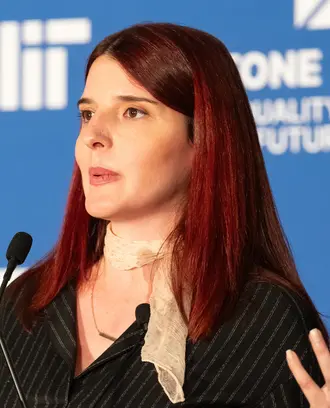
Osterman (pictured above) is a Professor Emeritus of Human Resources and Management at the MIT Sloan School of Management, as well as a former Co-Director of the MIT Institute for Work and Employment Research (IWER).