Christian Catalini

Faculty

Christian Catalini

Get in Touch

Title

About

Academic Area

Centers & Initiatives

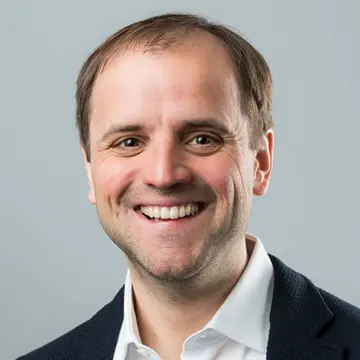
Christian Catalini is the founder of the MIT Cryptoeconomics Lab, and a Research Scientist at the MIT Sloan School.

Christian is a also co-creator of Diem (formerly Libra), and the chief economist of the Diem Association.

Christian was previously the Theodore T. Miller Career Development Professor at MIT, and Associate Professor of Technological Innovation, Entrepreneurship, and Strategic Management at the MIT Sloan School.

Christian's research focuses on blockchain technology and cryptocurrencies, and he previously worked on the economics of equity crowdfunding and startup growth, and the economics of scientific collaboration.

He holds a PhD from the University of Toronto (Rotman School of Management), and MSc (summa cum laude) in Economics and Management of New Technologies from Bocconi University, Milan.

His research has been featured in Nature, Science, the New York Times, the Wall Street Journal, the Economist, WIRED, NPR, Forbes, Bloomberg, TechCrunch, the Chicago Tribune, the Boston Globe, VICE news and the Washington Post among others.

Christian has presented his work at a variety of institutions including Harvard University, MIT, Yale University, London Business School, New York University, UC Berkeley, Stanford University, the Federal Reserve Bank, the US Treasury, the U.S. Securities and Exchange Commission, the Commodity Futures Trading Commission, the World Bank, the IMF, the White House OSTP, and a number of central banks and regulators.

 

Publications

"Financing Ventures with Fungible Tokens."

Catalini, Christian, and Joshua S. Gans, MIT Sloan Working Paper 5347-18. Cambridge, MA: MIT Sloan School of Management, June 2025.

"Syndication in Equity Crowdfunding: Performance and the Evaluation of Experts."

Catalini, Christian, and Xiang Hui, MIT Sloan Working Paper 5564-18. Cambridge, MA: MIT Sloan School of Management, January 2025.

"Proximate (Co-)Working: Knowledge Spillovers and Social Interactions."

Roche, Maria P., Alexander Oettl, and Christian Catalini. Management Science Vol. 70, No. 12 (2024): 8245-8264.

"Are Stablecoins Winner-take-all?"

Catalini, Christian and Jai Massari. TechREG Chronicle, June 2024.

"Forget Antitrust, Regulate to Let Tech Disrupt Itself."

Catalini, Christian. Forbes, April 2024.

"Is Crypto's Killer App Finally Here?"

Catalini, Christian. Forbes, February 2024.

Load More

Recent Insights

Ideas Made to Matter

Close proximity is the key to knowledge spillovers among startups

New research from MIT Sloan finds that physical distances within 20 meters lead to more knowledge spillover among startups.

Read Article
Ideas Made to Matter

Libra co-creator explains, defends Facebook’s cryptocurrency

MIT Sloan’s Christian Catalini said Facebook will keep financial and social data separate.

Read Article
Load More

Media Highlights

Press Forbes

Bitcoin vs. Ethereum and the flippening Lubin predicts

Bitcoin's design is simple. A fixed supply cap of 21 million coins, a predetermined issuance schedule, and proof-of-work securing the chain. It is digital scarcity in its purest form. Research scientist Christian Catalini frames it clearly in "Some Simple Economics of Stablecoins:" Bitcoin's supply expands "slowly and predictably in the short run" and is "capped in the long run," meaning demand shocks "directly translate into sharp fluctuations in its price."

Read Article
Press The Korea Herald

The trillion-dollar battle for money's operating system

Research scientist Christian Catalini wrote: "The strategic allure of a proprietary solution is powerful. But history is clear: the most enduring, economy-spanning value is never created within walled gardens. The market has a reliable memory. Closed systems offer a faster start, but when the need to experiment at the edge outgrows the sponsor's capacity to approve experiments, gravity shifts to open."

Read Article
Press MIT Sloan Management Review

What stablecoin regulation means for business

Research scientist Christian Catalini wrote: "A handful of institutions, such as credit card issuers and banks, run the tollbooths of everyday payments, collecting a toll on every swipe, tap, or wire. Consumers believe they are getting a free service, all while the background radiation of invisible fees shapes business models. The passage of the Guiding and Establishing National Innovation for U.S. Stablecoins (GENIUS) Act presents leaders with new options that could upend that system."

Read Article
Load More