The Female Founders of the Class of 2016
Women-owned enterprises represent a growing segment of all U.S. businesses, generating billions in revenue and employing millions across every sector of the economy. What’s more, according to the Female Founders Fund, companies created and run by women perform 63% better than those of their male peers.
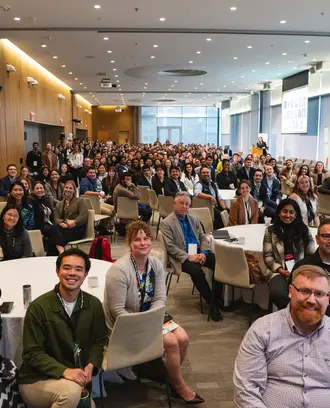
These numbers are not news to Cary Lin, Laide Olambiwonnu, and Ambika Singh. All three are female founders and graduates from the MIT Sloan MBA Class of 2016, celebrating their tenth reunion this year. At the event, alumni were given back letters they wrote to themselves on graduation day. This excerpt from Cary Lin’s prescient letter represents what many entrepreneurs were likely feeling that day.
Cary's Note to Self, 2016
“Dear Future Cary,
“Today you are graduating from Sloan. You don’t have a job—remember? You decided to take a risk and now vacillate between helplessness, anxiety, and a foolish yet unwavering belief that you are going to build your own consumer brand and create a company that is beautiful and responsible to employees.”
The Companies:
Cary Lin built and scaled Common Heir, an award-winning, first-to-market prestige skincare brand featuring 100% plastic-free packaging. She raised over $2.5M in seed funding from institutional and angel investors, and her brand has won multiple industry awards for innovation and sustainability leadership. In 2024, Common Heir was acquired.
Laide Olambiwonnu founded Pickytarian, a profitable eco tableware brand, with a design patent and a 15-SKU portfolio. Since 2021, the company has seen triple-digit growth year over year. Now family owned, Pickytarian is listed as an Amazon’s Choice, maintaining a 4.7-star average. Its products are also available at Walmart.com, Etsy, and a few retail stores in Southern California.
Ambika Singh is the founder of the clothes-sharing startup Armoire. For a flat, monthly subscription fee, Armoire members gain access to an unlimited, curated virtual closet of high-end pieces. Ambika has been featured on the Puget Sound Business Journal’s 40 Under 40 list, in The Seattle Times, and was a guest speaker at Amazon, Microsoft, American Express, Harvard Business School, MIT, and the UW Foster School of Business.
When I hang it up, I want to know we added value to people’s lives. We really believe in the reuse part of our business and we’re excited to support small, values-oriented clothing brands. Our true north isn’t just sales metrics—it’s making people’s lives better.
How they got started:
For Cary, Laide, and Ambika, the path to start-up success was neither straight, nor easy—as it is for many budding entrepreneurs. Their journeys required them to overcome self-doubt, missteps, and multiple obstacles.
According to Laide, she inherited her strong work ethic and entrepreneurial spirit from her parents, who owned and operated a large poultry farm in Nigeria. At 15, Laide came to the United States, where she went on to earn degrees in computer engineering and electrical engineering. She came to MIT Sloan determined to create her own business right after graduation, if not before.
“I was a bit naive back then,” she admits, because it took her five more years to finally achieve that goal.
After MIT, Laide held roles at several companies, including product manager at Sonos and Amazon, where she managed Ring’s powered devices portfolio and roadmap across North America and Europe. Once she finally committed to founding her company, she had to design the products, secure a patent, and launch the brand—all while working a full-time job.
“The first couple of years were tough, insane. For three years, I was the only employee. There were a lot of late nights.”
Cary Lin’s parents, both in healthcare, had wanted her to become a doctor. Instead, she earned a Harvard economics degree and worked as a consultant in New York City. After long days in the office, she would often find herself in the Times Square Sephora. “That’s where I’d go to de-stress and blow off steam,” says Cary, who realized beauty was something she was really passionate about. One day, she said to herself: What if I started a beauty brand?
That’s when she quit her consulting job, moved back in with her parents in the Bay Area, and went to work for a prominent Asian American beauty founder. On her advice, Cary earned her MBA and worked at some of the world’s top consumer and beauty companies before finally taking the leap to launch Common Heir in 2020.
I created this company because I wanted to leave the world a better place than I found it. Common Heir is a beauty brand that’s designed for sustainability from the inside out. The products are good for you. Good for your skin. And good for the world.
With a Dartmouth College degree in economics, Ambika played key roles in launching two internet startups (Rover.com and Vio, formerly TravelPost.com), as well as in two major Microsoft product launches (Internet Explorer 8 and Windows 7). That’s when she caught the entrepreneurship bug. Once, as she was considering what type of business to create, she said to herself, Sharing clothes—how hard can that be? It didn’t take her long to find out.
“It’s been a wild ride,” says Ambika, who launched Amoire in 2016, during the second-year of her MIT MBA. “There’s the theory and then there’s what really happens.”
What really happened was the COVID-19 pandemic—a major shock to her fledgling enterprise. “This is a complex business. It’s almost one-hundred percent about logistics—returns, warehousing, inventory shipping, cleaning, altering, as well as merchandising.” The pandemic brought all that to a halt. But with patience and perseverance, Amoire rebounded, and with capital from professional investors, the company is now profitable.
Leading with Purpose:
Studies show that women in business disproportionately lead with a sense of purpose, building companies that solve problems, create value and meaning, and operate with integrity. Sustainability and corporate responsibility were key drivers for Cary, Laide, and Ambika, thanks to what they learned at MIT Sloan.
“I created this company because I wanted to leave the world a better place than I found it,” says Cary. “Common Heir is a beauty brand that’s designed for sustainability from the inside out. The products are good for you. Good for your skin. And good for the world.” Since her brand was acquired, Cary has taken GTM and marketing roles at two other start-ups—Beeble and Aven.
At MIT, Laide and her roommate often hosted parties for their friends. She remembered feeling guilty about all the plastic tableware and paper plates they threw away afterwards. Pickytarian’s products are compostable, plastic-free, and PFAS-free, and the company gives 5% of its sales annually to charitable organizations alleviating food and shelter insecurity in our communities. Since Pickytarian, Laide has also been involved in other startups—Parallel Systems and Slabstack, which was acquired by Sysdyne Technologies in 2025.
The MIT MBA was one of the best things I did in my life. It gave me the sense of what is possible, planted the seed, and I’m very grateful for that. To this day, I still refer to my books and notes from my pricing class—thankfully I saved them.
“When I hang it up, I want to know we added value to people’s lives,” says Ambika. “We really believe in the reuse part of our business and we’re excited to support small, values-oriented clothing brands. Our true north isn’t just sales metrics—it’s making people’s lives better.” In 2025, GeekWire named Amoire a Best Place to Work.
The Secret Sauce—Entrepreneurship at MIT
Founding a business, as a male or female, is not an individual sport. Without a doubt, Cary, Laide, and Ambika say they would not have launched such successful companies without the help and encouragement of their MIT Sloan professors and the Martin Trust Center for MIT Entrepreneurship.
“Bill and the trust center are phenomenal,” says Cary, who was Bill Aulet’s teaching assistant. “As I started my business, all the systems dynamics, operations, and life cycle analysis courses came roaring back. Four years later, I still refer to the lessons of how not to get taken advantage of by a VC. And I owe everything to the New Enterprises course.”
“The MIT MBA was one of the best things I did in my life,” says Laide. “It gave me the sense of what is possible, planted the seed, and I’m very grateful for that. To this day, I still refer to my books and notes from my pricing class—thankfully I saved them.”
“I tried out lots of other ideas in Bill’s lab,” says Ambika, who started her business while still a student, “but the shared-closet idea kept coming back because it helped customers, the planet, and the industry.”