How Ferrari balances identity and growth with the electric Luce
What you need to know: The Luce is Ferrari’s first fully electric vehicle. The company sees its release as a technological addition, not necessarily a market shift.
Ferrari is one of the world’s most recognizable luxury brands. Much of the company’s success stems from a strategy its CEO, Benedetto Vigna, has described as keeping one eye on the past and one eye on the future.
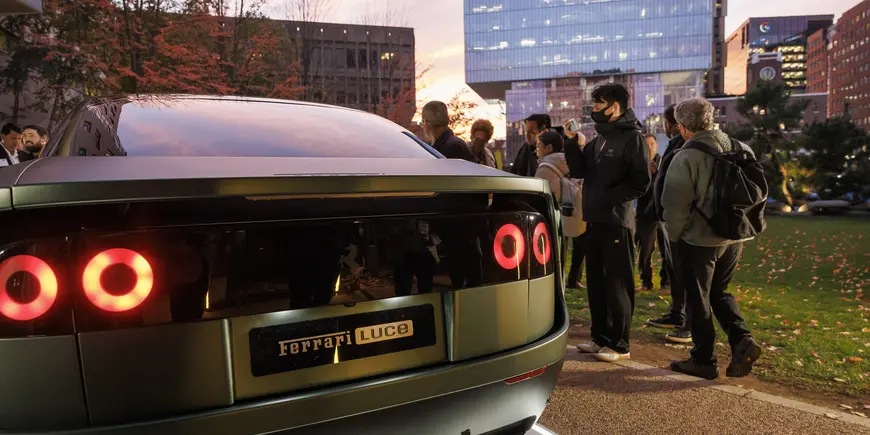
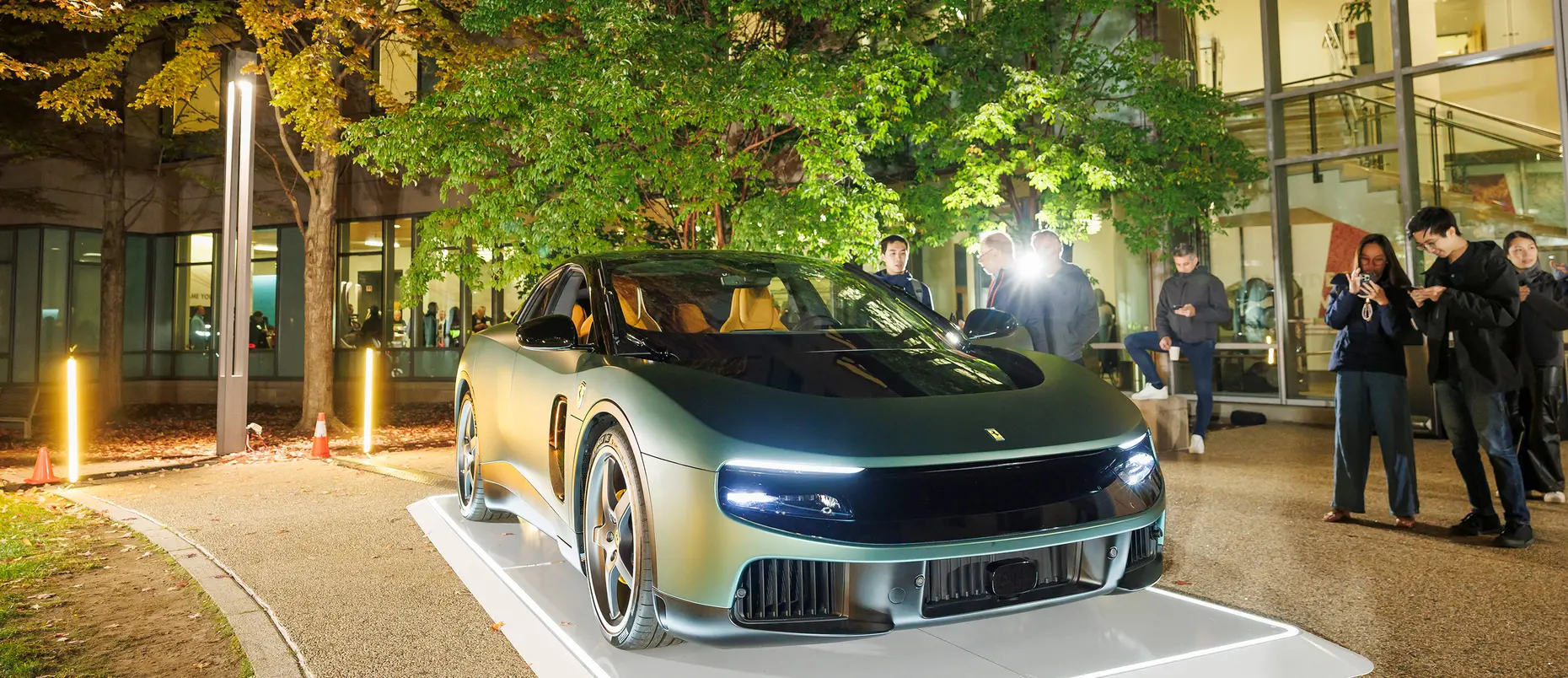
Earlier this year, Ferrari introduced the Luce, its first fully electric vehicle as well as its first four-door, five-seat, four-wheel-drive model. The move comes as many governments and automakers are shifting away from internal combustion engines, with policies in some countries designed to end sales of new gasoline-powered vehicles, with Norway nearly there. After nearly 80 years of internal combustion, the Luce, priced starting at $560,000 in the U.S., represents a moment of growth for the company.
Ferrari expects EVs to make up 20% of its lineup by 2030, with the remaining 80% split between hybrids and internal combustion engines. The company sees it as a technological addition, not necessarily a market shift. Speaking at the MIT Sloan School of Management on Oct. 21, Americas at Ferrari president Luca Zanetti said that Ferrari will remain true to itself with its new models. “When we presented the Luce, we didn’t say we [needed] an electric car,” he said at MIT. “We needed another Ferrari that happens to be electric.”
Zanetti was at MIT for a series of events, including giving a speech to and having lunch with students, and attending strategy classes as a guest. Those classes, taught by MIT Sloan professor of the practice Donald Sull, focused on the case study “Ferrari in 2025: Balancing Tradition and Innovation to Grow.” (The case, written by Sull, won the Free Case category at The Case Centre Awards and Competitions 2026.) The events were cohosted by MIT Sloan and the MIT Department of Mechanical Engineering.
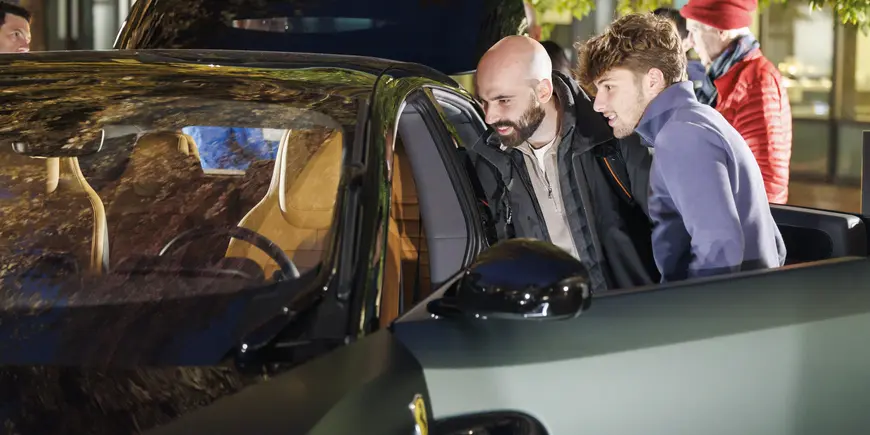
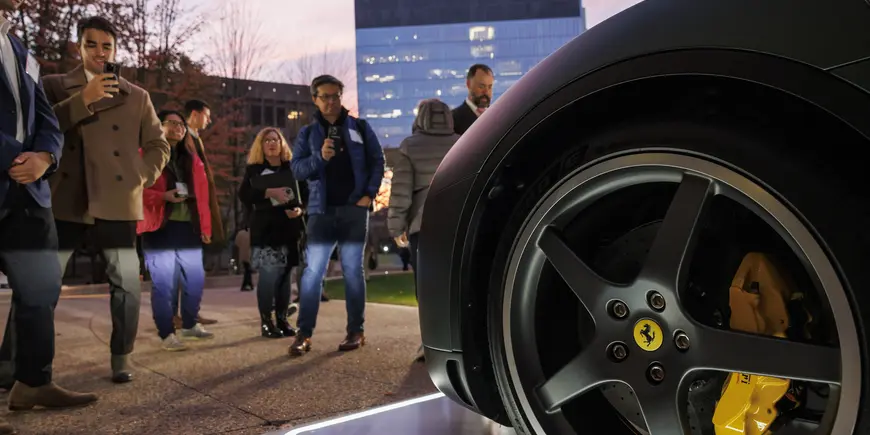
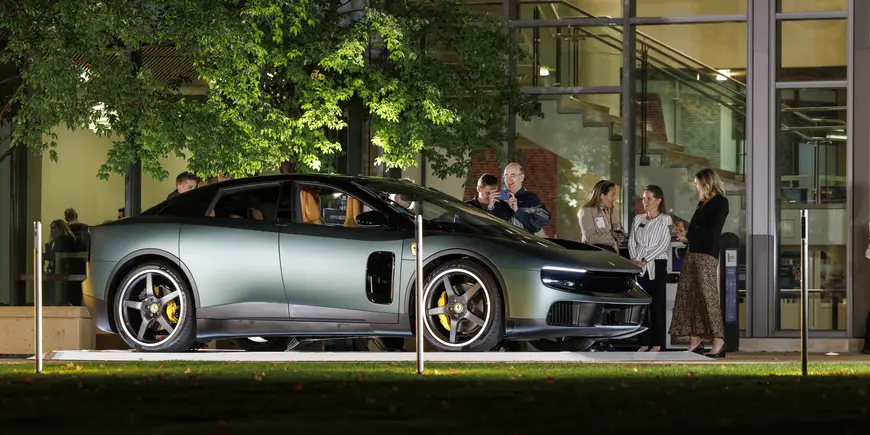
A Luce, one of only two currently in the Americas, was on display at the MIT campus throughout the day — at the MIT Department of Aeronautics and Astronautics in the morning and at MIT Sloan in the afternoon and evening.
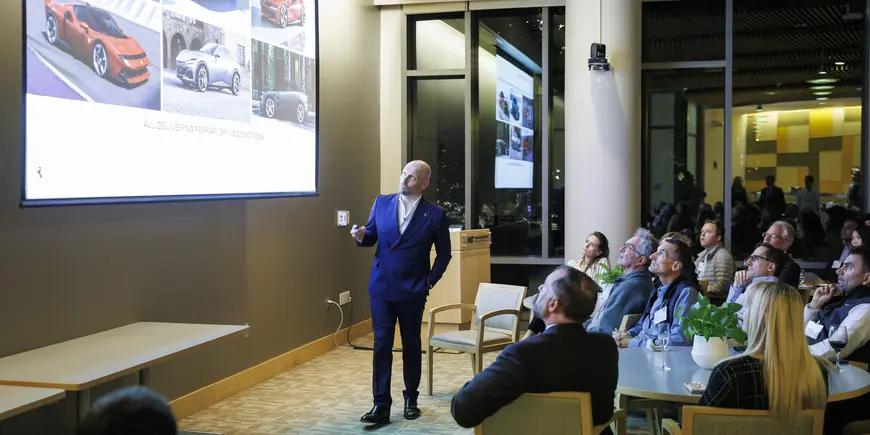
Zanetti also spoke at an alumni event at MIT Sloan to discuss the development and design of the Luce, as well as its alignment with the company’s history and anticipated future growth. The event was cosponsored by the MIT Sloan Boston Alumni Association and the MIT Club of Boston.
“The Luce is very much in line with our DNA,” Zanetti said. While Jony Ive’s LoveFrom design firm handled the look and feel, Ferrari engineers produced all of the vehicle’s core components. Two examples are the torque shift engagement and regenerative braking systems, which help the EV retain the performance of the supercars Ferrari is known for and led Top Gear to describe the Luce as “an incredible piece of engineering.”
The Luce as an innovation in line with Ferrari’s identity
In the decade since Ferrari went public under the ticker symbol RACE, the company has seen vehicle shipments grow about 6% annually, revenue increase by 10% annually, and EBITDA grow about 14% annually.
Ferraris nonetheless remain rare, with fewer than 14,000 cars sold each year and roughly 84% of new cars sold to existing Ferrari owners in 2025. The main reason for that scarcity is that demand significantly exceeds availability: Ferrari pursues a “controlled growth” strategy that preserves exclusivity by introducing new models rather than increasing production of existing models, according to the case study.
“We wanted to think about what happens when the Luce, in 20 to 30 years, will no longer be an innovative car but a classic that needs to belong to a collection,” Zanetti said. “Every collector will still enjoy it, as happens with any other Ferrari.”
Some response to the Luce upon its unveiling focused on the departure from Ferrari’s traditional design. “It’s clear that there’s a lot of affection [for] the brand, so I think that there was a gut reaction that was very intense,” Zanetti said. “I don’t know if I had expected it with that intensity, but I think that it made the car very much noticed.”
He said that the “treatment of lines” on the Luce resulted in the lowest drag coefficient of any Ferrari model. “Simplicity doesn’t necessarily correlate with a lack of performance,” Zanetti said. “Once you drive the car, you’ll understand why it makes sense.”
The Ferrari Luce at MIT Sloan
-
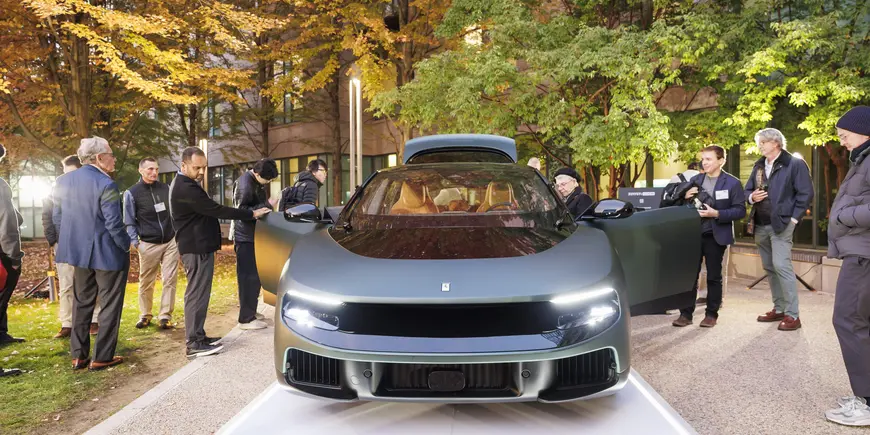
The Luce - Ferrari's first fully electric vehicle Photography by Tim Correira