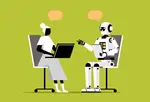
Machine learning developers should talk to end users
Machine learning tools only work if people use and trust them. To achieve this, developers and end users should have a back-and-forth conversation.
New research explores how individuals’ levels of engagement variability — how consistently or inconsistently they engage in their jobs — impacts performance.
In a new book about how technology will affect workers, MIT experts explain how AI is far from replacing humans — but still changing occupations.
New NBER research shows that savvy management can help companies better predict the future — and better position themselves for profitability.
Professors David Rand and Basima Tewfik research workplace topics such as imposter syndrome, and societal issues such as fighting online information.
Here are four ways that leaders can effectively respond to challenges and thrive amid the unknown, from MIT Sloan experts.
New books this year cover ecosystems, entrepreneurship, dynamic work design, and the paradox of meritocracy.
Artificial intelligence can make workers more capable and productive, but only if leaders design and deploy it to augment human judgment.
A new study found that developers using AI tools can write much more code than those working without AI, but they don’t release as much new software.
Professional service advisers are seen as more capable than AI — but that advantage fades when clients feel ashamed. An MIT Sloan study shows when people prefer AI’s nonjudgmental assistance.