Three Steps Managers Can Take to Empower Workers
A recent MIT Sloan doctoral dissertation sheds light on three steps managers can take to empower workers who have ideas about improving the workplace.
The August 2024 issue of the newsletter of the MIT Institute for Work and Employment Research is now available online.
Three scholars from the MIT Institute for Work and Employment Research (IWER) have been interviewed on “The Work Goes On,” a podcast series hosted by Orley Ashenfelter, the Joseph Douglas Green 1895 Professor of Economics, Emeritus at Princeton University.
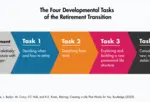
MIT Sloan Professor Emerita Lotte Bailyn has published a new book, Retiring: Creating a Life That Works for You, that she coauthored with four other scholars: Teresa M. Amabile, Marcy Crary, Douglas T. Hall, and Kathy E. Kram.
Do policies that it easier for employees to juggle work and family needs increase the ability of women to advance in organizations? New research from Eunmi Mun, Shawna Vican, and MIT Sloan Professor Erin L. Kelly suggests that was indeed the case with the Family and Medical Leave Act (FMLA) in the U...
New research by MIT Sloan Professor Nathan Wilmers and two coauthors finds that having certain kinds of tasks in a job description allows new employees, including frontline workers, to earn more.
In a new paper in the Proceedings of the National Academy of Sciences, Clem Aeppli and MIT Sloan Associate Professor Nathan Wilmers find that a plateau in U.S. earnings inequality that started around 2012 was primarily due to rapid wage gains by workers at the low end of the labor market,
MIT Sloan Adjunct Professor Mary P. Rowe, a pioneer in the organizational ombuds profession, has made many of the articles she has written over her career freely available on her personal webpages at MIT Sloan.
In an effort to attract a diverse pool of talented candidates, many contemporary U.S. employers seek to craft gender-neutral job postings by editing language in the postings that may have masculine or feminine connotations. But how much difference do such practices make in reality? Not that much, su...
New research finds that when U.S. companies switched away from standardized pay rates for blue-collar jobs in the late 1970s and 1980s, workers’ real wages declined.