AI Expert Spotlight: Tom Malone
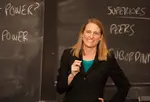
“We’re looking for innovative ways to combine people and computers by taking advantage of what each does best,” says Tom Malone.
Georgia Perakis focuses her work on pricing and supply chains, using AI to help retailers better predict demand and determine optimal promotional strategies based on different variables.
MIT Sloan School of Management experts weighed in on the state of business and the growing importance of artificial intelligence at MIT Sloan Reunion 2026.
At MIT Sloan Reunion 2026, Professor Alessandro Acquisti and Senior Lecturer Miro Kazakoff, MBA ’11, spoke about their ongoing research into data, privacy, and communication.
Artificial intelligence was top of mind at the 2025 MIT Sloan Reunion. In two talks, MIT alumni went to the furthest reaches of possibility with AI, both in terms of its capacity to do harm and its potential to solve existence's toughest problems.
Steve Rusckowski, SM ’84, former chairperson, CEO, and president of Quest Diagnostics, believes small changes can have a major impact on company culture.
Atlanta, Georgia-based EnviroSpark Energy Solutions designs, installs, and operates EV charging solutions, typically at multi-family housing and corporate office centers. As the growing startup continued expanding its national footprint, they enlisted MIT Sloan Enterprise Management Lab (EM-Lab) stu...
Katherine C. Kellogg studies the implementation of narrow AI — AI systems designed to perform specific tasks — as well as generative AI, among frontline knowledge workers. She’s exploring the barriers to AI implementation and the mechanisms for addressing them.
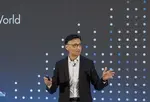
The MIT Sloan School of Management recently debuted the new event series “Invent the Future: Leading in an AI-Enabled World” to explore how leaders and organizations can harness artificial intelligence while keeping people at the center of the enterprise.
BPHC engaged with a team of students taking MIT IDE’s Analytics Lab (A-Lab) to explore how a wide range of non-traditional data such as weather metrics, unemployment statistics, and rental patterns can create a predictive model to forecast demand for public health services.