
Conference at MIT Sloan Honors Professor Susan Silbey
Distinguished scholars from across the U.S., Canada, and Europe came together at the MIT Sloan School of Management in early June for a two-day conference in honor of Professor Susan S. Silbey.
What happens to company profits, wages, and consumer prices when union membership becomes more affordable for employees? That’s a question posed in an interesting working paper by Samuel Dodini, MIT Sloan Professor Anna Stansbury, and Alexander Willén.
A recent MIT Sloan doctoral dissertation sheds light on three steps managers can take to empower workers who have ideas about improving the workplace.
The August 2024 issue of the newsletter of the MIT Institute for Work and Employment Research is now available online.
Three scholars from the MIT Institute for Work and Employment Research (IWER) have been interviewed on “The Work Goes On,” a podcast series hosted by Orley Ashenfelter, the Joseph Douglas Green 1895 Professor of Economics, Emeritus at Princeton University.
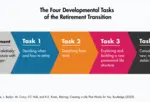
MIT Sloan Professor Emerita Lotte Bailyn has published a new book, Retiring: Creating a Life That Works for You, that she coauthored with four other scholars: Teresa M. Amabile, Marcy Crary, Douglas T. Hall, and Kathy E. Kram.
Do policies that it easier for employees to juggle work and family needs increase the ability of women to advance in organizations? New research from Eunmi Mun, Shawna Vican, and MIT Sloan Professor Erin L. Kelly suggests that was indeed the case with the Family and Medical Leave Act (FMLA) in the U...
New research by MIT Sloan Professor Nathan Wilmers and two coauthors finds that having certain kinds of tasks in a job description allows new employees, including frontline workers, to earn more.
In an economy with many low-wage jobs, employer-provided training can be an important route to upward economic mobility for workers. But which workers receive training? How do workers obtain new skills?
If U.S. workers could select the characteristics of a labor organization to represent them, what would they choose? That’s the question explored in an intriguing new journal article by Alexander Hertel-Fernandez of Columbia University’s School of International and Public Affairs, William Kimball of ...