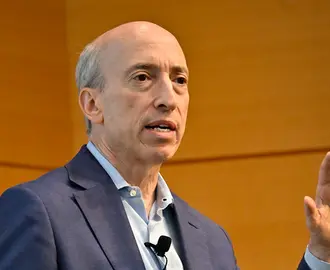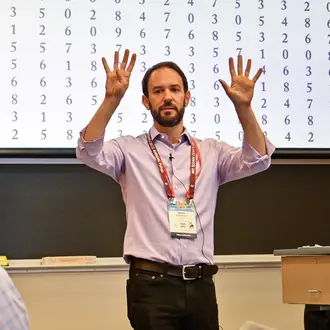

In this episode of Sloanies Talking with Sloanies, host Christopher Reichert, MOT ’04, speaks with Adela Jamal, SFMBA ’22, and Sebastian Barriga, SFMBA ’22, co-founders of milemark•capital, about their journey from diverse global careers to launching an applied AI-focused venture fund. They reflect on how their time at MIT Sloan—particularly during the transitional post-pandemic period—brought them together through shared values, complementary backgrounds, and a mutual commitment to meaningful innovation. Their story highlights the importance of authenticity, long-term relationship-building, and the often-overlooked reality that reputations are built long before founders formally step into the spotlight.
The conversation also explores milemark’s investment philosophy, centered on “applied AI”—specialized, domain-driven applications of artificial intelligence that deliver tangible business value. Rather than chasing broad, capital-intensive models, the firm focuses on founders with deep expertise and strong networks, emphasizing people as the key driver of success. Looking ahead, Jamal and Barriga express optimism about AI’s global impact, predicting increased accessibility, productivity, and innovation across industries. Ultimately, they underscore that while technology evolves rapidly, trust, human judgment, and purpose-driven leadership remain at the core of building enduring ventures.
Sloanies Talking with Sloanies is a conversational podcast with alumni and faculty about the MIT Sloan experience and how it influences what they’re doing today. Subscribe and listen on Apple Podcasts, Spotify, or wherever you get your podcasts.
Episode Transcript
Adela Jamal: Whether you’re launching your own startup, you kind of forget that you’ve actually been interviewed before you knew you were being interviewed. From day one, people have been watching you and assessing you and ranking you. And so, when we reached out to our network, because we had already built decades of trust and relationships, those are the first individuals to come in and support us.
Christopher Reichert: Welcome to Sloanies Talking with Sloanies, a candid conversation with alumni and faculty about the MIT Sloan experience and how it influences what they’re doing today. So, what does it mean to be a Sloanie? Over the course of this podcast, you’ll hear from guests who are making a difference in their community, including our own very important one here at Sloan.
Hi, I’m your host, Christopher Reichert, and welcome to Sloanies Talking with Sloanies. My guests today are Adela Jamal and Sebastian Barriga-Bermeo, founders and managing partners of milemark•capital, together with partners Sinan Aral, PhD ’07, a tenured MIT professor and AI expert, and Michael Lipton, SFMBA ’22, a serial entrepreneur. They are 2022 graduates of the MIT Sloan Fellows MBA (SFMBA) program.
Adela began her career in Silicon Valley as a startup operator and venture consultant before leading emerging technology strategy at Sony Pictures. She later joined the MIT Sloan Fellows MBA program where she co-founded milemark•capital. And there’s lots in between.
Sebastian started his career at Salomon Smith Barney and spent nearly two decades in private equity across Latin America, including leadership roles at Citigroup and the Carlyle Group. He also came to MIT as a Sloan Fellow to study AI and emerging technologies. And that’s where milemark began. So welcome, Adela and Sebastian.
Adela Jamal: Thank you. Thanks for having us. And you did a great job sort of looking up our backgrounds and happy to share more about that shortly.
Christopher Reichert: Excellent. Well, is there anything you want to add to the background that we should cover?
Adela Jamal: Yeah, I was actually thinking, of course, I’ve heard the podcast, Christopher, and I love the guests and sort of the breadth and the depth there. Something I’d like to add is that for me, being international and having been born and raised in India and actually grown up between the US and India has absolutely impacted personal and professional life. And I’m sure we’ll get to it in a few, but it’s also a big part of why I chose to go to Sloan. It was really just thinking about what’s happening in the shift over the last couple of decades. And 20, 30 years ago, nobody even knew where Bangalore India was, but look at it now. And look at what’s been sort of happening just technology-wise, innovation-wise. And I would like to bring that up because I think sometimes we forget that there’s such a large impact on how that shapes what we do, how we think about the future, how we think about what we each want to do in our chapters. And I think that there’s just so much more there for each of us that sometimes I think is skipped. And I always say, you know, when I meet people, I’m thinking, what is their non-LinkedIn version? Like, I want to hear that story.
Christopher Reichert: So your father is Indian and your mother’s white American. How did they meet?
Adela Jamal: Interesting story there. They met in South India back in the late 70s when my mother was there for her master’s. And she’s big into South Asian music and arts and lived there for 20 years. And so, think about traveling to, at that time, they say a third world country with a passport and booking trunk calls and waiting for a month to speak to anybody back home. Very, very different times. but love the country and the culture. And, you know, now it’s a nice small country of 1.5 billion people. Very different from what it was four decades ago. Yeah, it’s hard to fathom.
Christopher Reichert: And Sebastian, you grew up in Ecuador. Tell us about that transition from growing up in South America and coming overseas.
Sebastian Barriga: Yeah, well, first, Christopher, thanks for having us here. It’s great to be talking about what we do and with you. Yeah, different worlds. I mean, we often go back and we talk with friends about what it was growing up in Ecuador in the 80s. I know the world has changed so much and then we couldn’t believe, we cannot believe the things that we did as kids. Right. And it’s like, oh, my God, I don’t want my kids to do all the things we did when I was growing up.
But I would say that, you know, with time, we got to appreciate the different type of cultures and take the best of both and use that to be a global citizen. And that’s what, you know, in my family with three daughters, what we’ve been able to give them is that, you know, global citizen understanding where they know their different cultures. Some jokes work in one culture. They really don’t work in another. You know, it goes both ways. But I would say that traveling and meeting people from different places makes you a better person, for sure.
Christopher Reichert: I don’t know if you started this before Sloan or since Sloan. I mean, you’re continuing to be a visiting fellow at Sloan. You’re a mentor in, well, Techstars Boston, the Engine Blueprint, Delta V. So, is that something that you have done since graduating from Sloan as a way of kind of staying connected to the community, as a way of keeping your finger on the pulse? Tell us about that.
Sebastian Barriga: Yeah, through time. And I would say as a banker, you’re not a great leader. because everyone is there for the bonus. That’s what it is, right? So, I was 10 years as a banker and not really focusing on how to mobilize and incentivize people. But as you get more senior, you understand that people want to have meaning and people like to derive meaning from their work.
So, I slowly understood that the way to lead It is less control and more helping people to see what their potential is and amplifying that. And of course, coming here to Sloan, you get so many tools and so much insight on how to do that even better. That, you know, I just decided to lean into it. And, you know, I volunteer every time I can. And you become better in the sense that you identify that. You guide people. And one of the things I tell the founders and the mentees is like, look, I’m here to give you another data point. I’m here to give you an input on a situation that you’re telling me. But if you come back to me and say, I did the opposite of what you told me to do, it’s actually even better for me because I was able to help that person think through a problem and make their own decision. That’s the best type of mentee that one can have. That’s the best type of mentor that you can have.
So, it’s really intoxicating in the sense that, you know, you get to see so many people that are super inspiring and with a lot of grit and with great aspirations of righting a wrong or making an industry better. They’re dedicating their life to it. So that’s I respect that a lot.
Christopher Reichert: So what drew you to each other to start MileMark? And tell us about the name.
Adela Jamal: Let’s step back a little bit. Right. When you are coming into Sloan, regardless of what program you’re doing, if you’re an EMBA, you’re probably working, you’re coming in a couple of times a month, you’re meeting your cohort. If you’re a, let’s say two year, maybe on the younger end, MBA, you’re coming in for, you’re standing 24 months, still being thrown in. So the deep end with a ton of people and similarly also the Sloan fellows, right? You’re coming in from all over the world. And keep in mind, we were the class that was coming in just as COVID was ending. So think about what that looked like. Not many people were saying, oh, I’m going to actually go back to school at this point. We’re trying to come out of this pandemic.
And so setting the stage there, coming into the program, Seb was coming from, you know, you’ve read about his background and he’s doing a number of different things with private equity and such. I was coming from Los Angeles and I was leaving a role there with Sony Pictures. In the sea of students and this massive campus, there were classes that were assigned, let’s call it. And then there were classes that you elected, right? Very, very typical style. And what we noticed was not just with Seb, but also with Mike, who’s also a Sloan Fellow’s MBA 22, we end up having a lot of overlap and overlap in the sense of classes, maybe some social gatherings and electives.
And that’s hard. Because again, like you’re dealing with hundreds of students, this vibrant ecosystem where you have 1000s of options and things that you can lean into every day. It’s very exciting environment. But to actually say, okay, there’s a couple of individuals that you’re really drawn to, either from a personal and professional standpoint, or cultural, or all those elements, that’s really unique. And I think that’s not just for when you’re at Sloan, but like in life, right, we go through these waves, it’s like education, you’re in college, you’re at work, there is a reason that you pull together. And I think, at least from my perspective, I got to meet Seb in a couple of those different circles. I got to meet Mike in a couple of those different circles as well. And it was this lovely blend of, hey, we culturally actually have a very different backgrounds, but very aligned in priorities and how we sort of put ourselves forward being more, I would say, like transparent and genuine. And think of business school, by the way.
I’m sure listeners will understand, you know, you can show up and be very sort of like just posturing or you can really be transparent and like bring down the ego and say, I’m here to learn and I’m here to really meet people. And it’s not to say that, you know, all my classmates didn’t have elements of it, but there was a very nice balance.
And I was really drawn to Seb and Mike as classmates, but then also as individuals thinking, oh, wow, I’ve had electives with them. I’ve also had like a regular classes and we’re so different, but we’re really aligned on what we think about ourselves, the careers that we’ve had. Also, we’ll talk about milemark more, but like really where innovation, you know, funding, founders, all that is heading and really having the very similar worldviews. And that’s hard. I mean, it’s really hard to do all that, mind you, also in a 12-month span, right? Because Sloan Fellows Program is very, very tight. You’re doing a lot. You’re living three lives each day. But that was what stood out to me was, oh, wow, we’ve actually got something here much deeper than an assignment or just a class. This is someone that you know you’re going to be very close with for a very, very long time.
Sebastian Barriga: Yeah, 100% on that. I think we were drawn to each other not only because of what we did, but how we did it. And what do we want to do with our next stage in life? What’s the mark that we want to leave in the world? and how we want to empower others to do the same.
So, I remember Adela telling me, hey, come over here to SWIM (Sloan Women in Management) and you’re going to be a mentor. I was like, I didn’t think myself a mentor back then, but I believe in the mission and what she was doing at swim. I’m like, yeah, I’ll do that and I’ll help you. So those little, and then Mike also, he was still mentoring at Sandbox and a very different style, but very insightful in the commitment to see the best in others or see what they don’t see yet and accelerating and empowering that.
So it was very natural. We were drawn to each other.
Adela Jamal: Yeah. And I think about the name as well, because you were asking, how do we land on a MileMark? I mean, it’s also entertaining, right? And I think for anybody that’s ever chosen a company name, if we went back probably Seb to our list, got some hilarious names in there. But we were thinking about exactly like what we’re sharing here, which is, who are we? We want to be like in the square mile. We thought about that. That Cambridge ecosystem is just so rich on all accounts, people, resources, knowledge, everything. And also, we are working with early-stage AI companies, right, led by diverse teams and innovation individuals like out of MIT. So, it made sense to think about like, what’s the mark that we’re leaving.
And early stage, it needs to stand out. So, we always talk about that. I think about the mile markers as well, right? You’re literally just starting out and you need to hit those key hurdles.
Christopher Reichert: And you’ve both mentioned applied AI on your website, but also generally. Tell me about that term and also then how do you evaluate the early stage applied AI companies?
Sebastian Barriga: So, if you think about the history of private equity, it starts with LBOs. LBOs is basically how can I buy a company with a lot of leverage, like a mortgage of sorts. If I buy a company for 100, I put 99 in leverage, and then I make it grow just a little bit more to 101, I’m doubling my investment. It’s very risky, but that’s the way it’s done.
So that’s how the industry started. What that means is that, you know, this person with 20, 30 years of experience, let’s say in the restaurant industry, they know if the layout of the restaurant is this way, you’ll get this much traffic. If you know the menu has the barbell strategy and you have a cheap option and expensive option, you will capture clients. That is, in essence, input and output. That has so much iterations that you know you can run predictions.
So, when we came to MIT and you start analyzing what is really AI, it’s a bunch of a lot of inputs that you put into a model. You derive an insight and then you make a business decision. So, we started with that, with that opportunity. And then our first pitches were explaining why AI will bring value to the economy. And it was luck as well, but for us, ChatGPT got released November 22. But we didn’t have to pitch the value of AI after. What we had to do is say, okay, we’re not going to do foundational models. We’re not going to do LLMs because those are very expensive to run, our generalist applications of AI. What we want to do is, and the models become better and better when they’re very narrow and very specialized.
So, we decided to rename it to Applied AI. We’re going to look at businesses and founders that have very deep knowledge on their expertise or domain. They find a way to commercialize it. And their value proposition, the core value proposition is deriving from that application.
Christopher Reichert: So you have companies coming to you saying, we’ve got this idea, we need funding to either hire people or take it to market or whatever phase they’re up, they’re at in the process. But for your own business, right, you’ve built an advisory board, you’ve come together as your founding team. But one of the key elements that you offer them is obviously funds. So, when you graduated MIT and decided to start MileMark, how did you go about raising your first round of funds?
Sebastian Barriga: So, we asked a lot of questions about all types of people that are in the ecosystem that either have funds, raise the funds, or are advisors to other funds. And we got great advice on how to go about it, how to build it. But most importantly, I would say, is the support of people telling you that you can do it. Because this is the magic of this ecosystem. We had professors and we had classmates also that wanted to help us. They did not want to do a fund, but they wanted to give us their input and help us in this journey.
So, I would say we have like two phases right now. The first one is you go to the people that know you. You go to the people that you’ve known for 10 years and they really trust you. This is a business of trust.
Christopher Reichert: The classic family and friends, right?
Sebastian Barriga: Exactly. And the advantage there is that my previous life was a life of investors, people that I invested money for and with. And I was extremely surprised, and I continue to be extremely grateful, that I got the support from all my previous colleagues and bosses and their bosses all the way to the top. And that was a great way to start.
Sequencing matters. Who is your first check always matters.
So, we’re blessed to have a wonderful, amazing. And I was like three days after I was telling my wife, did I tell you about this? Because I fear I was dreaming. Right. But we got the first check. The best. I mean, the first check is that we couldn’t get any better. And that helped us raise. And that built conviction. And that helped us get started with an accelerant, if you wish, or a catalyst.
Christopher Reichert: So Adela, one of the questions I was going to ask you in your hat as MileMark, but I think it makes sense also when companies are coming to you, pitching to you, but also maybe think of it also as when you were pitching for funds as well. What are the mistakes that first-time founders make when pitching to venture capitalists? And think about that in terms of like, think about the things that you did that you would do over in the early days of MileMark.
Adela Jamal: Yeah. Yeah. And that’s a great question. And you know what, I’ll even just step back for a second just to finish a thought that I actually had and wanted to share because I think it’s so important, right? You were asking about how did we launch and, you know, Seb shared like literally the steps that we took.
I think one thing that whether you’re launching your own venture capital fund or your own startup is you kind of forget that you’ve actually been interviewed before you knew you’re being interviewed. And what I mean by that very specifically is we all think about our careers and who we are and we’re pivoting, but actually from day one, people have been watching you and assessing you and judging you and ranking you. And so when you decide to go and do something on your own, you have dropped everything. You’ve dropped that label from your past company, your title, everything is gone. And it’s just you in front of them. And for us, and I can say this now, especially looking back, very fortunate, but each one of us was looked at and judged as to who we were from our character to what we’d done, to how we interacted. I mean, everything was like, you know, 360 evaluation on each of us.
But then also together, when we set out to launch MileMark, we were very intentional about that. We were very intentional about, okay, you know, yes, you’re gonna be fundraising. And, you know, you’re kind of the middleman, right? You’re fundraising over here, and then you’re supporting companies who are fundraising on the left, and you’re trying to grow them and advise them, et cetera. But right in the center, it’s like this question of, well, who are you? What is your worth?
And to Seb’s point, you know, there’s a reason why everyone he worked in the past supported and encouraged him and mentored him and leaned in and was like, yes, we absolutely will back you with what you’re building, right? And the same was happening for Mike or Sinan or myself. It was like, when we reached out to our network, because we had already built decades of trust and relationships, those are the first individuals to come in and support us. And support looks like many different things, right? Some of the supporters are advisors today. Some of them are putting in capital. Some of them are mentors and sponsors of us. But that is so important because that does also then tie into what we’re doing as supporting the founders.
And the other element too, I think, is thinking of who we were and the unique positioning. There are tons. In the US, if you do a quick search, there are thousands upon thousands of venture capital funds. But if you do the filtering, and you start to look at the profile, okay, so you filter it by early stage, and then you filter it by, you know, focus area, and then you filter it by, this is an interesting one, filter it by the profiles of the general partners and the founders of the funds. Those are some interesting numbers.
And if you try to look for a fund that’s very similar to us, right now, I’ll use the word diversity or, you know, ethnically different. There’s not many funds who are doing this, and this in this way, and the same thinking, it doesn’t exist. And so we were excited. I mean, unfortunately, it was a gap, but we were excited because we realized when we propose what we’re going to do based on who we are, we’re going to be very unique. People are going to actually know us because we’ve had two decades of experience, but all of that is going to be assessed. And that I think is a very important point that’s usually overlooked. It’s not in the headlines, really not talked about, but that was a big part of how we were thinking about it and launching.
And then fast forward to question right now, which is, hey, now you have the founders coming to you and you’re assessing them. Well, everything I just said, we’re doing that as well. You’re literally just kind of turning. You’re going, okay, well, I was pitching on one call and now being pitched on the next, but all that matters. Who are they? What are they creating? Is their value? Is the timing correct? Do we believe in them? Do we believe in their backing and their network and who they pull together if they’re doing this for the first time? Great. I admire people doing something for the first time, but then how they brought in the individuals to support them. So who are their advisors? So there’s a very sort of like interesting symmetry there and a mirroring effect that kind of exists, which again, is not really talked about that much.
Christopher Reichert: So what are you both excited about that right now that you think most investors aren’t paying attention to?
Sebastian Barriga: People think that the power of AI is just LLMs and the application of AI are LLMs, And I think they’re wonderful. My workday and my productivity has gone up incredibly. Sometimes I play with the models and I get so much stuff done. I’m super impressed where Cloud is right now.
Some of the geeky stuff I want to do in finance and understand where our portfolio is, how close are we from the efficient portfolio frontier. here, I can now do it, right? So it is powerful, but I think because of the novelty and because it’s so general, you’re not seeing what’s also available and possible in areas that have a lot more impact, truck discovery, for example, or in biotech, in manufacturing, I think every industry is going to be affected and transformed with the first, second, third layer of the use of AI and also the combination of it. So I do think the productivity that we’re going to see, We hadn’t seen it before.
That brings to another problem, which is not everyone has access to AI. I think I saw somewhere, I didn’t verify it, but I saw somewhere that only 1% of the population is using it. Let’s say it’s 10% or 5%. I think I saw 1%, but let’s say 5%. That’s nothing. We’re just starting. It’s just starting. Right. So so, yeah, people talk about the ROI in AI and Wall Street talks about, you know, oh, what is the cap ex spent on AI and what’s the result? Am I seeing the productivity or the margins? It’s way too early to do that. And of course, Wall Street is I mean, I was there for 10 years. I understand that it’s very, you know, quarter to quarter. But I think I think we’re overestimated in the short term and underestimated in the long term.
Adela Jamal: I think when I look back, and again, it’s nice to be able to have a little bit of a couple years now of doing this to say what has already shifted. So everyone’s using the term as AI revolution. And as I mentioned, we first started, we were talking about AI and explaining why it was important. So just imagine that conversation, right? Convincing someone, trust me, you should really lean into this. This is important. Like, you should really research it. And this is the future. To then all of a sudden everyone’s got all the chat GPT, all the applications in their pocket, and they’re going, okay, great, this is important.
Okay, well, that just happened in a couple of years. And now look at where we are. And so we’re sitting in spring of 2026, and the value and the opportunity that’s coming up, I mean, we are just getting started, right? And we can look back on the various revolutions and think about what’s happened. What I’m most excited about is the opportunity and the timing of this disruption or the value, right? So even if we think about a decade ago, we were not ready to have AI in our pocket. We just weren’t. And now everyone’s expecting it. And so I’m actually excited about sectors which are like, think about healthcare, right?
And so when I think about positive disruption and actually making an impact, the timing has never been better. And when we’re just scratching the surface, We’re just scratching the surface. And even though we don’t know how this will play out, I would say based on everything that we’ve learned professionally, personally, everything that we’ve learned from being at Sloan, sitting in Dean Schmittlein’s class and hearing from executives who had lived their careers and they were coming in and talking to you about what they had seen for like literally 50 years, everyone would say, it’s okay if you over-index on the people because that is always going to be the winner.
And so even with what we’re doing, I’m excited about backing the people, right? And the ones who are really building purposefully because it’s okay if there’s a couple of shifts. But if you just drown out the noise and that’s where you focus, that is going to be the best winners, the best outcomes, and what I’m truly most excited about.
Sebastian Barriga: And to build on that, which is very, very important, is that I think the people that have the ability to create more with AI tools and AI models and systems, it’s distributed around the world in all these innovation hubs and centers. Contrary to the last software revolution, which was really centered in Silicon Valley, and they had quite clearly, let’s say, a monopoly on it. I think this is different. I think we’re seeing things globally, people deploying and using this tool in a way that’s very invigorating. because the more people you have thinking about solutions to problems that have been present for so long, I think that the chance that we have to birth better businesses and build better societies, it’s right there.
Christopher Reichert: So let’s talk about your Sloan experience. You both came to Sloan from different directions and have left together. How did you choose Sloan and how did you choose the Sloan Fellows program out of all of the offerings?
Adela Jamal: It was not an easy decision, first of all, to even leave a career. So thinking about Sloan Fellows program, it’s someone who’s worked, you’ve had some road behind you and ahead of you as sort of the prerequisite. I would say for me personally, it was something I had been toying with for a long time. When is the time to maybe do an EMBA program, do an executive program? And I had done actually a women’s leadership initiative through LA. It was a very short course. And I remember coming out of that and everybody in that course had said, I wish I had made a change earlier. And it was like this regret that everyone had. And I kept thinking, wow, that’s interesting. This keeps coming back and I keep hearing it or I keep focusing on it.
And at the time, as I shared earlier, we were in the pandemic. And while everything was being turned upside down, I was one of those individuals like many who had a moment of, okay, if you’re going to make a change, this is probably the best time to do so. Looking at programs, I had applied to a few which were going to be EMBAs. And then I had looked at a few that were going to be shorter. But I think it always comes down for all of us, right? It has to be really, it has to be timed.
And let’s be honest, you have to think about like the economics of it. You have to think about where you are professionally. You have to think about, you know, are you doing this just to get a promotion? Or are you doing this for something much more meaningful, which for me, at least, was I’m looking to pivot. I know there’s something more that I want to do. I was definitely one of those individuals who had been doing a number of things career wise. I’ve always been curious and saying yes to everything. But I also realized I was doing things at my past organization, which was a great organization, but doing a lot of things on the side because there’s obviously a void. And what I mean by that specifically is I was doing a ton of women’s advancement work for like last decade, like launching programs in India, US and Japan, doing a lot of women in tech initiatives, doing a lot of DEI volunteering, just things where I felt there’s a gap here. And yes, I might be working like in finance and tech and innovation, but there’s a gap. what could I do with all of that? And is there something that I can do with all of that on the other side of this?
And so when Sloan was an option, of course, when you get into Sloan, you get that phone call, you don’t say no, you say yes, absolutely. It was the perfect opportunity to say, you put everything aside, you drop the title, you drop the golden handcuffs, you drop everything. And you allow yourself 12 months, not to reinvent yourself, but to actually just be a student and to absorb. And that never happens. I mean, in my life, I have yet to experience that 12 months. And I only think it would have happened because I did drop everything. So for me, ultimately, Sloan had that ecosystem, which I just hadn’t seen anywhere else.
Christopher Reichert: Sebastian, how about you? Did you go in wanting to do the AI sort of thing? Or did that come once you were there?
Sebastian Barriga: So I looked at this program in 2011 and I came to Cambridge and I came to classes to look at the program and I was very drawn to it. But at that point in time, I got an opportunity in investment banking and I really liked that. So, I decided not to pursue this, but I had the program, you know, very present since. And I think if I had done it in 2011, my goal would have been, I want to come into private equity and I would have done it for that. right and it would have been a completely different experience and goal and I’m happy I didn’t do it then.
So fast forward 10 years I’ve been at Carlyle for that long I learned how to invest I remember my oldest daughter was applying to college as well and doing you know this this introspection of what do you want to do in life that also resonated with me it’s like okay what do what do I want how do I want to contribute to society something on my own or with more than what I had done so far.
And I also, it’s a, I call it as a joke, like I had a midlife crisis. What am I doing with my life? What’s going with the world? Technology is taking over. I know nothing of it. I might become an obsolete investor soon. Not that fear. I was working with a coach at the moment and, you know, through sessions and then Working with a coach is great because only talking about your thinking, your internal thinking, externalizing it, makes you hear yourself. And you’re like, why am I telling myself these things?
But slowly I realized, you know what? I really need to go back and see where the world is. And I need to go back to school. Last time I was in school in UT Austin, I didn’t have a cell phone. I went into the telecom group at Salomon Brothers and I did not have a cell phone for a year until they bullied me to get one.
So I told Leticia, I think I’m going to need to go back to school, but I’m going to be 44 and a student. And she goes, well, you’re going to be 44 regardless. That flipped the switch. It’s like, OK, I need to take charge of my life, and I need to do what I need to do.
So that’s where I, you know, it’s just made up my mind. I need to come back to Sloan. Here, I didn’t think, first of all, I didn’t think I was going to do venture capital. Because as a PE guy, we look at venture capital, like, these guys are not really investing. It’s out of ignorance, mostly. But because in PE, you look at the financials, you look at the company, you do a model, you do a DCF and valuation and all that. So, you have the illusion that you’re pricing it better.
But here, it was like the world opened in the sense of access to knowledge. And I couldn’t draw from so many places. Literally how they say, you know, kid in a candy store, 100%. So, I would say that not only MIT helped me transform my life, my trajectory, but it also strengthened the relationships that I had in the past in a way that I did not think were possible.
Christopher Reichert: Well, I’m looking at the time here. I have two last questions for you both. I’ll ask them and then you can just decide how, you know, what order do you want to answer them? And who wants to go first?
So the first question is, where do you think applied AI venture investing will be five years from now? And what was the last thing you geeked out about?
Sebastian Barriga: I think applied AI is going to be everywhere. That 1% that I told you, I think it hopefully is 20, 25%, 30%. And I think and I hope that as a society we’ve adjusted and we’re creating more and we’re augmenting human creativity with the AI tools.
Last thing I geeked about just last night, I did analyze our portfolio, and I maximized the sharp ratio on our holdings with ETF proxies to see where are we on that efficient frontier. So that’s very finance stuff. But I was surprised that I could do that in less than two hours.
So now, you know, my problem is what type of questions can I ask so I can create insightful tools for us to be better at what we do?
Adela Jamal: I think just being very, very excited about the opportunities that are being unlocked, right? We just, like we mentioned earlier, we’re scratching the surface and I’m very excited to see where that’s going. But also, I think it’s going to be accessibility to Seb’s point. I think it’s also going to be second nature, right? You’re just going to have everyone leaning into it, utilizing it in very different ways, but also from a global perspective. And I can say that because I literally travel between India and the US all the time, and I see what’s happening. And I’m talking at every layer. It doesn’t matter who you are, if you’re driving an auto, if you’re driving a Mercedes, this is here to stay and we’re just getting into it. So that’s very exciting. And I think that’s where it’s heading.
From a geek out perspective, I actually just had a call earlier today and I was geeking out over the fact that in this call, it was with a young woman who was talking about female founders and just sort of the ecosystem. And she said, look, I’ve heard about milemark from several people. And I thought, really? This is fantastic. You know, tell me more. And I was just so overwhelmed positively because it’s something that we’ve created with such thought and whole heart and process and everything as a part of it. And to fast forward a couple of years and then have people saying that, hey, we’ve been hearing about you in the best way possible and reaching out and complimenting who we are and what we’re doing. I mean, that’s the best, right? Unsolicited, just positive reinforcement around who we are, what we’ve created and built. A lot of sacrifice is just the best thing. So it made my day, made my weekend. And yeah, I definitely geeked out hearing about that.
Christopher Reichert: Well, that’s excellent. So thank you to Adela Jamal and Sebastian Barria-Bermejo, 2022 MIT Sloan fellow graduates and co-founders of Mile Mark Capital for joining us on this episode of Sloanies Talking with Sloanies.
Adela Jamal: Thanks so much, Christopher.
Sebastian Barriga: Thanks for having us.
Christopher Reichert: And if you want to follow their work, visit milemark.capital online. And if you have any ideas for future guests or topics you’d like me to explore on Sloanies Talking with Sloanies, drop me a line at crf@sloan.mit.edu or the podcast inbox, sloanalumni@mit.edu.
Christopher Reichert: Sloanies Talking with Sloanies is produced by the Office of External Relations at MIT Sloan School of Management. You can subscribe to this podcast by visiting our website, mitsloan.mit.edu/alumni, or wherever you find your favorite podcasts. Support for this podcast comes in part from the Sloan Annual Fund, which provides essential flexible funding to ensure that our community can pursue excellence. Make your gift today by visiting giving.mit.edu/sloan.