When Managerial Discretion about Compensation Brings Lower Pay
New research finds that when U.S. companies switched away from standardized pay rates for blue-collar jobs in the late 1970s and 1980s, workers’ real wages declined.
Hint: They Involve food.
In this December 2023 working paper, MIT Sloan Professor Emeritus Thomas A. Kochan and five additional co-authors from MIT identify ways to bring workers’ voices into the development and use of generative artificial intelligence (AI).
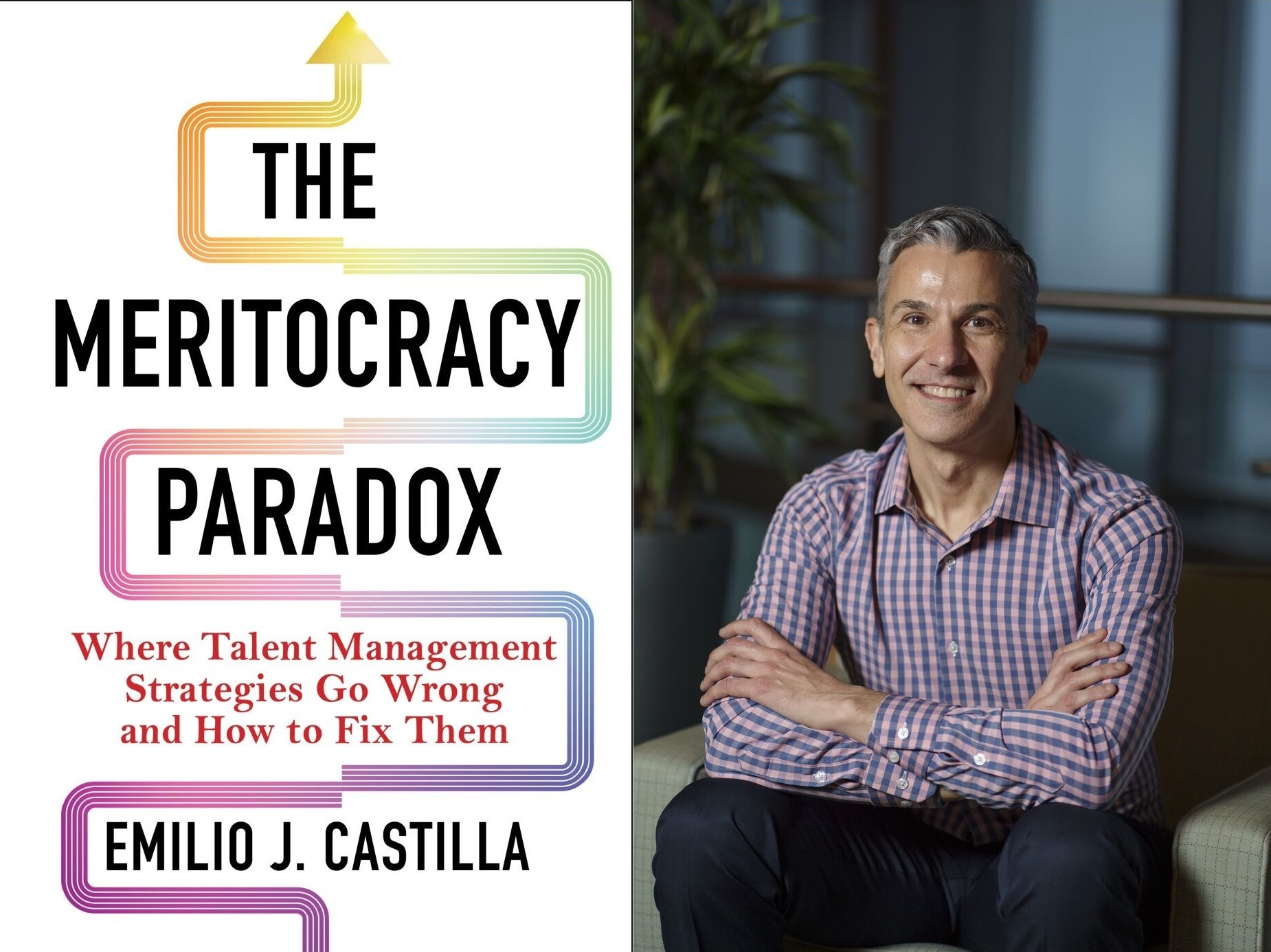
Meritocracy has become an increasingly popular term. But MIT Sloan Professor Emilio J. Castilla explains in The European Business Review that saying an organization is meritocratic can increase bias.
The Good Jobs Institute, founded by Professor of the Practice Zeynep Ton, helps companies improve frontline jobs and company performance.
MIT Sloan Sustainability Initiative Director Jason Jay, PhD ’10, helps organizations decide on and implement their sustainability goals
MIT Sloan Professor Emeritus Thomas A. Kochan of the MIT Institute for Work and Employment Research (IWER) co-leads this executive education Course with MIT Professors David Autor and Sandy Pentland.
MIT Sloan Professor Emilio J. Castilla explains how bias can creep into employers’ talent management processes — and what leaders can do to make their organizations fairer and more meritocratic.
This journal article by Erin L. Kelly et al. describes the protocol for the Fulfillment Center Intervention Study.
In this paper, authors Jack Gallifant, Katherine C. Kellogg, Matt Butler et al. present "a practitioner-oriented field manual for deploying generative agents that use electronic health records."