
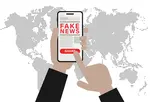
Why do people around the world share fake news?
Since the 2016 U.S. Presidential election and British “Brexit” referendum — and then COVID-19 — opened the floodgates on fake news, research has delved into the psychology behind online misinformation
This page highlights the case studies, policy work and policy simulation of the Climate Policy Center
The studies describe new methods for accelerating drug approvals during pandemics and for providing more accurate measures of the probabilities of success for clinical trials of vaccines.
A new study shows analysts are expecting negative earnings growth this year. After 2022, they expect the situation to stabilize.
Ukrainians with stronger analytical reasoning skills were better at identifying pro-Russia propaganda, according to a new study.
New study commends program as a 'big step forward,' but calls for more default risk transferred to investors.
A recent study by MIT Sloan School of Management Prof. Nemit Shroff found that firms with common owners are more likely to disclose information.
Research led by MIT Sloan Prof. David Rand studies the factors that convince people to adopt products and behaviors that are individually costly but beneficial to society.
Software developers with access to a generative AI tool do more coding and less project management, according to a new study.
Six illustrations we loved this year, illuminating topics such as supply chain, health care, ESG, and remote work.