
Pro-worker AI, explained
Artificial intelligence can make workers more capable and productive, but only if leaders design and deploy it to augment human judgment.
MIT Sloan School of Management researcher Christian Catalini found that AI can now produce complex work at near-zero cost, but the time it takes a human to check that work is fixed by biology.
Many climate technologies fail not because of their effectiveness but because they falter in the “missing middle” of financing. The MIT Catalytic Climate Finance Project aims to bridge that gap.
Organizations are struggling to succeed with AI. Research from the MIT Center for Information Systems Research shows common mistakes and how to overcome them.
Entrepreneurs should develop solutions that connect climate to reliable energy, economic growth, and competitiveness, argue MIT Sloan’s Ben Soltoff and Greentown Labs’ Georgina Campbell Flatter.
Learnright laws would give copyright holders the exclusive right to license their content for artificial intelligence model training.
MIT Sloan researchers find that warm, empathetic AI agents consistently outperform cold, ruthless ones in a large-scale international AI negotiation competition
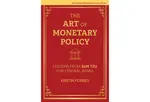
In her new book, The Art of Monetary Policy: Lessons from Sun Tzu for Central Banks, Professor Kristin Forbes draws on ancient strategic frameworks to show how central banks can survive this new era.
A new paper explores how seeing economic value from artificial intelligence hinges on closing the gap between what AI can do and how humans can verify its outputs.
The MIT $100K Entrepreneurship Competition hosted its 2026 Launch finale this month where innovative student founders from MIT and the Greater Boston area competed for $160,000 in prize funding.