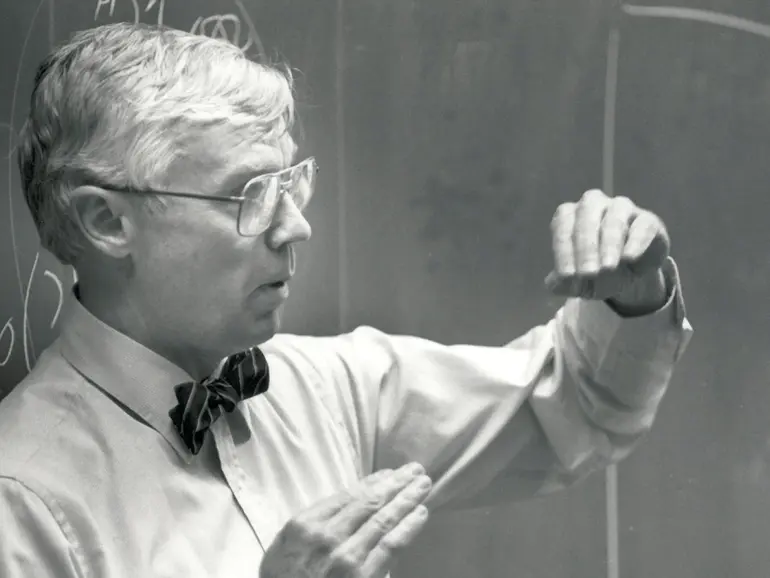
Remembering Robert McKersie, who reshaped how we understand negotiation
McKersie’s 1965 framework for labor bargaining became one of negotiation theory’s most enduring ideas — and helped guide a life of activism, mentorship, and academic leadership.
Faculty
Robert McKersie is Professor Emeritus of Management at the MIT Sloan School of Management.
McKersie is an expert source on industrial and labor relations with a focus on bargaining. He researches strategies being pursued by different industries to bring about more effective organizational changes. McKersie is the author of A Decisive Decade: An Insider’s View of the Chicago Civil Rights Movement (SIU Press, 2013), where his participation as a white activist for black rights presented a firsthand account of the debates, boycotts, marches, and negotiations that impacted race relations in Chicago and the United States during the 1960s. He is also the coauthor of A Behavioral Theory of Labor Negotiations (ILR Press,1991), Strategic Negotiations (Harvard Business School Press,1995), The Transformation of American Industrial Relations (Basic Books,1986), and Pay, Productivity, and Collective Bargaining (Macmillan,1983).
McKersie holds an SB in electrical engineering from the University of Pennsylvania and an MBA and a DBA from Harvard University.
McKersie, Robert B., Corinne Bendersky, and Thomas A. Kochan. In The Palgrave Companion to MIT Economics, edited by Robert A. Cord, 183-201. Palgrave Macmillan, Cham., 2025.
McKersie, Robert B. Negotiation Journal Vol. 39, No. 3 (2023): 279-296.
McKersie, Robert B. Negotiation Journal Vol. 37, No. 3 (2021): 301-323. Download Paper from DSpace.
McKersie, Robert B. Cornell, NY: Cornell Publishing, 2019.
Werner Sengenberger and Robert McKersie.
Kochan, Thomas A., Adrienne Eaton, Robert McKersie and Paul Adler. Ithaca, NY: Cornell University Press, 2009.
McKersie’s 1965 framework for labor bargaining became one of negotiation theory’s most enduring ideas — and helped guide a life of activism, mentorship, and academic leadership.
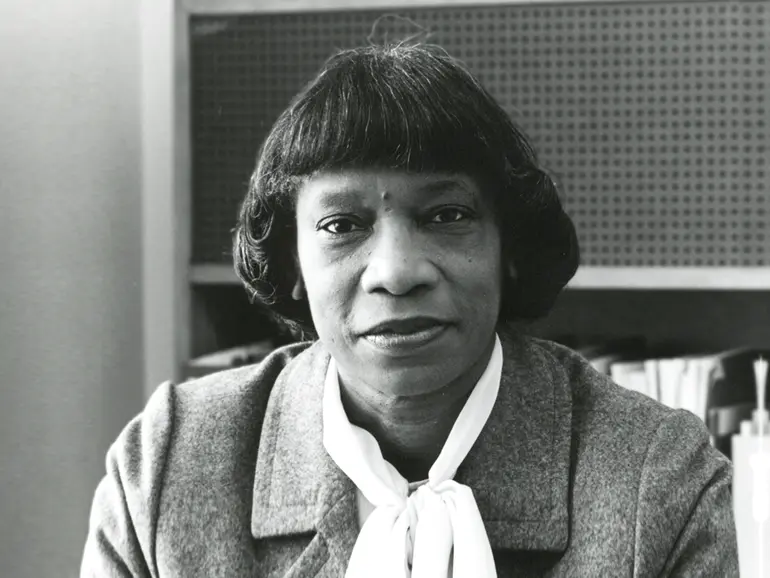
Phyllis Wallace took part in a landmark 1970s AT&T discrimination case and researched the working lives of young Black women.
Professor Emeritus Robert B. McKersie wrote: "It was clear during those early years of the 1960s that Jesse Jackson was a brilliant and visionary leader."