
‘The Collision: What AI Does to Us’
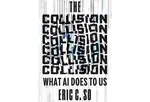
In his new book, MIT Sloan School of Management professor Eric So examines the ways AI is reshaping human cognition and offers advice on protecting your uniquely human skills while using AI.
MIT Sloan professor Eric So explores how AI can reshape human cognitive development and workplace skills — and how to use it to strengthen our thinking — in his new book, The Collision.
MIT Sloan School of Management course offerings like AI-Augmented Work, Defense and Dual-Use Ventures, and Leading Agentic AI Transformation in Organizations anticipate businesses’ future needs.
An analysis of executives at FTSE-listed companies and more than 322,000 UK Biobank participants finds lower leadership attainment among ethnic Chinese men.
As AI tools become more widely available, competitive advantage will depend on the trust, data, expertise, operating capabilities, and work redesign companies build around them.
Google’s Fabien Curto Millet examined how AI is reshaping job roles, workflows, and employee training in an address at the MIT Stone Center on Inequality and Shaping the Future of Work.
When stakeholders become more involved in generative AI design and implementation, it’s more likely that such tools will augment work rather than displace workers.
A panel of practitioners explores how to solve worker shortages and offers three best practices for success.
To see the benefits of automation, companies need to understand challenges and create more flexible robotic tools.
A report from the MIT Working Group on Generative AI & the Work of the Future identifies three principles and seven outcomes that ensure that jobs are better, not just faster, with AI.