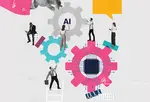

These human capabilities complement AI’s shortcomings
The work tasks that AI is least likely to replace are those that depend on uniquely human capacities, such as empathy, judgment, ethics, and hope.
Artificial intelligence is a profound technology “as important or more than fire and electricity,” according to Alphabet’s Sundar Pichai.
The MIT Institute for Work and Employment Research (IWER) conducts and disseminates research that improves the lives of workers and guides managers in crafting a successful, inclusive future of work.
When stakeholders become more involved in generative AI design and implementation, it’s more likely that such tools will augment work rather than displace workers.
New books about the future of AI, working remotely, the COVID-19 vaccine, and how to build the perfect portfolio.
MIT research about the pandemic looks at economic fallout, the impact of government interventions, digital technology, and fighting misinformation.
How millennials approach writing, giving presentations, and data visualization diverges from previous generations.
A report from the MIT Working Group on Generative AI & the Work of the Future identifies three principles and seven outcomes that ensure that jobs are better, not just faster, with AI.
“Work Lab: Building Better Jobs," a new MIT Sloan class for MBA students and other MIT graduate students, will be offered for the first time in spring 2026. Taught by Ben Armstrong, Director of the MIT Industrial Performance Center, the half-semester course will teach students to model, evaluate, a...
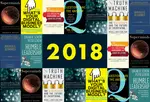
From blockchain to collective bargaining, here are the books from MIT Sloan faculty that made their debut in 2018.