Alumni
Future of Work
At MIT Sloan, we’re leading the future of work. Through research and classroom teaching, we explore the technologies, systems, and leadership styles that profoundly affect organizations and workers everywhere. The MIT Sloan Work and Organization Studies Group studies what workers will need to succeed in jobs of the future and what leaders need to know to manage complex organizations and diverse teams; the MIT Institute for Work and Employment Research explores how work can be improved for both workers and organizations; and the MIT Initiative on the Digital Economy examines how people and companies can adapt to new ways of doing business. Courses taught by our faculty and coaching offered by the MIT Leadership Center help students gain the fundamental knowledge of organizational structures and processes and develop the necessary skills to lead the workforce of the future.

‘The Collision: What AI Does to Us’
In his new book, MIT Sloan School of Management professor Eric So examines the ways AI is reshaping human cognition and offers advice on protecting your uniquely human skills while using AI.

Lessons from Kaiser Permanente’s AI labor deal
An MIT report details how Kaiser Permanente and the Alliance of Health Care Unions reached a landmark labor agreement to incorporate worker input into AI decision-making.

Building Worker Voice into AI: A State-Level Strategy
In a new op-ed for The Center for State Labor Innovations (CSLI), IWER's Thomas Kochan makes the case for state-level sectoral bargaining processes that could give workers genuine voice across all phases of AI decision-making.

What 3 new MIT Sloan professors have learned about AI
New faculty members are thinking about how AI can help decision-making, the value of adversarial AI agents, and the skills workers need in the AI era.

10 levers for shaping generative AI that improves worker performance
A report from the MIT Working Group on Generative AI & the Work of the Future identifies three principles and seven outcomes that ensure that jobs are better, not just faster, with AI.

‘No One Works Here’ urges firms to tackle human bottlenecks with AI
In his new book, MIT Sloan School of Management’s Paul Cheek argues that companies lose competitive ground when they keep humans in the loop on decisions that AI can make more efficiently.
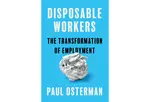
The Rise of the “Disposable” American Worker
The transformation of employment has left roughly one-third of the U.S. workforce without job security, according to a new book by MIT Sloan School of Management professor Paul Osterman.

‘Disposable Workers: The Transformation of Employment’
MIT Sloan’s Paul Osterman argues that the rise in gig workers, freelancers, contractors, adjuncts, and other contingent workers carries long-term implications for the future of work.

How will AI automation hit — like a crashing wave or a rising tide?
AI performance is improving across many workplace tasks broadly, not in sudden shocks, new MIT research finds. That cadence gives companies and workers time to prepare for task-level displacements.

Why AI-driven enterprises are the future of entrepreneurship
AIDEs have lower overhead, are extremely efficient at product development, require a smaller footprint, and provide increased ownership for founders, according to MIT Sloan’s Paul Cheek.