

What is BYOAI?
A working definition from MIT Sloan
BYOAI (noun)
Employees’ use of unapproved, publicly accessible generative artificial intelligence tools for work-related tasks.
The rapid increase in generative AI use poses a variety of new challenges for organizational leaders, among them the advent of “bring your own AI.”
While the use of generative AI offers workplace value, companies need a plan for employees’ use of unapproved tools on the job, according to Barbara H. Wixom and Nick van der Meulen of the MIT Center for Information Systems Research.
BYOAI introduces risks that organizations are not yet equipped to manage, including data loss, intellectual property leaks, copyright violations, and security breaches.
The answer isn’t to ban these tools outright, van der Meulen said during a webinar hosted by MIT Sloan Management Review. “If we restrict access to these tools, employees won’t just stop using generative AI. They’ll start looking for workarounds — turning to personal devices and using unsanctioned accounts and hidden tools,” he said.
Instead, organizations should aim to turn BYOAI from a liability into an asset by developing clear guardrails and guidelines, training employees, and sanctioning specific generative AI tools.
Working Definitions: Artificial Intelligence
MIT Sloan's Working Definitions explore the words and phrases behind emerging management ideas.

Leading the AI-Driven Organization
In person at MIT Sloan
Register Now


These new MIT Sloan courses track emerging technologies and business trends
MIT Sloan School of Management course offerings like AI-Augmented Work, Defense and Dual-Use Ventures, and Leading Agentic AI Transformation in Organizations anticipate businesses’ future needs.

‘The Collision: What AI Does to Us’
In his new book, MIT Sloan School of Management professor Eric So examines the ways AI is reshaping human cognition and offers advice on protecting your uniquely human skills while using AI.
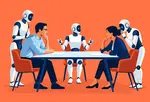
4 seats AI can occupy at the negotiating table
AI can negotiate for you, coach you, support your team, or mediate between parties. An MIT Sloan School of Management professor explains those four roles — and why human judgment still matters.

Lessons from Kaiser Permanente’s AI labor deal
An MIT report details how Kaiser Permanente and the Alliance of Health Care Unions reached a landmark labor agreement to incorporate worker input into AI decision-making.

A framework for determining when AI can make decisions
The AI Decision Matrix uses ambiguity and risk to determine the optimal decision-making structure between humans and AI automation.

3 principles to bring your data monetization initiatives to life
In today’s AI-driven environment, robust data monetization capabilities are both a competitive advantage and a precondition for success, research from the MIT Sloan School of Management finds.
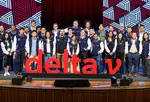
13 MIT startups to watch in 2026
The 2026 MIT delta v Demo Day showcased startup innovations in biotechnology, healthcare, AI, cybersecurity, robotics, finance, and manufacturing.

What 3 new MIT Sloan professors have learned about AI
New faculty members are thinking about how AI can help decision-making, the value of adversarial AI agents, and the skills workers need in the AI era.

Generative AI as a tool for market research
Market research is essentially a prediction problem. MIT Sloan’s John Horton says organizations should consider using generative AI to simulate the effects of their decisions before they make them.

10 levers for shaping generative AI that improves worker performance
A report from the MIT Working Group on Generative AI & the Work of the Future identifies three principles and seven outcomes that ensure that jobs are better, not just faster, with AI.