

What is artificial intelligence explainability?
A working definition from MIT Sloan
artificial intelligence explainability (noun)
A quality that enables users of artificial intelligence programs to understand and trust how models operate and make decisions.
Creating successful artificial intelligence programs doesn’t end with building the right system. Stakeholders must have confidence that the programs are accurate and trustworthy.
According to research from Ida Someh, Barbara Wixom, and Cynthia Beath of the MIT Sloan Center for Information Systems Research, artificial intelligence explainability helps by ensuring users that models are “value-generating, compliant, representative, and reliable.”
There are several reasons stakeholders hesitate to trust AI. Because AI is relatively new, there isn’t an extensive list of proven use cases. Models are often opaque — AI relies on complex math and statistics, so it can be hard for average users to tell how a model works, whether it is producing accurate results, and if it is ethical and compliant.
Models can produce biased results if trained on biased data, and they also “drift” over time, meaning they can start producing inaccurate results as the world changes or incorrect data is included and replicated.
AI explainability is an emerging field, and teams working on AI projects are mostly creating the playbook as they go, the researchers write. Organizations can start by identifying units and organizations that are already creating effective AI explanations, continuing to test the most promising practices, and institutionalizing the best ones.
Working Definitions: Artificial Intelligence
MIT Sloan's Working Definitions explore the words and phrases behind emerging management ideas.

Leading the AI-Driven Organization
In person at MIT Sloan
Register Now


How to level up systematic innovation with AI
Artificial intelligence can boost the systematic innovation of products, processes, and services. MIT Sloan professor Steven Eppinger offers four steps for making that happen.

AI and jobs: 4 takeaways from Google’s chief economist
Google’s Fabien Curto Millet examined how AI is reshaping job roles, workflows, and employee training in an address at the MIT Stone Center on Inequality and Shaping the Future of Work.

5 things to know about how companies can create value from AI
As AI tools become more widely available, competitive advantage will depend on the trust, data, expertise, operating capabilities, and work redesign companies build around them.

These new MIT Sloan courses track emerging technologies and business trends
MIT Sloan School of Management course offerings like AI-Augmented Work, Defense and Dual-Use Ventures, and Leading Agentic AI Transformation in Organizations anticipate businesses’ future needs.

‘The Collision: What AI Does to Us’
In his new book, MIT Sloan School of Management professor Eric So examines the ways AI is reshaping human cognition and offers advice on protecting your uniquely human skills while using AI.

4 seats AI can occupy at the negotiating table
AI can negotiate for you, coach you, support your team, or mediate between parties. An MIT Sloan School of Management professor explains those four roles — and why human judgment still matters.

Lessons from Kaiser Permanente’s AI labor deal
An MIT report details how Kaiser Permanente and the Alliance of Health Care Unions reached a landmark labor agreement to incorporate worker input into AI decision-making.

A framework for determining when AI can make decisions
The AI Decision Matrix uses ambiguity and risk to determine the optimal decision-making structure between humans and AI automation.

3 principles to bring your data monetization initiatives to life
In today’s AI-driven environment, robust data monetization capabilities are both a competitive advantage and a precondition for success, research from the MIT Sloan School of Management finds.
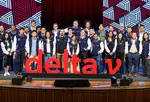
13 MIT startups to watch in 2026
The 2026 MIT delta v Demo Day showcased startup innovations in biotechnology, healthcare, AI, cybersecurity, robotics, finance, and manufacturing.