
Press
What personality pairings most improve human–AI collaboration?
New research from the MIT Sloan School of Management identifies the most effective ways businesses can use and benefit from AI personalization
Aug 31, 2026
Faculty

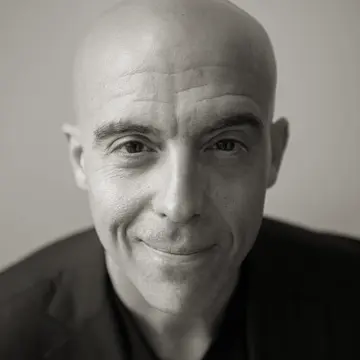
Sinan Aral is a global authority on business analytics; award-winning researcher; entrepreneur, and venture capitalist who is ranked among the top 50 management scholars in the world and was rated the World’s “Top Digital Thinker” in 2021. He is the David Austin Professor of Management, Marketing, IT and Data Science at MIT, Director of the MIT Initiative on the Digital Economy (IDE) and a founding partner at the venture capital firms Manifest Capital and Milemark Capital. He has been called “one of the first and most prescient scholars of social media” by former U.S. Undersecretary of State Richard Stengle.
Sinan was the chief scientist at SocialAmp, one of the first social commerce analytics companies (until its sale to Merkle in 2012) and at Humin, a social platform that the Wall Street Journal called the first “Social Operating System” (until its sale to Tinder in 2016). He is currently on the advisory boards of the Alan Turing Institute, the British National Institute for Data Science in London, the Center for Responsible Media Technology and Innovation in Bergen, Norway and C6 Bank, one of the first all-digital banks of Brazil.
His research has won numerous awards including the Microsoft Faculty Fellowship, the PopTech Science Fellowship, an NSF CAREER Award, a Fulbright Scholarship, and the Jamieson Award for Teaching Excellence (MIT Sloan’s highest teaching honor). In 2014, he was named one of the “World’s Top 40 Business School Professors Under 40.” In 2018, he became the youngest ever recipient of the Herbert Simon Award of Rajk László College in Budapest, Hungary. In the same year, his article on the spread of false news online was published on the cover of Science and became the second most influential scientific publication of the year in any discipline, and his TED talk on “Protecting Truth in the Age of Misinformation,” which received over two million views in nine months, set the stage for today’s modern solutions to the misinformation crisis.
Sinan’s first book, The Hype Machine, which was named a 2020 Best Book on Artificial Intelligence by WIRED, a 2020 Porchlight Best “Big Ideas and New Perspectives” Book Award Winner and among the Best New Technology Books and Best New Economy Books to Read in 2021 by BookAuthority, became an instant classic.
Sinan earned his PhD at MIT and completed his Master’s degrees at the London School of Economics and at Harvard University. You can find him on Twitter @sinanaral and on Instagram @professorsinan.
Cao, Yiquin, and Sinan Aral. Journal of Research in Interactive Marketing. Forthcoming.
Li, Haiwen and Sinan Aral. Nature Human Behavior. Forthcoming. arXiv Preprint.
Ju, Harang, Ehsan Valavi, Madhav Kumar, and Sinan Aral. Communications of the ACM Vol. 68, No. 12 (2025): 104-111. arXiv Preprint.
Aral, Sinan, Seth G. Benzell, Avinash Collis, and Christos Nicolaides, MIT Sloan Working Paper 6975-23. Cambridge, MA: MIT Sloan School of Management, June 2025.
Ju, Harang, Madhav Kumar, Ehsan Valavi, and Sinan Aral, MIT Sloan Working Paper 6971-23. Cambridge, MA: MIT Sloan School of Management, May 2025.
Ju, Harang, Michael Zhao, and Sinan Aral, MIT Sloan Working Paper 7279-25. Cambridge, MA: MIT Sloan School of Management, April 2025.

New research from the MIT Sloan School of Management identifies the most effective ways businesses can use and benefit from AI personalization
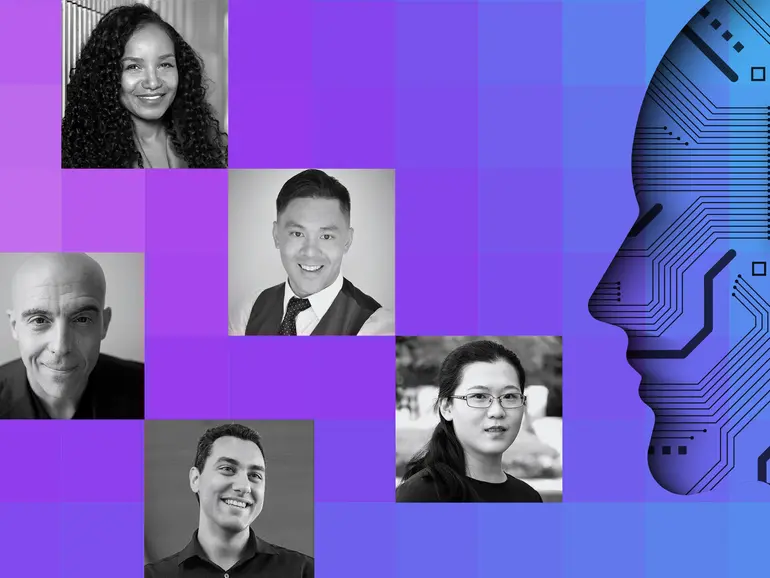
Researchers at the MIT Initiative on the Digital Economy share the latest insights about getting the most from working with AI, such as personality pairing and reorganizing job tasks.
"The sheer number of platforms turns attention into a central economic resource," said professor Sinan Aral. "This mechanism creates structural pressure toward content capable of generating an immediate reaction. In this scenario, complex materials are more difficult to circulate because they demand time, patience, and sustained concentration. What is relevant for public understanding often loses ground to emotionally effective stimuli."
An MIT Sloan article describes recent research by professor Sinan Aral, professor Jared Curhan, and co-authors that ran over 180,000 unique negotiations between AI agents from more than 40 countries to determine what makes an AI negotiator succeed. The article says the competition's central finding challenged a widespread assumption: that politeness and empathy are wasted on AI. Agents designed to be warm and kind consistently outperformed cold and ruthless ones.
Artificial intelligence could transform the economy faster than any previous technology, and policymakers must move equally quickly to figure out how to respond, a group of economists and researchers are warning. The statement, titled "We Must Act Now,"was signed by nearly 200 people, including 15 Nobel laureates. MIT Sloan signatories are Institute Professor Daron Acemoglu, professor Sinan Aral, assistant professor Michiel Bakker, research scientist Christian Catalini, Professor Emeritus Bengt Holmström, professor Simon Johnson, professor Thomas W. Malone, professor Scott Stern, and principal research scientist Neil Thompson.
Professor Sinan Aral joined "Squawk Box" to discuss the impending SpaceX IPO, Elon Musk's AI strategy post-SpaceX IPO, and more.
Machine learning, a branch of artificial intelligence, is the science of programming computers to improve their performance by learning from data. Dramatic progress has been made in the last decade, driving machine learning into the spotlight of conversations surrounding disruptive technology. This six-week online program from the MIT Sloan School of Management and the MIT Computer Science and Artificial Intelligence Laboratory (CSAIL) aims to demystify machine learning for the business professional – offering you a firm, foundational understanding of the advantages, limitations, and scope of machine learning from a management perspective.